Industrial Storage Rack Portfolio
Precision-engineered structural steel systems tested for maximum static load capacity, dynamic deflection control, and seismic resilience across supply chain verticals.
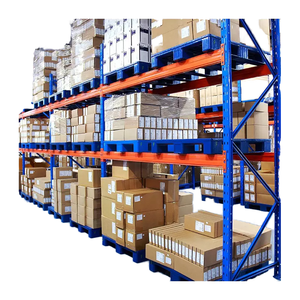
Engineered for direct 100% SKU selectivity in high-throughput fulfillment hubs. Features heavy-gauge beam connectors and electro-welded wire decking.
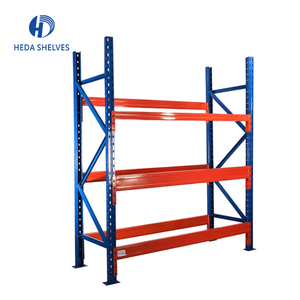
Rigid hot-rolled structural steel profile designed for high-abuse zones. Unsurpassed resistance to material handling equipment impacts.
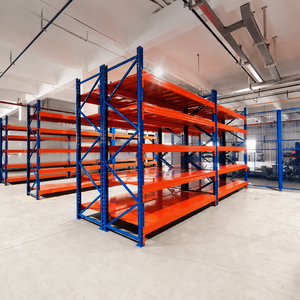
Modular, pitch-adjustable beam connections accommodating fluctuating pallet geometries, multi-level SKU pick faces, and reach truck operations.
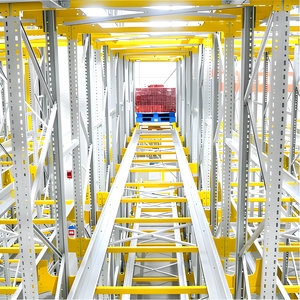
Increases storage density by up to 60% compared to single selective layouts by positioning pallet loads two-deep in a single-aisle access format.
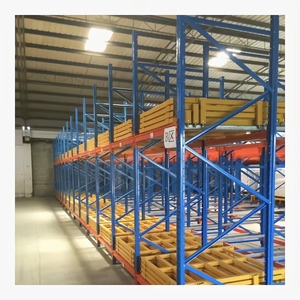
Multi-depth nested cart system functioning on inclined rails. Combines high storage volume with rapid aisle cycle times for medium turnover SKUs.
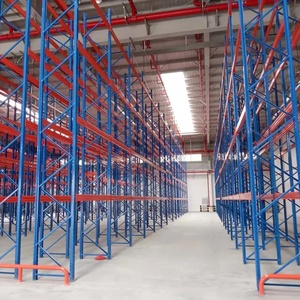
Designed for hand-loaded inventory, heavy cartons, and multi-tier mezzanine floor support. Rapid boltless assembly with reinforced zinc phosphatizing.
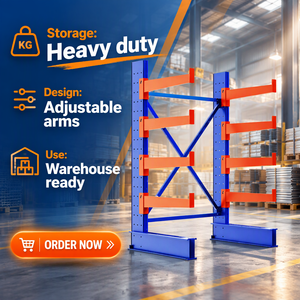
Unobstructed horizontal storage for lumber, extruded bar stock, tubing, and non-standard architectural hardware. Dual-sided and single-sided vertical towers.
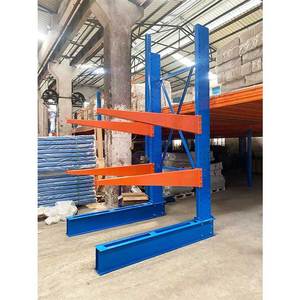
Specialized hanging and cantilevered configuration engineered for awkward shapes, cycle frames, engineered profiles, and high-density industrial storage.
Evaluating the Top 10 Industrial Pallet Storage Rack Factories & Suppliers
Modern warehousing operations in North America and global logistics corridors are moving away from treating pallet racking as a passive commodity. In an era shaped by soaring real estate costs, autonomous material handling integrations, and strict seismic building codes, storage racks are foundational capital infrastructure.
Selecting a premier rack manufacturer demands rigorous evaluation of engineering capacity, metallurgy, code compliance, and structural longevity. A tier-one supplier is no longer defined merely by tonnage capacity, but by finite element analysis (FEA) capabilities, adherence to the Rack Manufacturers Institute (RMI) ANSI MH16.1 specifications, and certified quality assurance under ISO 9001 and AWS D1.1 welding standards.
When auditing top industrial storage rack factories, supply chain directors, procurement officers, and lead structural engineers consistently identify several vital differentiators that distinguish world-class manufacturers from low-tier fabricators:
Certified Metallurgy
Direct mill sourcing of certified hot-rolled structural steel channels and high-yield Q235B/Q355B cold-rolled profiles with comprehensive chemical mill test reports (MTRs).
Integrated Tooling & Robotics
Automated continuous roll-forming lines, multi-torch robotic welding cells, and automated pre-treatment powder coating systems ensuring dimensional tolerances within ±0.5mm.
Regional Scalability
Strategically situated regional manufacturing plants across the USA, Canada, and Mexico that minimize long-haul freight costs, hedge supply disruptions, and accelerate jobsite delivery.
Total Cost of Ownership (TCO): Structural Steel vs. Roll-Formed Gauge
A primary consideration in industrial rack procurement is structural hot-rolled channel steel versus light-gauge roll-formed (teardrop) sheet steel. While roll-formed racking frequently presents a lower initial purchase price, its vulnerability to forklift collisions results in ongoing replacement cycles, operational downtime, and potential rack collapse hazards.
In high-velocity distribution centers and cold storage freezers, structural steel racks demonstrate an unmatched operational lifespan. Utilizing heavy C-channel columns with solid steel corners, structural racking resists significant forklift impacts ($E_k = \frac{1}{2}mv^2$) that would crumple open-back roll-formed uprights. With bolted frame components, repairs are localized, eliminating the need to unload multiple adjacent bays for complete upright replacements.
| Performance Criterion | Structural Hot-Rolled Channel | Roll-Formed Teardrop Steel | Strategic Impact on Operations |
|---|---|---|---|
| Column Impact Resistance | Exceptional (Solid Flanges) | Low (Thin Open Channel) | Reduces forklift impact damage by over 80% in busy travel aisles. |
| Frame Connections | Grade 5 Heavy Hex Bolted Joint | Punched Slotted Rivet / Clip | Prevents accidental beam dislodgement under violent upward fork load. |
| Cold Storage Performance (-30°C) | Immune to Brittle Fatigue | Susceptible to Micro-Cracks | Hot-rolled ductility prevents catastrophic fracture under thermal shock. |
| Torsional Rigidity | Superior Section Modulus | Dependent on Rear Bracing | Permits taller free-standing systems without excessive tie-back structures. |
| Standard Warranty Terms | Up to 2-Year Impact Warranty | Standard Workmanship Only | Direct lower total lifecycle expenditure over a 15-year facility horizon. |
Future Procurement & Technological Trends in Industrial Racking
Global logistics modernization is driving profound transformations in structural storage design. Enterprise buyers must anticipate these macro shifts to preserve asset flexibility and high residual valuation.
1. Convergence of AS/RS & Rack-Supported Structures
As commercial land values escalate in urban infill areas, warehouses are shifting from standard 32-foot clear heights to 100-foot-plus vertical facilities. The racking system is no longer merely static shelving; it serves as the primary load-bearing skeleton carrying the building envelope, roofing, insulated wall panels, and dynamic automated cranes.
2. AI-Driven AMRs & Ultra-Narrow Aisle Interfaces
Autonomous Mobile Robots (AMRs) and automated four-way shuttles require deflection tolerances well beyond traditional forklift aisles. Leading rack manufacturers now fabricate guidance channels and rail interfaces calibrated to millimeter tolerances (±1.0mm) to prevent robotic cart derailments during dynamic handling.
3. Performance-Based Seismic Engineering
Seismic classifications (IBC Site Class D, E, and F) demand non-linear dynamic time-history analysis for high-bay installations. Procurement teams now require site-specific stamped structural engineering calculations that incorporate fluid viscous dampers, seismic base isolation, and reinforced dual-flange baseplates.
Key Strategic Procurement Trends for Global Supply Chains
Procurement directors across Fortune 500 retailers, third-party logistics providers (3PLs), and industrial manufacturers are changing how they write equipment specifications. The historical model of accepting generic teardrop roll-formed bids is being replaced by structured technical requisitions:
- Nearshoring & Local Fabrication Redundancy: Geopolitical supply disruptions and volatile ocean freight rates have elevated the value of domestic and USMCA-aligned regional manufacturing hubs. Facilities in the USA, Canada, and Mexico allow shorter shipping distances and direct factory oversight during production.
- Decarbonization & Green Steel Sourcing: Environmental, Social, and Governance (ESG) mandates require rack suppliers to furnish verified Environmental Product Declarations (EPDs). Facilities utilizing Electric Arc Furnace (EAF) steel with up to 90% recycled content are winning enterprise contracts over blast-furnace operations.
- IoT-Enabled Structural Health Monitoring (SHM): Forward-thinking warehouses are piloting sensor-integrated pallet uprights. Integrated strain gauges and optical displacement sensors detect forklift collisions instantly, alerting warehouse safety managers via cloud dashboards before catastrophic structural collapse occurs.
Why Tier-One Logistics Networks Partner With Us
Combining over seven decades of hot-rolled structural steel innovation with an integrated North American manufacturing infrastructure that delivers safety, speed, and long-term durability.
75+ Years of Pedigree
Continuously innovating structural steel pallet storage systems since 1949. Over 100,000 successful projects engineered across the United States, Canada, Mexico, and global export corridors.
10 Modern Factories
A multi-plant network including Long Valley, Milton, Waterloo, Lamar, Dyersburg, Idaho Falls, Trenton (Canada), and Escobedo (Mexico) ensuring uninterrupted order throughput and reduced freight costs.
Industry-Leading Warranty
Backed by an exclusive 2-Year Direct Rack Damage Warranty alongside comprehensive material warranties. Engineered to lower maintenance and replacement expenditures in high-traffic operations.
Certified RMI Standards
Active standing members of the Rack Manufacturers Institute (RMI), MHI, Global Cold Chain Alliance (GCCA), and WERC. Every system is reviewed and stamped by registered Professional Engineers (PE).
Frequently Asked Engineering & Sourcing Questions
Direct technical answers addressing the real structural, regulatory, and budgetary considerations faced by warehouse procurement teams.
What structural differences differentiate hot-rolled channel pallet racking from standard roll-formed teardrop racking? +
Hot-rolled structural steel channel racking is fabricated from molten raw steel shaped at temperatures exceeding 1,700°F into standardized structural C-channels with thick flanges and webs. Roll-formed racking, by contrast, is bent at ambient temperatures from light-gauge sheet steel into an open, hollow upright column. Structural steel offers up to 250% higher impact resistance, eliminates vulnerable open seams, utilizes heavy Grade 5 bolted hardware instead of friction pins, and can be repaired section-by-section without compromising overall frame integrity.
How do seismic zone requirements impact the design and pricing of industrial pallet storage racks? +
Seismic design categories (A through F according to IBC/ASCE 7) dictate the lateral and torsional resistance required of the racking frame. In high-seismic regions (such as California, the Pacific Northwest, or New Madrid zones), engineering standards mandate heavier upright column wall thicknesses, oversized baseplates with heavy-duty chemical wedge anchors, continuous welded back-to-back ties, and reinforced horizontal and diagonal bracing patterns. While seismic engineering increases steel tonnage by 10% to 25%, it is legally mandatory for municipal permitting and life-safety insurance validation.
What floor slab specifications (thickness and PSI) are required for heavy-duty structural pallet racks? +
Standard warehouse applications typically require a reinforced concrete slab-on-grade with a minimum thickness of 6 to 8 inches and a compressive strength between 3,500 and 4,500 PSI. For high-density systems, automated AS/RS high-bays, or heavy cantilever racking where post-load point forces exceed 15,000 to 30,000 lbs, an engineered slab of 10 to 14 inches with 5,000+ PSI concrete and specific sub-base geotechnical compaction is typically specified to prevent slab punching shear or differential settlement.
Which surface finish is recommended for blast freezers, cold chain facilities, and outdoor yard storage? +
For blast freezers and cold storage facilities down to -30°C, an electrostatic thermoset epoxy powder coating applied over a multi-stage iron phosphate pre-treatment provides exceptional resistance against thermal cracking and moisture condensation. For outdoor lumber yards, chemical storage, or humid coastal facilities, Hot-Dip Galvanizing (HDG) compliant with ASTM A123 is required, providing a sacrificial zinc layer that prevents atmospheric oxidation for 25 to 50 years.
How does pallet rack layout design impact Early Suppression Fast Response (ESFR) fire sprinkler compliance? +
NFPA 13 building codes mandate clear transverse and longitudinal flue spaces (typically 6 inches minimum) throughout pallet storage bays to allow rising thermal plumes to activate ceiling sprinklers quickly and allow water to penetrate downward. If solid decking is used instead of open wire mesh decking (minimum 50% open area), or if rack depths exceed NFPA thresholds, in-rack fire sprinkler systems must be installed, significantly increasing total fire protection infrastructure costs.
Can modular structural storage racks be integrated with future autonomous automated shuttle systems? +
Yes. Our structural systems can be engineered with pre-punched connector slots, standardized beam levels, and heavy-gauge uprights that support bolt-on guide rails for four-way autonomous shuttles (such as the Mole IQ® system) and Automated Guided Vehicles (AGVs). This forward-compatible design allows facilities to start with standard forklift operations and transition smoothly to semi-automated or fully automated deep-lane storage without replacing base racking assets.
Transform Your Warehouse Efficiency & Structural Safety
Consult with our structural engineering team to optimize your facility's cube utilization, ensure seismic compliance, and review our full product specifications.
Get Catalog