Global Procurement & Technology Shifts The Future of Selective Pallet Racking: Emerging Trends for 2026 and Beyond
As warehouse operations scale into larger footprints and vertical volumes, the procurement criteria for selective pallet racking are experiencing fundamental shifts. Facilities are moving away from treating racking as commoditized warehouse steel and instead procuring it as mission-critical logistics infrastructure.
1. Convergence with Autonomous Mobile Robots (AMRs) and Automated Lift Trucks
The global shortage of certified forklift operators has accelerated the adoption of automated reach trucks, driverless counterbalanced forklifts, and AMRs. Autonomous navigation software relies on absolute positional consistency. Roll-formed racking can deflect or settle under heavy loads over time, causing beam deflections that exceed optical robotic sensor tolerances. Structural selective pallet racking, engineered with strict deflection limits (L/180 per RMI or custom L/240 specifications), guarantees the millimeter-level pick-and-place accuracy required by automated guided navigation systems.
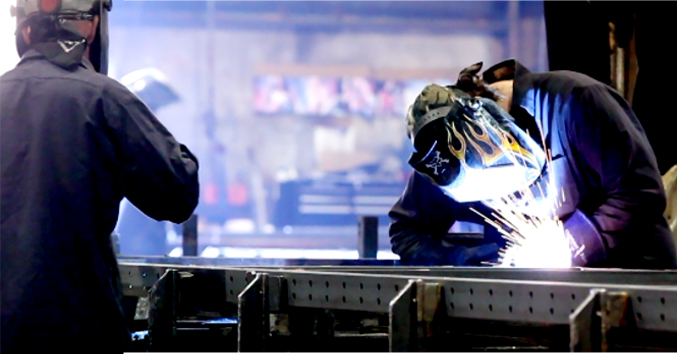
Robotics & Automation Autonomous Alignment Rigidity
Rigid hot-rolled channel uprights eliminate frame twist, ensuring automated lift equipment locates pallet openings with continuous laser precision.
Supply Chain Nearshoring 10 North American Hubs
Shortened freight hauls and USMCA tariff resilience across strategic facilities in the USA, Canada, and Mexico.
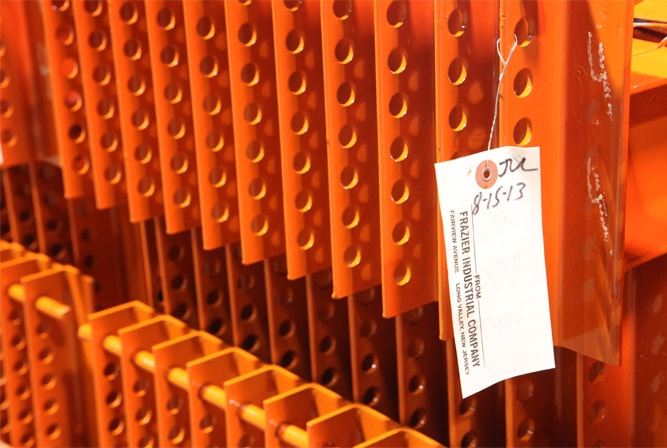
Asset Protection Guaranteed Field Longevity
Industry-leading 2-Year Rack Damage Warranty providing complete operational peace of mind against forklift collisions.
2. Nearshoring and Supply Chain De-Risking in North America
Supply chain leaders are increasingly moving away from unpredictable overseas freight lanes. Long transit times, port congestion, and geopolitical trade tariffs have exposed the fragility of offshore procurement. With 10 regional manufacturing facilities spanning the United States, Canada, and Mexico, Frazier Industrial Racking Systems Co., Ltd. provides reliable supply lines, rapid lead times, and USMCA duty advantages, ensuring complex distribution center expansions meet strict commissioning deadlines.
3. Rigorous Seismic and Building Code Mandates (IBC & ASCE 7 Compliance)
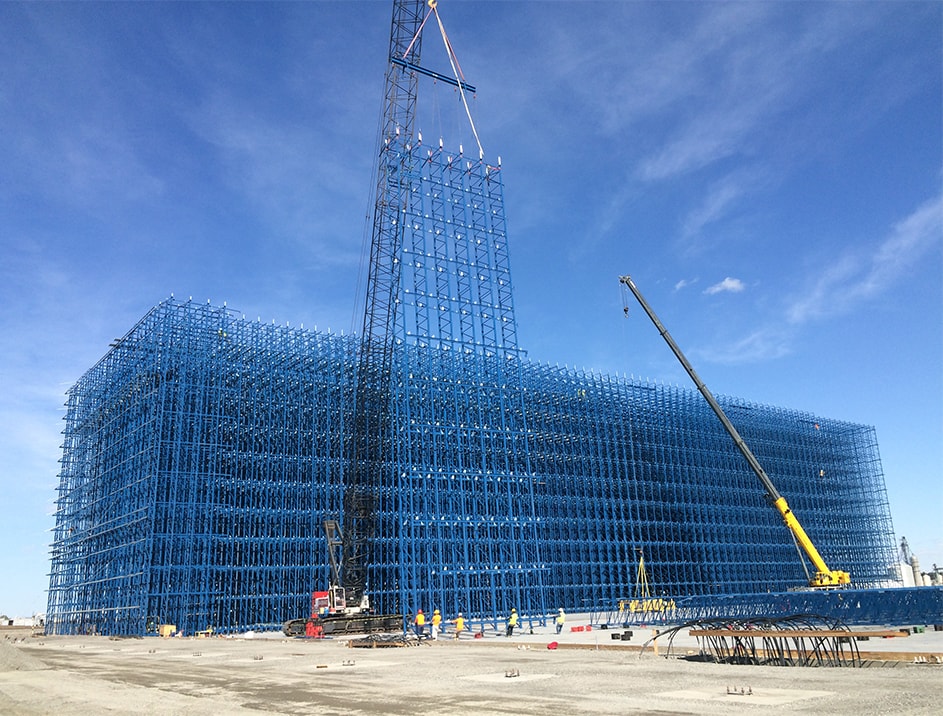
Permitting authorities throughout North America and global seismic zones (such as the West Coast, New Madrid fault lines, and Canadian seismic belts) enforce rigorous seismic analysis for high-bay selective racking. Structural engineering must account for site soil conditions, spectral acceleration responses ($S_s, S_1$), and rack-to-slab anchoring forces. Frazier's professional engineering team utilizes advanced finite element modeling (FEM) to ensure every selective pallet rack bay safely dissipates lateral ground motions without progressive collapse.
4. Circular Economy, Embodied Carbon, and Steel Recyclability
Corporate sustainability mandates (ESG) now scrutinize warehouse capital expenditure. Hot-rolled structural steel manufactured by Frazier contains substantial recycled scrap metal content and maintains near-infinite recyclability without downcycling. Furthermore, its 30+ year lifecycle drastically reduces the carbon footprint per pallet position compared to thinner roll-formed steel that is repeatedly replaced and scrapped due to routine operational collisions.