Industrial Pallet Racking Systems for Fort Worth Facilities
Explore our robust line of selective, high-density, and long-span racking systems built to comply with RMI ANSI MH16.1 specifications, IBC structural criteria, and local North Texas permitting standards.
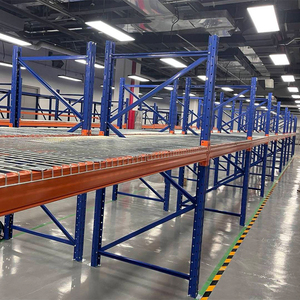
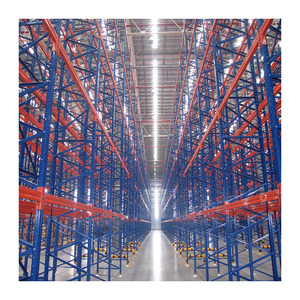
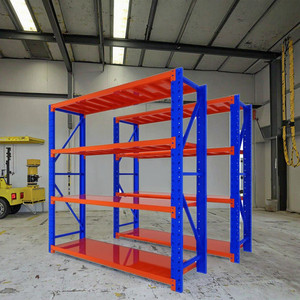
Engineering Resilient Storage Systems for Fort Worth's Distribution Ecosystem
As the core western anchor of the Dallas–Fort Worth (DFW) Metroplex, Fort Worth has evolved into one of the most critical supply-chain hubs across the entire North American continent. Encompassing extensive logistics submarkets—including the AllianceTexas inland port corridor, the DFW International Airport submarket, Great Southwest Industrial District, and South Fort Worth/Carter Park along Interstate 35W—warehousing operations here operate under intense throughput demands. When facilities manage millions of square feet with multi-shift forklift activities, the choice of warehouse racking ceases to be a simple procurement of steel shelving; it becomes a foundation of enterprise risk mitigation and asset longevity.
Structural Steel Channels vs. Roll-Formed Teardrop: Total Cost of Ownership (TCO)
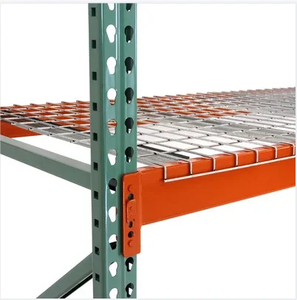
Historically, light-gauge cold-formed (roll-formed) teardrop racking has been selected for fast, entry-level distribution installations. However, enterprise warehouse managers, 3PL logistics executives, and cold-storage operations throughout Fort Worth consistently observe that roll-formed uprights are exceptionally susceptible to catastrophic damage from modern reach trucks and counterbalanced forklifts. An unreinforced open-back column can deform upon impact from a moving vehicle carrying a 3,000-lb load at low speeds, requiring rack offloading, emergency red-tagging, and costly frame replacement.
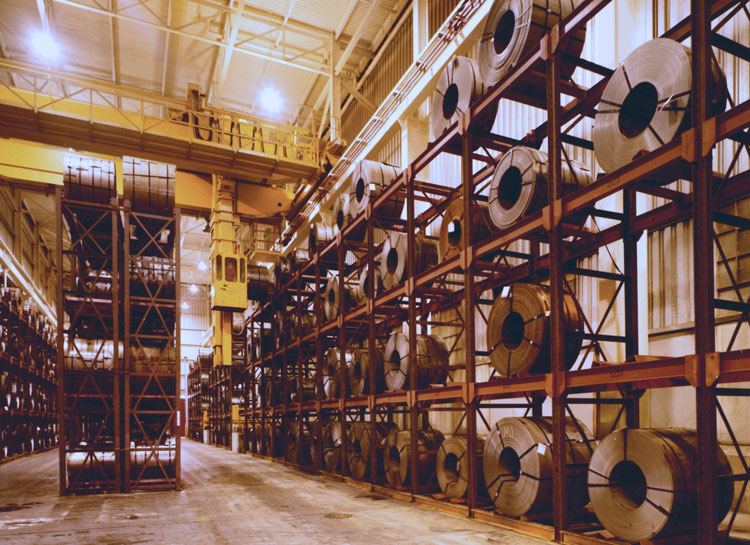
In contrast, 100% hot-rolled structural steel channel racking engineered by industry leaders incorporates heavy-gauge structural channel frames with bolted beam connections. Structural steel delivers over 250% higher torsional stiffness and massive impact resistance against forklift abuse. With heavy-duty bolted connections, individual components can be field-serviced or reconfigured without requiring entire upright tear-downs. Over a 10-to-15 year lifecycle in high-velocity DFW fulfillment centers, hot-rolled structural steel significantly lowers the Total Cost of Ownership (TCO) by reducing routine maintenance downtime, replacement materials, and safety liabilities.
Seismic Analysis and Building Code Permitting in Fort Worth, Texas
All pallet racking installations exceeding 8 feet in clear height within the City of Fort Worth require formal commercial building permits, structural calculation packages wet-stamped by a licensed Texas Professional Engineer (PE), and strict coordination with the Fort Worth Fire Department regarding high-piled combustible storage guidelines under IBC Chapter 32 and NFPA 13 sprinkler clearances. Our engineering teams perform comprehensive site-specific soil, slab load, and wind/seismic uplift calculations—especially critical for automated rack-supported structures and very-high-bay narrow aisle (VNA) systems exceeding 40 feet in building clear height.
Localized Application Scenarios Across Fort Worth Submarkets
From sub-zero temperature environments to automated omnichannel distribution, our structural racking systems power high-performance facilities across key North Texas industrial nodes.
AllianceTexas Logistics & Freight Hub
Serving rail-served multimodal operations at BNSF Alliance Intermodal Facility. High-bay structural selective and drive-in systems designed for rapid container drayage transfers, bulky consumer electronics, and heavy industrial machinery goods.
Cold Storage & Food Supply Chains
Specialized hot-rolled steel push-back, drive-in, and pallet flow racking deployed in South Fort Worth and Carter Industrial Park. Engineered to withstand -20°F temperatures without steel embrittlement, facilitating dense food & beverage storage.
Aerospace & Defense Manufacturing
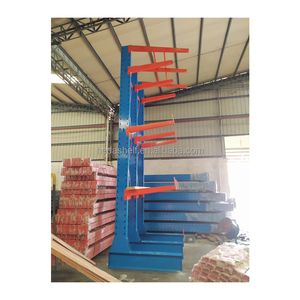
Heavy-duty cantilever racks and custom classified racking supporting Fort Worth's aerospace defense giants and subcontracting tier suppliers. Designed for high concentrated loads including aircraft composites, sheet metal, and bar stock.
E-Commerce & 3PL Fulfillment
Multi-level pick modules, VNA configurations, and carton-flow systems in the DFW Airport and Great Southwest corridor. Engineered to optimize cubic volume, eliminate operator travel distances, and boost same-day parcel picking efficiency.
ASRS High-Bay & Shuttle Storage
Next-generation automated high-bay warehouses and semi-automated Mole IQ shuttle lanes. We coordinate sub-millimeter structural tolerances with automation integrators to eliminate aisle wasted space and optimize vertical density.
Rack-Supported High-Rise Buildings
Greenfield projects where the racking framework serves as the structural support for the warehouse walls and roof. Drastically lowers building construction cycles and delivers unmatched footprint utilization across North Texas land tracts.
Fort Worth Warehouse Market Trends: Vertical Density, Automation & Nearshoring
The industrial landscape in Tarrant County and the greater DFW region is undergoing structural transformation driven by three macroeconomic trends:
1. The Rush Toward 36-to-40-Foot Clear Heights
With industrial land values increasing and development costs climbing along key corridors like I-35W, State Highway 170, and US 287, warehouse developers are moving away from traditional 28-foot or 32-foot ceilings. Modern Class-A distribution facilities now standardly specify 36-foot to 40-foot clear heights. Maximizing this vertical cube requires ultra-stable upright frames capable of sustaining extreme concentrated column loads without mid-span deflection. Hot-rolled structural steel provides the required structural integrity, allowing operators to add an additional 2 to 3 pallet tiers per bay.
2. Integration of Automated Material Handling & AMR/AGVs
Labor availability pressures in the DFW metroplex are accelerating the adoption of autonomous mobile robots (AMRs), automated guided vehicles (AGVs), and Automated Storage and Retrieval Systems (ASRS). Unlike manual lift trucks, robotic shuttles and cranes operate at high speed with ultra-tight tolerance thresholds. Frazier's manufacturing facilities ensure laser-calibrated beam hole centers, precision beam-to-column welded connections, and heavy structural guide rails required for autonomous pallet insertion and extraction.
3. Cross-Border USMCA Nearshoring Influx
As manufacturing migrates from overseas back to North America and northern Mexico (Monterrey, Saltillo, Mexicali), Fort Worth serves as the premier receiving node for freight traveling north on the NAFTA/USMCA interstate highway artery. Regional factories and 3PL staging facilities require heavy-tonnage selective and push-back rack networks capable of fast-paced cross-docking and variable load packaging.
| Storage Architecture | DFW Operational Best Fit | Pallet Selectivity | Impact Resistance | Typical Clear Heights |
|---|---|---|---|---|
| Structural Selective (Sentinel®) | High SKU counts, 3PL cross-docking, Omnichannel | 100% Direct Access | Maximum (Channel Steel) | 24' – 42' High Clear |
| Push-Back Racking (2-6 Deep) | Cold storage, medium velocity SKU batches | LIFO by Lane | High (Bolted Carts) | 20' – 36' |
| Drive-In / Drive-Through | Bulk homogeneous SKUs, raw materials, beverage | Low (High Density) | Heavy Channel Reinforcement | 18' – 32' |
| Pallet Flow (Gravity FIFO) | Food & Beverage date codes, pharmaceutical goods | 100% FIFO Rotation | Heavy Duty Flow Rails | 20' – 38' |
| ASRS & Shuttle Systems | Lights-out warehouses, e-commerce mega-hubs | System Controlled | Integrated Structural Tolerances | 40' – 120' High-Bay |
Why North American Enterprise Brands Rely on Frazier Systems
With engineering innovation dating back to 1949, Frazier Industrial Racking Systems Co., Ltd. has established the standard for North American warehouse structural engineering. We do not compromise on steel gauge, structural weldments, or safety standards.
-
10 Regional Manufacturing Facilities: Strategic plant locations across the USA, Canada, and Mexico ensure short freight transit times, low drayage costs, and rapid on-site steel delivery directly to Fort Worth construction pads.
-
100% Hot-Rolled Structural Channel Steel: Built from mill-certified 50,000 PSI minimum yield structural steel channel members, joined by rugged grade-5 bolted hardware rather than fragile roll-formed tab slots.
-
Industry-Leading 2-Year Rack Damage Warranty: Forklift impacts happen. Our structural steel systems are backed by an unmatched two-year damage warranty, reflecting absolute confidence in structural performance.
-
Turnkey Engineering & PE Seal Certification: Our in-house engineering and AS/RS teams coordinate all layout CAD drawings, sub-slab geotech verification, egress aisle dimensions, and Texas PE permit documentation.
Fort Worth Warehouse Pallet Racking FAQs
Frequently asked technical, seismic, and regulatory questions from warehouse operators, general contractors, and logistics directors across North Texas.
What permits are required for industrial pallet racking installations in Fort Worth?
Why choose hot-rolled structural steel racking over conventional roll-formed teardrop in DFW logistics hubs?
How do North Texas soil and slab conditions impact pallet rack baseplate design?
What lead times can Fort Worth facilities expect for new rack systems and facility expansions?
Can Frazier racking accommodate automated guide vehicles (AGVs) and warehouse shuttle systems?
What coverage is included under Frazier’s 2-Year Rack Damage Warranty?
Optimize Your Fort Worth Warehouse Cube & Structural Safety
Whether you are constructing a greenfield 1,000,000 sq. ft. automated logistics hub in AllianceTexas, upgrading a cold-storage facility in Carter Park, or reconfiguring selective racks in the Great Southwest submarket, our structural racking engineering team is ready to assist.