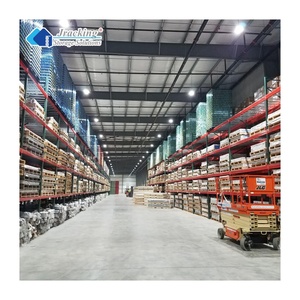
Precision Storage Portfolio
Industrial Racking Systems Available for Direct Export to Cap-Haïtien
Engineered to RMI ANSI MH16.1, FEM 10.2.02, and ASTM A36 international structural standards. Fully containerized marine export packaging ready for discharge at the Port of Cap-Haïtien.
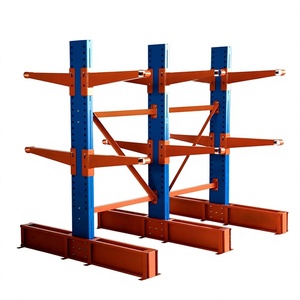
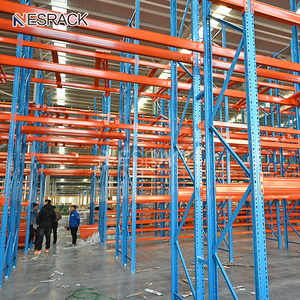
75+
Years of Global Racking Engineering Heritage
100%
Structural Steel C-Channel Impact Integrity
50%
Aisle Width Footprint Reduction Over Standard Selective
2-Yr
Comprehensive Structural Damage Warranty
Engineering High-Density Very Narrow Aisle (VNA) Storage in Cap-Haïtien's Expanding Industrial Axis
As the commercial powerhouse of northern Haiti, Cap-Haïtien (Okap) serves as a vital economic gateway linking maritime container logistics, agricultural exports, and cross-border manufacturing. The development corridor running between the Port of Cap-Haïtien and the massive Caracol Industrial Park (Parc Industriel de Caracol - PIC) has accelerated the need for modernization within local warehousing infrastructure. Faced with constrained geographic space bounded by the Atlantic Ocean and the Massif du Nord mountain chain, commercial real estate in the Nord Department commands high premiums. Logistics developers and industrial operators can no longer afford wide-aisle warehouse layouts that waste over 60% of floor plates on forklift turning radii.
This technical white paper explores the engineering requirements, structural steel specifications, and return-on-investment parameters of implementing Very Narrow Aisle (VNA) Racking Systems for facilities operating in Cap-Haïtien. By condensing operating aisles down from standard counterbalanced forklift clearances (3.5 to 4.2 meters) to ultra-slim dimensions between 1.5 and 1.8 meters, VNA systems unlock up to 90% cubic space utilization while maintaining uninterrupted 100% SKU selectivity. For export-oriented apparel manufacturing, commercial cold chains, and FMCG importers across Northern Haiti, VNA architecture represents the single most efficient route to maximizing logistics yield.
1. Technical Anatomy of VNA Racking Systems
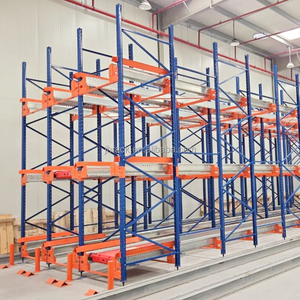
A precision-engineered Very Narrow Aisle layout leverages specialized high-reach articulating turret trucks (man-up or man-down order pickers) or automated trilateral stackers that operate without physically turning inside the rack aisle. The mast or fork-carriage rotates 180 degrees to service pallets on both the left and right sides. Because operating tolerances between the handling equipment and steel frames are limited to millimeters, structural tolerances must adhere to stringent standards.
Guidance Subsystems
Equipped with either low-profile floor-mounted mechanical guide rails (hot-rolled steel angles anchored into structural slabs) or inductive wire guidance embedded beneath the finished floor for clean navigation.
Floor Flatness Standards
Requires compliance with DIN 18202 Table 3 (Group 4) or Concrete Society TR-34 Specification (DM2 or FM2 limits) to avoid mast sway and collision risks when hoisting heavy pallets past 14 meters.
Structural Steel Integrity
Built from hot-rolled C-channel profiles or heavy-gauge cold-formed uprights that absorb static load forces, seismic acceleration, and dynamic impact along Caribbean shipping channels.
2. Structural Channel Steel vs. Roll-Formed Steel in Maritime Caribbean Environments
Cap-Haïtien's tropical coastal climate introduces severe environmental challenges for industrial steel infrastructure. High relative humidity (often exceeding 80%), salt aerosol drift from the Bay of Cap-Haïtien, and seasonal tropical storms require careful steel selection. When specifying storage racks for this maritime hub, engineering teams must evaluate the structural divergence between hot-rolled structural steel and conventional light-gauge roll-formed teardrop steel.
Our structural VNA lines use hot-rolled structural steel channels with bolted connections. Unlike light-gauge roll-formed racks that utilize thin, open-back roll profiles (which buckle easily when grazed by a high-capacity turret truck), structural channel profiles deliver superior torsional stiffness, structural reserve capacity, and ease of field maintenance. If accidental forklift impact occurs during rapid pallet loading, structural members can be isolated and unbolted without compromising adjacent vertical bays.
| Performance Parameter | Hot-Rolled Structural Steel (Recommended) | Roll-Formed Teardrop Steel | Impact on Cap-Haïtien Operations |
|---|---|---|---|
| Forklift Impact Resistance | Extremely High; hot-rolled flanges absorb lateral kinetic forces without column crumpling. | Moderate to Low; open-back tubular shapes easily deform upon impact. | Reduces operational downtime caused by turret truck entry/exit strikes in narrow aisles. |
| Corrosion Resistance (Salt Air) | Standard minimum 2.5–3.0mm thickness with thermoset epoxy powder or Hot-Dip Galvanizing (HDG). | Thin-gauge steel (1.5–1.8mm) subject to faster localized wall penetration. | Prevents structural failure caused by humidity and marine air within 10 km of the northern shoreline. |
| Seismic / Hurricane Readiness | Engineered to RMI ANSI MH16.1 & Seismic Design Categories C/D; high ductility bolted connections. | Requires heavy supplemental external bracing; lower dynamic shear tolerance. | Withstands Atlantic seismic fault activity along the Septentrional Fault Zone north of Haiti. |
| Vertical Elevation Limits | Capable of clear spans past 16–22 meters in high-bay warehouse configurations. | Typically practical up to 9–11 meters before column buckling limits are reached. | Maximizes vertical cubic air rights when plot footprints are strictly limited. |
| Total Cost of Ownership (10 Yrs) | Lowest; near-zero structural frame replacement; covered by 2-Year Damage Warranty. | Higher over time due to frequent upright column replacements and structural patching. | Protects capital investments in remote Caribbean logistics facilities. |
3. Localized Applications in the Greater Cap-Haïtien & Caracol Corridor
Cap-Haïtien's supply chain is uniquely dual-faceted: it serves as the maritime import nexus for consumer staples, building materials, and food products consumed throughout the Grand Nord region, while simultaneously hosting multi-tenant apparel production for global brands under HOPE/HELP US trade preferences. VNA racking provides targeted operational solutions for each industry sector:
- Garment & Textile Export Consolidation (Caracol Free Zone): Fabric rolls, cut garments, and finished packaged apparel require organized, clean, and ultra-dense storage before loading into 40ft sea containers. VNA designs equipped with heavy-duty wire mesh decking or drop-over steel crossbars accommodate diverse pallet dimensions and multi-tiered roll containers.
- Port-Adjacent Customs Bonded Storage: Customs clearings at the Port of Cap-Haïtien experience fluctuating demurrage windows. Bonded warehouse operators along Route Nationale 1 (RN1) implement high-bay VNA systems to store hundreds of high-mix SKUs within tight security boundaries, maintaining instant access to any individual pallet during customs inspection without having to shuffle nearby cargo.
- Cold Chain & Perishable Food Distribution: Refrigerated and frozen warehouse space in northern Haiti carries heavy thermal operating overheads due to regional power constraints. Implementing VNA within insulated cold rooms shrinks the refrigerated air volume per pallet position by up to 40%, lowering kilowatt consumption per unit of stored perishables.
4. Navigating Northern Haiti Logistics: Civil Engineering & Flooring Considerations
The successful execution of a Very Narrow Aisle installation requires meticulous preparation of the warehouse floor slab. In Cap-Haïtien, where alluvial ground conditions along coastal and river delta plains demand robust civil engineering, storage racks cannot be installed on uncalibrated concrete. Because narrow-aisle turret trucks lift tons of cargo beyond 10 meters on a narrow wheel base, any minor deflection in the slab surface is magnified at the top of the mast.
Our engineering services team works directly with local Haitian general contractors and structural engineers to establish exact floor remediation protocols:
- Dynamic Wheel Load Dispersion: VNA turret trucks exert heavy point wheel loads. We supply detailed baseplate footprint and anchor bolt calculations to confirm the existing concrete slab can support concentrated bearing stresses without punch failure.
- Floor Grinding & Superflat Levelling: We supply technical guidelines for path grinding along guided truck wheel tracks to comply with DIN 18202 or ACI 117 F-min ratings, eliminating mast sway risks.
- Mechanical Rail Alignment vs. Wire Guidance: In regions prone to intermittent power grid variations, mechanical angle guide rails (100mm x 75mm x 8mm structural angle) provide a fail-safe physical guidance barrier that keeps machinery perfectly aligned without relying on subterranean electronic signal generators.
Integrated Systems Architecture
Why Frazier / Jracking Heritage Delivers Maximum Supply Chain Security
Combining North American engineering rigor with agile global export logistics to deliver mission-critical storage solutions directly to Haitian terminal docks.
Turnkey Engineering & Design
Every bay, upright, beam, and connector is designed by licensed structural engineers according to RMI ANSI MH16.1 specifications, customized to match your building's seismic profile and lift-truck dimensions.
100% Hot-Rolled Structural Steel
Forged from ASTM A36 / Q235B heavy structural channel steel. Unlike thin roll-formed steel, our bolted channel frames withstand warehouse forklift impacts and eliminate structural fatigue over decades of continuous use.
2-Year Structural Damage Warranty
We provide an industry-leading 2-year rack damage warranty in addition to our standard manufacturing warranty. Bolted connections allow field replacement of single damaged components with zero warehouse downtime.
Direct Marine Ocean Export
Comprehensive ocean freight consolidation handling FOB, CIF, or DDU shipments into the Port of Cap-Haïtien. Components are nested, banded, and container-stowed to avoid salt-air oxidation and transit abrasion.
Surface Treatments for Tropical Belts
Multi-stage pre-treatment with electrostatic polyester powder coating cured at 200°C, or full Hot-Dip Galvanization according to ASTM A123 to provide corrosion immunity in high-humidity Caribbean environments.
Field Installation & Commissioning Support
From CAD layout approval to remote supervisor video assistance and on-site engineering teams, we ensure the installation meets exact plumb tolerances, anchor torque metrics, and rack safety audits.
Procurement Intelligence
Frequently Asked Questions: Purchasing Racking for Cap-Haïtien Facilities
Technical answers to common questions regarding logistics, site feasibility, engineering standards, and Caribbean customs clearance.
Why should warehouse operators in Cap-Haïtien choose VNA over standard selective racking?
Cap-Haïtien faces geographic and economic limits on flat industrial land, driving commercial lease rates upward along Route Nationale 1 and the RN3 junction. Standard selective racking requires wide forklift aisles between 3.5m and 4.2m, wasting more than 60% of the building's floor plate. A Very Narrow Aisle (VNA) system slashes aisle widths to 1.5m–1.8m, expanding pallet capacity by 40% to 55% within the identical footprint without sacrificing 100% direct selectivity. This makes VNA the fastest path to lowering cost-per-pallet position.
What ocean freight and customs procedures apply when importing racking to the Port of Cap-Haïtien?
Racking systems are packed into 40ft High Cube (40HC) dry shipping containers, banded with steel strapping, and protected with vapor-corrosion inhibiting plastic wrap to withstand ocean transit. Containers sail directly or via regional Caribbean transshipment hubs into the Port of Cap-Haïtien (operated by APN). We furnish all necessary documentation, including verified gross mass (VGM) certificates, commercial invoices, detailed packing lists with steel weight declarations, and certificates of origin to expedite customs clearance through Haitian customs (AGD - Administration Générale des Douanes).
How do your systems handle the seismic and tropical weather demands of Northern Haiti?
The northern coast of Haiti lies along the Septentrional-Oriente fault zone, requiring structural engineering that accounts for seismic lateral acceleration. Our systems are engineered in accordance with RMI (Rack Manufacturers Institute) ANSI MH16.1 specifications and IBC building codes. We calculate base plate thickness, heavy-duty wedge anchor depths, and overhead bracing systems to resist seismic movement and hurricane-force vibrations, ensuring workplace life-safety compliance.
Can our existing warehouse floor support a high-bay VNA racking system?
VNA systems transfer heavy concentrated point loads through baseplates to the concrete slab (often exceeding 8,000 to 12,000 kg per column). Before engineering approval, our team reviews your slab depth (typically 150mm–250mm reinforced), concrete compressive strength (minimum 25–30 MPa / 3500–4000 PSI recommended), and subgrade soil compaction. If the floor is uneven, our engineering drawings specify localized shimming plates, heavy-duty grout packing, and rail grinding protocols to meet TR-34 superflat standards.
What is the practical difference between mechanical guide rails and inductive wire guidance in VNA aisles?
Mechanical guide rails consist of heavy structural steel angles (such as 100x75x8mm) anchored along both sides of the aisle. The turret truck uses side-mounted polyurethane guide rollers to track smoothly through the aisle. Wire guidance uses an electronic cable embedded into a 15mm-deep slot cut into the concrete, sending an inductive signal that guides the truck's steering automatically. For warehouses in Cap-Haïtien, mechanical steel rail guidance is frequently favored because it is completely immune to electrical interference, easy to install with local tools, and acts as a physical protective curb for lower upright columns.
What warranty coverage is provided for Caribbean industrial installations?
Reflecting our Frazier and Jracking industrial heritage, we offer an industry-leading 2-year rack damage warranty alongside our standard product manufacturing warranty. Because our systems use structural steel channels with bolted beam-to-frame connections, should a forklift impact occur, damaged parts can be independently unbolted and replaced without having to tear down adjacent bays or replace entire multi-bay runs.
How long are manufacturing lead times and delivery schedules to Cap-Haïtien?
Standard fabrication times for custom-engineered structural or teardrop VNA racking range between 4 to 6 weeks, depending on order tonnage and powder coat finishes. Ocean freight to the Port of Cap-Haïtien typically takes between 14 and 25 days depending on the departure port and shipping line rotations. Our project managers provide complete container tracking and step-by-step assembly guides to ensure smooth hand-off to local installation crews.
Plan Your High-Density Storage Facility in Cap-Haïtien
Send our structural engineering team your building dimensions, clear heights, pallet weights, and forklift specifications. We will return a comprehensive 3D CAD layout, structural capacity report, and direct CIF export quotation within 48 hours.