Industrial Structural Storage Systems
Precision-engineered racking profiles rated up to 3,000kg per tier, manufactured for intermodal logistics, freezer depots, and high-density distribution centers across Alberta.
Structural Metallurgy & Cold-Climate Resilience
A rigorous examination of yield strength, torsional stability, and forklift impact mitigation for Western Canadian distribution centers operating in the Calgary Inland Port corridor.
Warehousing and distribution centers situated in Calgary, Balzac, and the surrounding Rocky View County corridor confront mechanical challenges distinct from other North American logistics hubs. Operating at altitudes above 1,045 meters, subjected to rapid Chinook freeze-thaw cycles swinging from -35°C to +15°C within hours, and handling heavy multi-industry freight from petrochemical infrastructure to refrigerated beef and intermodal containers, conventional roll-formed (teardrop) racking systems routinely fall short. When evaluating lifecycle economics, total cost of ownership (TCO), and workforce safety, understanding the mechanical differential between hot-rolled structural steel channels and thin-gauge roll-formed sheet steel is paramount.
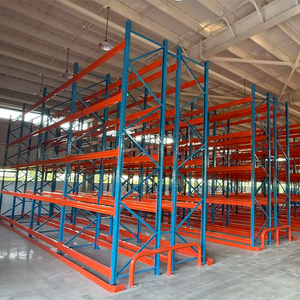
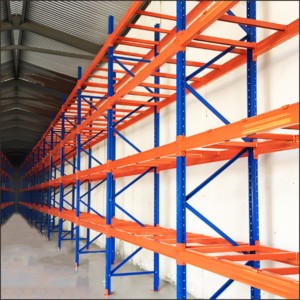
Structural Channel Advantage: Hot-rolled ASTM A36 / CSA G40.21 structural C-channels provide up to 300% greater torsional resistance and withstand direct forklift impacts at frame corners without buckling, unlike cold-formed open-back uprights that can suffer catastrophic progressive collapse.
Mechanical Yield, Impact Kinematics, and Column Failure Mechanics
Roll-formed pallet racking is fabricated by feeding thin, cold-rolled sheet steel (typically 12 to 16 gauge) through a series of progressive rollers at ambient temperature. While cost-effective for static, lightweight consumer warehousing, cold-working introduces residual manufacturing stress along the bends. The standard teardrop punch profile creates localized stress concentration points every two inches along the vertical column face. In contrast, 100% structural steel racking is produced by hot-rolling solid steel billets at temperatures exceeding 1,100°C into thick-flange structural channels (standard C-channels C3, C4, or C5 profiles with thicknesses up to 0.320 inches). Hot-rolling eliminates residual internal stress, yielding an isotropic grain structure capable of ductile elongation even under sub-zero freezer room conditions.
Kinematic studies on reach-truck and counterbalance forklift collisions reveal that 85% of structural damage occurs within the lower 600mm of the aisle-facing upright. A loaded Class 1 forklift operating at 8 km/h delivers dynamic impact energy exceeding 14,000 Joules. Under this loading, roll-formed open-back columns suffer localized flange buckling and immediate torsional twist, which drastically degrades axial load capacity and risks rack shed collapse. Structural C-channels, bolted with Grade 5 structural bolts directly to heavy-gauge structural tubular bracing, dissipate kinetic energy via plastic yield rather than localized buckling. This fundamental difference is why our structural systems carry an unconditional 2-year rack damage warranty across high-throughput Calgary facilities.
| Performance Parameter | Hot-Rolled Structural C-Channel Racking | Cold-Formed Roll-Formed (Teardrop) Racking | Calgary Operational Impact |
|---|---|---|---|
| Steel Grade & Profile | ASTM A36 / CSA G40.21 44W or 50W solid structural channels (up to 8mm wall thickness) | Thin-gauge sheet steel (12 to 16 gauge, 1.5mm to 2.5mm open channel) | Resists deformation under extreme loads and sub-zero forklift impact |
| Forklift Impact Resistance | Extreme (High Ductility) |
Low (Buckles easily on impact) |
Eliminates frequent upright replacements in high-velocity Calgary cross-dock bays |
| Connection Mechanism | Heavy-duty 1/2" or 3/4" Grade 5 structural bolts torqued to structural plates | Friction rivets / slot hooks (teardrop punch holes prone to shearing) | Will not dislodge or pop out during pallet upward-snags or seismic shake |
| Low-Temperature Performance (-35°C) | Ductile transition retained; thick flanges prevent brittle fracture under dynamic load | Susceptible to notch embrittlement around stamped teardrop perforations | Mandatory for cold storage, blast freezer, and unheated winter distribution |
| Permitting & Seismic Design | CSA S16 / RMI ANSI MH16.1 fully stamped; high ductility factor $R_d$ | Requires heavier column reinforcing to meet high lateral seismic drift | Accelerates City of Calgary & Rocky View County building permit approvals |
| Total Cost of Ownership (10-Yr) | Lowest TCO: Virtually zero replacement downtime; high residual resale value | High TCO: Continuous post-impact upright sleeve repairs and rack downtime | Capital asset protection for long-term leaseholders and institutional 3PLs |
Engineered for Calgary's Primary Industry Corridors
From high-velocity e-commerce in Balzac to oilfield manufacturing in Foothills Industrial Park, our structural pallet racks provide certified reliability tailored to specific operational profiles.
Balzac & Rocky View Mega-Fulfillment
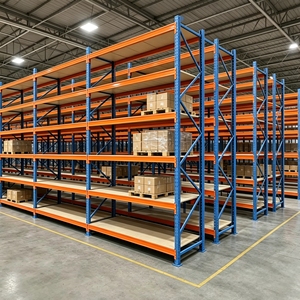
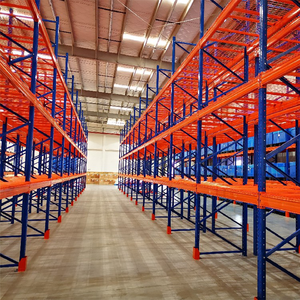
Distribution centers exceeding 500,000 sq ft near the Stoney Trail ring road demand high-bay selective and push-back rack systems. With vertical heights extending up to 45 feet, structural steel columns handle dynamic seismic and vertical loads while maintaining narrow aisle forklift clearances for reach and turret trucks.
Cold Storage & Meat Processing Logistics
Southern Alberta's agricultural and protein sector relies heavily on blast freezers and sub-zero storage facilities maintained between -20°C and -35°C. Hot-rolled structural pallet shuttle and drive-in racks prevent brittle failure caused by cryogenic shock and pallet loading abrasion common in moist, freezing air.
SE Industrial Heavy Machinery & Pipe Staging
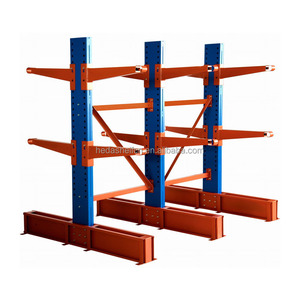
Calgary's industrial parks (Foothills, Great Plains, and Starfield) support Western Canada's energy supply chain. Structural cantilever systems and high-capacity wide-flange pallet racks accommodate irregular, concentrated steel coils, heavy drilling valves, valves, and casing pipe bundles weighing over 6,000 lbs per tier.
Intermodal Cross-Dock Container Terminals
Adjacent to the CPKC and CN intermodal yards, container cross-dock operations require rapid turnaround with heavy forklift cycles. Bolted structural channel selective racks endure continuous impact from aggressive high-speed offloading of international shipping pallets.
Building Materials & Wholesale Distribution
Wholesale distributors supplying drywall, lumber, insulation, and fasteners across the Prairies require heavy rack frames with wire mesh decking that withstand unyielding concentrated point loads without sagging or puncturing under heavy uneven cargo.
High-Cube Automated ASRS Systems
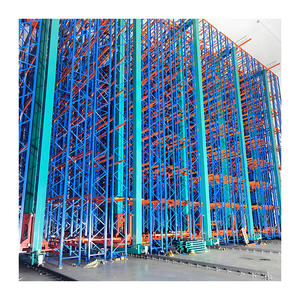
As modern Calgary greenfield warehouses exceed 40-foot clear heights, our structural storage frames integrate seamlessly with high-speed automated cranes and shuttles, offering tight fabrication tolerances that prevent beam deflection and robotic sensor alignment trips.
Macro Dynamics Driving Calgary’s Pallet Racking Demand
How the shift toward Western Canadian regional centralization and supply chain nearshoring is transforming industrial storage density requirements.
Calgary has solidified its standing as the preeminent inland logistics capital of Western Canada. With the rapid completion of the Stoney Trail ring road infrastructure, direct rail links via Canadian Pacific Kansas City (CPKC) and Canadian National (CN) connecting Port of Vancouver to Ontario and the U.S. Midwest, global retailers and third-party logistics (3PL) providers are concentrating their distribution footprints in the Calgary Metropolitan Region. This shift introduces critical procurement mandates for commercial warehouse racking:
1. Vertical Space Optimization Amid Rising Land & Construction Costs: While land in Rocky View County remains more accessible than Metro Vancouver, industrial construction costs per square foot have increased markedly. Operators are maximizing cubic volume rather than horizontal footprint, pushing storage rack heights from standard 24-foot clear heights to 36, 40, and 45-foot ceiling structures. At these elevations, roll-formed rack systems require excessive bracing or bulky columns to resist overturning moments. Structural steel channel systems deliver exceptional load-bearing capacities with smaller column profiles, increasing overall pallet position density by up to 22%.
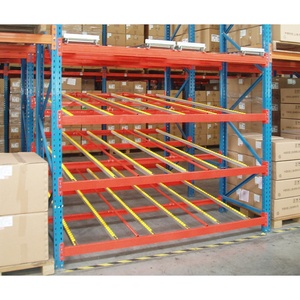
2. Transition from Manual Forklift Operations to Semi-Automated Shuttle Systems: Chronic shortages of certified material handling equipment operators across Alberta have accelerated the adoption of automated shuttle systems and dynamic flow racks. Automated storage requires millimetric precision; minor column deflection caused by fork-truck impacts disrupts shuttle sensors and halts automation. Rigid structural hot-rolled steel maintains plumb alignment over decades of continuous operational throughput.
3. Stringent Municipal Safety Auditing & Alberta Building Code Permitting: Safety Codes Officers across the City of Calgary and Rocky View County enforce strict seismic compliance under the National Building Code (Alberta Edition) and CSA S16. Warehouses attempting to install uncertified or imported non-spec racking face immediate stop-work orders and failed occupancy reviews. Every rack structure we export and wholesale includes engineered, stamped P.Eng documentation, pre-calculated baseplates, and anchor bolt embedment schedules customized to local concrete slab compressive strengths.
Engineered Wholesale & Direct Export Superiority
Direct manufacturer capabilities, rigorous quality assurance, and proven North American freight channels delivering turnkey peace of mind.
100% Hot-Rolled Structural Channels
Zero cold-formed stamped sheet metal. All uprights and beams are crafted from structural C-channel steel for maximum impact resistance, higher weight thresholds, and field repairability.
2-Year Rack Damage Warranty
Forklift impacts occur in every high-volume operation. We back our structural pallet racks with a comprehensive 2-year damage replacement warranty that roll-formed competitors cannot match.
Full CSA S16 & RMI ANSI MH16.1 Compliance
Complete structural calculations and professional engineering stamps provided for seamless municipal permitting across Calgary, Rocky View County, and broader Western Canada.
Consolidated Rail & Flatbed Logistics
Full-truckload (FTL) and direct intermodal rail container shipping directly into Calgary rail terminals ensures punctual project deliveries with zero middleman markups.
Cryogenic & Cold-Chain Durability
Structural channel metallurgy resists cold-induced brittle fracture down to -40°C, providing superior structural safety for refrigerated warehousing and blast freezer facilities.
Turnkey Layout Engineering & Customization
From custom beam lengths and heavy-duty wire decking to integrated pallet flow beds and rack-supported buildings, our engineering group works directly with your facility design team.
Frequently Asked Questions for Warehouse Operators & Wholesalers
Essential guidance addressing municipal permitting, concrete floor slab tolerances, frost-heave mitigation, and engineering approvals in Alberta.
What engineering codes govern pallet racking installation permits in Calgary and Rocky View County?
Why is structural C-channel racking preferred over roll-formed teardrop racking in Calgary distribution hubs?
How does sub-zero winter weather and seasonal freeze-thaw affect warehouse pallet racking?
What floor slab specifications and anchor bolt engineering are required for high-bay structural racks?
How are wholesale and export shipments delivered into Calgary and surrounding industrial parks?
Request Engineering Layout & Wholesale Pricing
Planning a new distribution center, freezer warehouse expansion, or replacing damaged roll-formed uprights in the Calgary region? Connect directly with our material handling engineering team to review site plans, load matrices, and project timelines.