Engineered Heavy-Duty Pallet Racking Solutions
Engineered to comply with ANSI MH16.1 specifications, delivering ultra-high impact absorption, corrosion protection, and optimum load capacities for distribution and port storage.
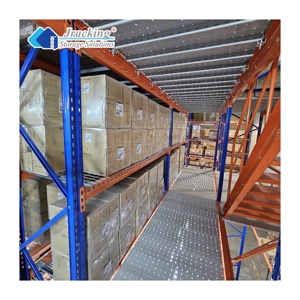
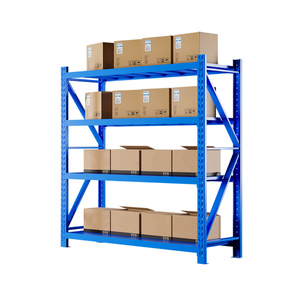
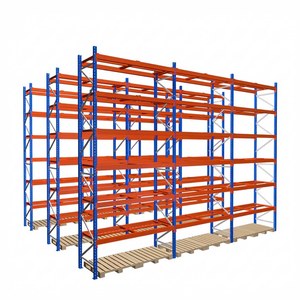
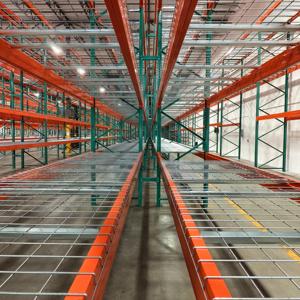
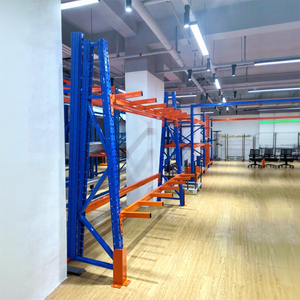
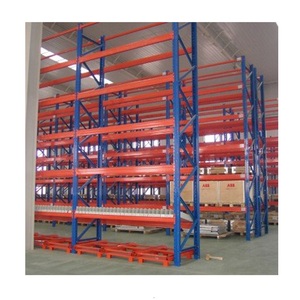
Strategic Warehousing Transformation in the Republic of Haiti
Navigating Caribbean seismic demands, maritime corrosion, and modern inventory security through structural steel engineering.
The warehousing and logistics landscape across Haiti—anchored by critical commercial hubs such as Port-au-Prince, Delmas, Carrefour, and the northern industrial nodes around Cap-Haïtien and the Caracol Industrial Park—is experiencing a structural transformation. For decades, supply chain operators in Haiti operated predominantly on block-stacking and manual wooden pallet staging. However, escalating real estate expenditures, coupled with supply disruptions and the urgent need for inventory fortification against severe natural disasters, have elevated steel pallet racking systems from a mere storage accessory to mission-critical infrastructure.
Operating a warehouse within the Caribbean basin presents unique structural challenges. Facilities situated along the Gulf of Gonâve face high ambient humidity and saline exposure that rapidly corrode substandard, cold-rolled sheet steel. Simultaneously, the Enriquillo-Plantain Garden Fault zone mandates that any elevated storage configuration must withstand significant lateral ground acceleration. For procurement managers, logistics wholesalers, and multinational FMCG distributors sourcing pallet racks in Haiti, selecting an engineered system requires a deep evaluation of yield strength, base-plate anchoring protocols, and epoxy or hot-dip galvanized metallurgical finishes.
Port-au-Prince Customs & Freight Terminals
High-density selective and drive-in pallet racking systems installed near the APN (Autorité Portuaire Nationale) terminals maximize container turnarounds, handling ISO pallets with high vertical throughput under 24/7 continuous operation.
FMCG & Food Wholesale Depots (Delmas / Tabarre)
Multi-tier selective rack and dynamic pallet flow systems allow rapid inventory turnaround for rice, grains, packaged food, and edible oils, preventing product spoilage via true First-In, First-Out (FIFO) gravity roller control.
Caracol & Northern Apparel Free Zones
Engineered cantilever and heavy-duty steel shelving racks support fabric roll bolts, finished garments, and industrial equipment in northern export processing corridors, fully integrating with narrow aisle order pickers.
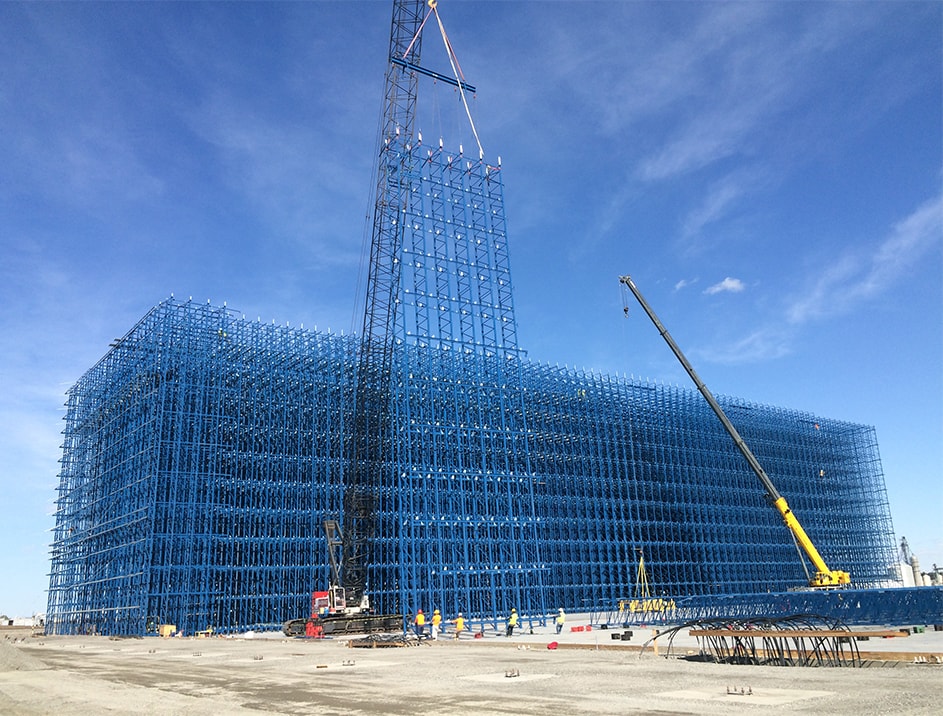
Hot-Rolled Structural Steel vs. Conventional Roll-Formed
In developing logistics markets like Haiti, forklift operator certifications and smooth concrete slab installations can vary considerably. Light-gauge roll-formed teardrop uprights frequently buckle under low-speed impact from counterbalanced forklifts, leading to catastrophic bay collapses.
Our industrial racks feature 100% hot-rolled structural steel channels. The thicker flanges and closed web designs deliver exceptional torsional rigidity and up to 250% higher impact resistance at column corners. Damaged structural components can be unbolted and replaced individually on-site without cutting or field welding, drastically lowering the total cost of ownership (TCO) and warehouse downtime.
Key Development Trends Reshaping Caribbean Material Handling
Strategic investments in spatial optimization, cold storage resiliency, and seismic anchoring systems are establishing new benchmarks across Haiti.
1. Seismic Compliance & Structural Stiffening
Following historical seismic activity along the Enriquillo Fault, warehouse builders are migrating toward ANSI MH16.1 Class D & E seismic designs. High-ductility structural columns with oversized heavy-gauge footplates and deep chemical anchor bolting prevent uplift and rack twisting during earthquakes.
2. Cold-Chain Resiliency & Drive-In Density
With energy costs remaining elevated in the Caribbean, cold storage operators in Port-au-Prince are deploying deep-lane drive-in and push-back racking. Maximizing thermal volumetric efficiency reduces the cubic meters requiring active refrigeration, drastically lowering utility overhead per pallet.
3. Advanced Epoxy & Galvanized Metallurgical Finishes
Marine salinity near coastal discharge docks causes severe oxidation on poorly coated steel. The shift toward thermoset epoxy powder coating pre-treated with zinc phosphatizing, alongside hot-dip galvanization for exterior and open-sided sheds, guarantees prolonged service life without structural rust flaking.
Global Engineering Pedigree, North American Standards
Leveraging over 75 years of structural engineering expertise to deliver robust, damage-resistant warehouse rack frameworks globally.
100% Hot-Rolled Structural Steel
We reject fragile sheet metal. Every upright channel, load beam, and frame cross brace is forged from solid structural steel for maximum impact and load carrying capacity.
2-Year Impact Damage Warranty
Our products are engineered for unforgiving environments. We stand behind our structural integrity with an industry-leading 2-year rack impact warranty.
RMI & ANSI Certified Calculations
All racking profiles are designed in accordance with ANSI MH16.1 specifications, with full PE stamped structural engineering packages provided for permitting and safety compliance.
Streamlined Caribbean Export Logistics
Extensive containerized shipping experience ensures optimized 40ft High Cube container stuffing, knock-down packaging, and complete customs documentation for seamless arrival in Haiti.
Frequently Asked Questions by Haitian Warehouse Operators
Clear engineering insights addressing customs, seismic requirements, installation, and floor load capacities.
How do structural steel pallet racks protect warehouses against Haitian seismic activity?
Haiti is situated along complex strike-slip fault zones, demanding rack designs that prioritize ductility and load retention. Structural steel racking uses hot-rolled C-channel columns with bolted connection brackets, as opposed to friction-fit teardrop clips that can shake loose under cyclic lateral loading. Our Caribbean projects include oversized footplates anchored deep into the foundation with certified mechanical or chemical anchors, preventing frame displacement and bay failure during seismic acceleration events.
Can your pallet racking resist corrosion from Port-au-Prince's coastal climate?
Yes. We offer dual surface protection regimens: an industrial thermosetting epoxy powder coat cured at 200°C over an automated multi-stage iron phosphate pre-wash, or 100% Hot-Dip Galvanization conforming to ASTM A123 standards. Hot-dip galvanization provides superior sacrificial cathodic protection, making it ideal for open dock sheds, cold rooms, or warehouses located within 5 kilometers of the shoreline.
What slab thickness and concrete PSI are required for heavy-duty racking?
For standard selective rack frames carrying 2,000 kg per beam level up to 6 meters in height, a minimum slab thickness of 150mm (6 inches) with reinforced concrete rated at 3,000 PSI (approx. 20 MPa) is standard. For taller configurations, seismic zones, or narrow aisle systems, we evaluate the concentrated leg load and can engineer custom baseplates that distribute point loads evenly, preventing punch-through shear on older or unreinforced warehouse floors.
How are racking shipments delivered and imported through Port-au-Prince or Cap-Haïtien?
We deliver FOB, CIF, or DDU containerized freight directly to Port-au-Prince or Cap-Haïtien ports. Upright frames are typically shipped pre-assembled or knock-down (KD) to optimize container volume in 40ft High Cube containers. All shipments include comprehensive bill of ladings, certified mill test reports, assembly manuals, and CAD layout plans to facilitate rapid customs clearance with Haitian customs agents (Douane d'Haïti).
Do you supply replacement parts or allow modular layout expansion?
Absolutely. Our bolted structural modularity ensures that if an upright column or horizontal brace suffers an accidental high-impact strike, individual members can be replaced in less than an hour without dismantling adjacent spans. Furthermore, beam elevations can be adjusted on 2-inch or 3-inch vertical increments as your pallet profiles evolve.
Maximize Your Haitian Facility's Cubic Storage Capacity
Send your architectural warehouse DWG/PDF drawings. Our structural engineering team will configure an optimized, seismic-compliant rack plan within 24 business hours.