Industrial Warehouse Storage & Pallet Rack Product Portfolio
Engineered for intense throughput, cold chain integrity, and heavy structural load containment. Explore our field-tested systems optimized for All Saints regional logistics centers.
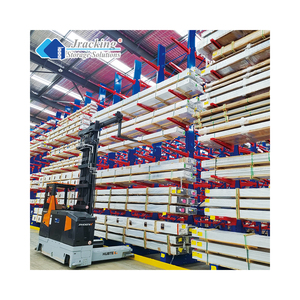
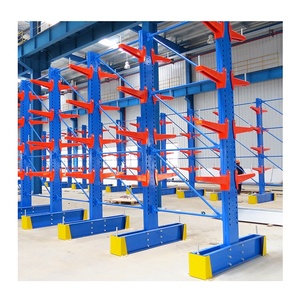
Jrackng High Capacity Heavy Duty Warehouse Storage Long Arm Cantilever Racking for Timber
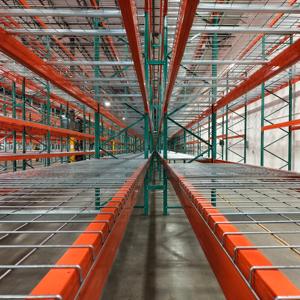
Industrial US Standard Warehouse Shelving Racks RMI & CE Certified Heavy Duty Teardrop Pallet Racking for Logistics Center
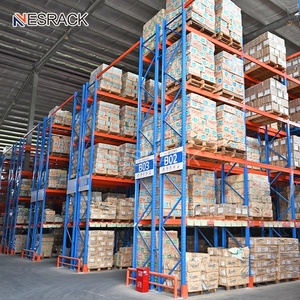
Heavy Duty Adjustable Pallet Racking Industrial Warehouse Shelving Selective Pallet Rack System Storage Shelves
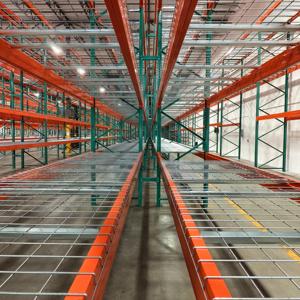
Jracking US Standard Warehouse Shelves Rack Heavy Duty Teardrop Pallet Racking System for Cold Storage Warehouses
Selective Pallet Racking Warehouse Storage System Steel Upright and Beam Frame Wholesale
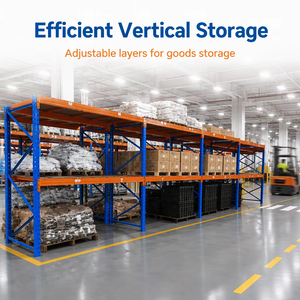
OEM ODM Adjustable Industrial Warehouse Storage Stackable Selective Pallet Racking System Heavy Duty Shelving Units Shelf Rack
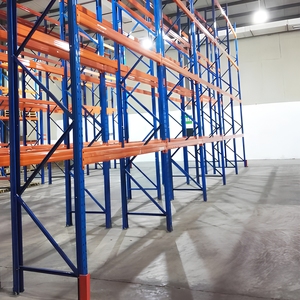
Wholesale Heavy Duty Steel Adjustable Stackable Modern Multi-Level Warehouse Rack Storage Pallet Racking Industrial 1000-3000kg
Kinematic Design & Structural Mechanics of Push Back Racking Systems
Push back racking bridges the operational chasm between low-density 100% selective systems and aisle-restrictive drive-in setups. Designed around dynamic nested nesting cart carriages, it transforms vertical warehouse volume into pure high-throughput staging capacity.
Low-Profile Nested Cart Engineering
Unlike older, failure-prone roller flow push-back systems that require extensive gravity clearances, our Glide-In® structural steel push-back systems utilize telescoping nested carts that glide along precision-sloped structural steel angle tracks. Pallets rest squarely on heavy-duty channel steel frames with flanged steel wheels running on sealed ball bearings, saving up to 4 inches of critical vertical bay space per storage level.
Gravity Flow Gradient & Cart Velocity Control
Configured with a calculated 2.5% to 3.5% incline slope, the system utilizes controlled gravitational force to bring queued pallet loads smoothly to the pick face upon extraction. When a forklift retrieves the front pallet, the nested carts behind gently roll forward at a controlled velocity of under 0.35 m/s, preventing kinetic shock loads, cart derailment, and product tipping across 2-deep, 3-deep, 4-deep, 5-deep, and 6-deep configurations.
Impact Tolerance: Hot-Rolled Channel vs. Cold Roll-Formed
Warehouse forklift operators frequently impact rack column bases during fast-paced push-loading. Conventional thin-gauge roll-formed (teardrop) uprights experience catastrophic buckling under torsional impact. Our structural steel systems utilize ASTM A36 / A572 Grade 50 structural C-channels with heavy bolted frame assemblies, offering up to 300% greater torsional rigidity and forklift impact absorption without frame deformation.
Localized Application Scenarios in All Saints Warehousing Hubs
Warehouses, cold storage facilities, and wholesale distribution centers across the All Saints trade corridor operate under distinct supply chain and environmental pressures. Here is how our push back racking platforms solve localized logistical bottlenecks.
Refrigerated Cube Optimization & Energy Savings
Operating refrigerated and sub-zero freezer space in All Saints incurs immense kilowatt-hour cooling costs. Push-back racking increases pallet density by up to 75% compared to selective rack, shrinking unconditioned airspace and maximizing thermal efficiency. Because forklift operators never drive into the sub-zero rack structure (unlike drive-in), refrigeration door cycles and operator exposure times drop significantly.
High-Throughput LIFO Staging for Medium-Velocity SKUs
All Saints regional distributors handling fast-moving consumer goods face complex inventory rotations. With push back racking, every storage lane represents an independent SKU channel. Unlike drive-in racks that trap entire bays under one product code, a 4-deep push back array allows up to four different product categories to share the same vertical bay column with zero honeycomb space waste.
Buffer Storage for Containerized Freight Inflow
Logistics operations in All Saints handling container drayage require robust buffer storage during peak break-bulk operations. Structural steel push-back lanes absorb rapid bulk unloading cycles directly from sea-freight containers. Forklift drivers stage pallets sequentially from a single front aisle, cutting internal travel distances across cross-docking aprons by over 40%.
Push Back Racking vs. Alternative High-Density Systems
Procurement decisions must evaluate holistic lifecycle expenditures rather than raw first-cost per pallet position. Examine the mechanical, operational, and financial parameters across industrial racking topologies.
| Evaluation Parameter | Push Back Racking | Selective Pallet Rack | Drive-In Racking | Pallet Flow (FIFO) |
|---|---|---|---|---|
| Storage Density Efficiency | High (Up to 75% Floor Gain) | Baseline (Standard Footprint) | Very High (Up to 85% Floor Gain) | Extreme (Up to 90% Floor Gain) |
| Pallet Access Principle | LIFO (By Lane) | 100% Selective (Direct Access) | Strict LIFO (By Entire Bay) | FIFO (First-In, First-Out) |
| Forklift Aisle Travel Exposure | Low (Single Aisle Loading/Picking) | High (Aisle between every rack) | Deep (Drive directly into frame) | Split (Dedicated Load & Pick Aisles) |
| Impact Collision Risk | Minimal (Forklift never enters rack) | Moderate (Flank impacts during turn) | Severe (High upright strike rates) | Minimal (External aisle operations) |
| SKU Selectivity Index | High (1 SKU per lane) | Total (1 SKU per pallet) | Very Low (1 SKU per full bay) | High (1 SKU per lane) |
| Honeycombing Losses | Under 10% | 0% | Up to 35% - 40% unused volume | Under 8% |
Industrial Logistics & Intralogistics Trends in All Saints
As real estate values and construction raw material prices escalate, warehouse operators across All Saints are transforming low-density footprints into high-cube fulfillment machines.
Land Scarcity & The Vertical Imperative
Commercial land in All Saints logistics corridors has seen rapid appreciation. Building footprint expansion is rarely economical; modern operations are deploying 5-deep and 6-deep structural push-back systems reaching 32 feet clear height, tripling storage capacity within existing facility envelopes without pouring new concrete slabs or applying for zoning variance.
Coastal Atmospheric Corrosion Mitigation
Facilities near maritime corridors face pervasive airborne humidity and salinity. Standard untreated roll-formed racks experience accelerated micro-crack corrosion around punched holes. Our structural systems for All Saints are engineered with heavy-duty thermoset powder coatings or hot-dip galvanized finishes meeting 1,000-hour ASTM B117 salt spray ratings for multi-decade life expectancy.
Integration with AGVs & Reach Truck Fleets
Labor shortages in All Saints have catalyzed adoption of automated guided reach trucks and camera-guided electric forklifts. Our push-back racking includes laser-cut alignment guides, positive-stop front bumpers, and bright high-visibility cart indicators, providing the mechanical precision necessary for both manual and autonomous vehicle staging.
Why Structural Steel Push Back Racking Outlasts Any Alternative
With over seven decades of manufacturing mastery, we do not build lightweight commodity racking. We engineer structural steel infrastructure built to withstand severe seismic activity, heavy cyclic loads, and harsh daily material handling.
100% Hot-Rolled Structural Channel
Our columns, cross-beams, and cart chassis are fabricated exclusively from heavy structural steel channels. Unlike open-back teardrop roll-formed tubing, hot-rolled structural steel has solid flanges that do not deform when nudged by pallets or outriggers. This ensures structural integrity under continuous maximum rated bay loads up to 40,000 lbs.
Bolted Connection & Modularity
While teardrop pins easily shear or dislodge under upward pallet catching forces, our push back systems feature Grade 5 structural bolted connections. If a major vehicular collision occurs, individual beam members or upright sections can be unbolted and replaced on-site without requiring extensive rack teardowns or welding shutdowns.
Industry-Leading 2-Year Damage Warranty
We back our structural push-back systems with an unprecedented 2-year rack damage warranty in addition to our standard factory guarantee. We recognize that warehouse accidents happen—our structural design protects your capital investment from catastrophic failure and unbudgeted maintenance liabilities.
Frequently Asked Questions by All Saints Procurement Teams
Critical engineering, seismic, permitting, and operational questions answered for warehouse directors, supply chain VPs, and facility planners in All Saints.
What slab specifications and concrete PSI are required for a 4-deep or 5-deep push back system in All Saints?
+
Can our facility use standard counterbalance forklifts, or are specialized reach trucks mandatory?
+
How does push back racking accommodate poorly maintained, defective, or varying pallet sizes?
+
Are push back racking installations engineered to local building, wind, and seismic codes in All Saints?
+
What preventative maintenance is required to maintain the cart nesting system in hot, humid environments?
+
Modernize Your All Saints Storage Facility Today
Connect with our senior storage application engineers to receive custom structural layouts, load capacity calculations, seismic verifications, and turnkey manufacturing quotes tailored to your operation.
Contact Us