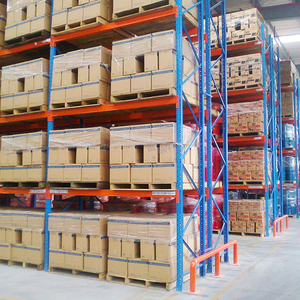
Precision Structural Catalog
Engineered Storage Systems Ready for Costa Rican Free Zones
Manufactured to rigid RMI ANSI MH16.1 and Código Sísmico de Costa Rica specifications. Explore our structural steel configurations designed for high-density warehouse throughput.
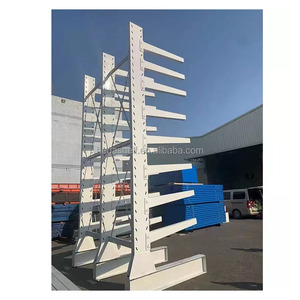
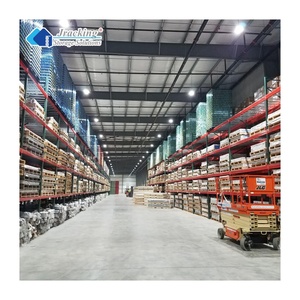
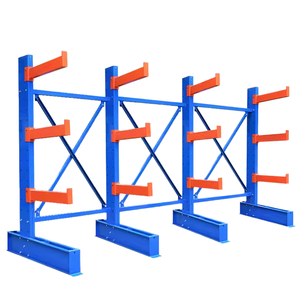
Galvanized Weather-Proof
Heavy Duty Galvanised External Adjustable Metal Cantilever Racks
Get CatalogEngineering High-Throughput Gravity Pallet Flow Racks for Costa Rican Logistics
As the primary logistics artery connecting the Atlantic and Pacific maritime shipping corridors through Puerto Caldera and Moín Container Terminal (APM Terminals), Costa Rica has evolved into a premier nearshoring and high-technology manufacturing epicentre. However, modern distribution operators face dual challenges: maximizing floor footprint utilization under escalating square-meter land values in the Gran Área Metropolitana (GAM) and mitigating extreme seismic accelerations dictated by the active fault zones of Central Costa Rica.
Flow-through racking factories engineered by our fabrication network are purpose-built to address these exact constraints. A pallet flow system, operating on a First-In, First-Out (FIFO) gravity-driven mechanism, utilizes slightly inclined roller lanes mounted within heavy-duty structural steel bays. Unlike standard selective teardrop racks that demand aisle spaces between every back-to-back run, flow-through racking collapses aisle requirements into two designated pathways: a dedicated replenishment/loading aisle at the charge side and an isolated retrieval/picking aisle at the discharge face.
Technical Operational Value: By segregating forklift loading paths from picking operations, gravity flow systems eliminate vehicular traffic congestion, reduce lift truck cycle times by up to 40%, and achieve 85% greater cubic volume saturation compared to standard roll-formed selective systems.
Dynamic Flow Mechanics: Separation, Speed Governors, and Braking Rollers
The operational core of an industrial gravity flow system lies in controlled dynamic inertia. In an unmonitored gravity lane, a 1,200 kg pallet rolling down a 30-meter lane would accumulate destructive kinetic force, resulting in violent impacts against the front stop beam, crushed pallets, and shattered merchandise. Our structural pallet flow configurations integrate centrifugal brake rollers engineered to maintain uniform pallet descent speeds between 0.25 m/s and 0.3 m/s, irrespective of weight disparities between full-capacity master loads and partial unit picks.
Furthermore, each flow lane is equipped with mechanical pallet separators. When a forklift operator approaches the discharge aisle to extract the lead pallet, the secondary pallet behind it exerts zero hydrostatic line pressure on the front pallet. The separator locks trailing loads in place until the front pallet is completely elevated and cleared, allowing single-operator extraction without load binding, tip-over risks, or pallet jamming.
CSCR Seismic Hardening
Engineered to resist dynamic moment forces and ground shear up to Zone 4 under the Código Sísmico de Costa Rica. Incorporates bolted 100% structural C-channel columns with multi-anchor baseplates.
Tropical Anti-Corrosion
Coated with multi-stage electrostatic thermoset polyester powders or hot-dip galvanizing to resist the 85%+ relative ambient humidity characteristic of coastal and Central Valley wet seasons.
Cleanroom & Cold Chain
Sanitary, non-shedding rollers and washdown-safe channel profiles built specifically for ISO Class 7/8 medical device cleanrooms and deep-freeze agricultural cold storage facilities.
Localized Engineering Applications Across Costa Rican Free Zones (Zonas Francas)
The strategic concentration of foreign direct investment in Costa Rica is centered across established industrial development zones such as Coyol Free Zone (Alajuela), Evolution Free Zone (Grecia), Bes Free Zone, and Global Park (Heredia). Each sector represents specific operational requirements that mandate custom rack configurations rather than off-the-shelf catalog racks:
1. Life Sciences & Precision Medical Manufacturing: As Costa Rica’s top export category, medical device operations (Class I, II, and III device assemblies) require high-density, validated FIFO lot control. Flow-through racking guarantees absolute batch trace isolation, eliminating expired component staging while complying with cleanroom particulate standards using closed structural shapes that prevent dust collection.
2. Perishable Produce & Cold Chain Logistics: Cold storage is a substantial capital and energy cost. In the refrigerated facilities handling agricultural exports (pineapples, bananas, and high-altitude specialty coffees), refrigeration costs per cubic meter are extreme. Flow through racking systems provide maximum density inside blast freezers and chilled buffer holding zones (-25°C to +4°C), eliminating unusable aisle air corridors and reducing thermal loss.
3. Fast-Moving Consumer Goods (FMCG) Distribution: Centralized distribution hubs serving retail chains throughout the San José metroplex utilize 4-to-8-deep pallet flow lanes to organize high-velocity consumer goods. The continuous gravity feed provides uninterrupted replenishment to case-picking tunnels beneath the upper structural levels.
| Storage Architecture | Space Efficiency | Inventory Rotation | Structural Impact Resistance | Seismic Reliability (Costa Rica) |
|---|---|---|---|---|
| Structural Pallet Flow (Gravity) | Maximum (85% Cube) | Strict FIFO (Separated Aisles) | Extremely High (Hot-Rolled Steel) | Engineered Base Anchors / CSCR Zone 4 |
| Push-Back Racking (Carts) | High (70% Cube) | LIFO (Single Aisle) | High (Nested Structural Carts) | Rigid Longitudinal Bracing Required |
| Roll-Formed Teardrop Rack | Moderate (45% Cube) | FIFO or LIFO | Low (Vulnerable to Forklift Impact) | High Column Deflection Risk Under Shake |
| Drive-In Structural Racking | Very High (75% Cube) | Strict LIFO (Last-In, First-Out) | Moderate (High Forklift Collision Risk) | Requires Heavy Cantilever Torsional Arms |
Macro Trends Reshaping Costa Rican Warehousing Architecture
Three dominant structural vectors are currently accelerating the transition toward flow-through racking factories and specialized heavy-duty installations across Costa Rica:
Nearshoring Expansion: Global multinational enterprises are shortening supply lines back to the Americas. The surge in nearshored industrial manufacturing has placed unprecedented demand on available warehouse real estate in the GAM corridor, pushing land leases higher and compelling developers to build higher vertical clear spans (up to 14–16 meters). High-bay structural gravity flow racks optimize this vertical envelope safely.
Strict Seismic Code Updates: The Colegio Federado de Ingenieros y de Arquitectos (CFIA) and the Costa Rican Seismic Code require rigorous structural calculation for non-building industrial installations. Thin-gauge roll-formed racking frequently fails permitting due to low torsional rigidity. Hot-rolled structural C-channel steel framing, with its heavy web and flange dimensions, easily delivers the ductile deformation capacity and base shear absorption needed to satisfy municipal safety permits.
Integration with Automated Guided Vehicles (AGVs) & Pick Modules: As automated forklifts and autonomous vehicles become common in Costa Rican distribution centers, floor tolerances and lane positioning must remain millimetrically stable. Gravity flow lanes provide predictable, static pick faces where autonomous equipment can continuously dock and retrieve loads without human intervention.
Proven Industrial Pedigree
Why Frazier Structural Racking Outperforms Standard Roll-Formed Metal
Over seven decades of hot-rolled structural steel excellence engineered to protect your capital investment, personnel, and daily operations.
75+ Years Engineering Heritage
Pioneering hot-rolled structural steel warehouse racking since 1949 with proprietary engineering algorithms, validated testing protocols, and over tens of thousands of global installations.
100% Structural C-Channel Steel
We do not use fragile open-back roll-formed teardrop profiles. Our structural channel uprights withstand intense forklift impacts that crumple lighter steel, substantially lowering lifetime maintenance costs.
Exclusive 2-Year Rack Damage Warranty
Industry-leading protection against daily material handling impacts. While standard manufacturers disclaim forklift contact, our bolted structural construction is backed by a 2-year damage replacement warranty.
Regional North American Production
With 10 advanced manufacturing facilities across the USA, Canada, and Mexico, projects in Costa Rica benefit from streamlined maritime freight routing via the Gulf and Pacific routes, cutting delivery lead times.
Full ASRS & Automation Synergy
Our in-house high-rise engineering division coordinates directly with international warehouse management software (WMS), crane systems, and shuttle manufacturers for turnkey integration.
Procurement Intelligence
Frequently Asked Questions: Purchasing Flow Racking in Costa Rica
Essential guidance covering customs, engineering validation, seismic calculations, and site installation requirements.
How does flow-through racking differ structurally from standard selective teardrop racking?
Flow-through (pallet flow) racking is a high-density dynamic storage system that operates via inclined gravity roller beds mounted within rigid structural steel frames. Pallets are charged (loaded) from the rear aisle and automatically glide down to the discharge (picking) face on heavy-duty steel rollers regulated by speed retarders. In contrast, standard selective teardrop racking requires dedicated access aisles between every two rows of racks, utilizing roll-formed sheet metal prone to twist deformation upon impact. Flow-through racking achieves up to 85% volumetric space utilization while guaranteeing strict First-In, First-Out (FIFO) stock rotation.
Can your engineering team certify compliance with the Código Sísmico de Costa Rica (CSCR)?
Yes. All structural rack calculations for installations in Costa Rica are conducted according to RMI ANSI MH16.1 specifications coordinated with the seismic zoning parameters (Zones 2, 3, and 4) outlined in the Código Sísmico de Costa Rica. We provide PE-stamped structural calculation packages detailing floor slab bearing pressure, anchor bolt shear forces, and frame ductility factors required by the CFIA (Colegio Federado de Ingenieros y de Arquitectos) and local municipal planning bodies for building permits.
What pallet specifications are required for reliable gravity flow operation?
Pallet quality is critical for smooth gravity flow. Systems can be engineered for standard wooden GMA (48" x 40") pallets, European wooden pallets (1200 x 800 mm), or hygienic plastic export pallets commonly used in pharmaceutical free zones. Key parameters include bottom runner continuity, bottom deck surface flatness, and maximum bottom board deflection under maximum design loads (up to 1,500 kg per pallet). For inconsistent or low-grade pallets, continuous full-width steel roller tracks or specialized pallet slave trays are incorporated into the design.
How are import customs and tax exemptions handled for operations in Costa Rican Free Trade Zones?
Companies registered under Costa Rica's Régimen de Zona Franca (Free Trade Zone Regime—Law 7210) administered by PROCOMER enjoy full exemptions from import duties, tariffs, and value-added tax (IVA) on capital equipment and industrial infrastructure. Our logistics documentation teams supply commercial invoices, certified packing lists, structural certificates of origin, and bill of lading (B/L) designations tailored for expedited customs clearance through either Puerto Caldera (Pacific) or Moín/Limón (Caribbean).
How does high ambient humidity affect roller bearings, and how is corrosion prevented?
Costa Rica exhibits tropical humid conditions with relative humidity often exceeding 80–90%. For non-climate-controlled warehouses or cold chain food packing plants, standard commercial steel rollers risk premature bearing seizure and oxidation. We utilize precision-machined rollers with sealed labyrinth stainless steel ball bearings and zinc-electroplated or hot-dip galvanized finishes. Uprights and horizontal load beams are pre-treated and coated with industrial-grade electrostatic powder coating formulated to pass 1,000-hour salt spray ASTM testing.
What minimum clear height and floor slab tolerances are needed to install flow through racks?
Flow-through systems typically require a minimum warehouse clear height of 6 meters for 3-tier configurations and can extend beyond 14 meters for multi-tier automated installations. Regarding floor slab capacity, dynamic racking transfers concentrated point loads through baseplates. Slabs must meet minimum concrete compressive strength ratings of 280 kg/cm² (4,000 PSI) with flatness tolerances complying with ASTM E1155 F-min 50 or higher to maintain true track inclination without lateral lane warping.
Ready to Engineer Your High-Density Facility in Costa Rica?
Submit your warehouse architectural drawings, pallet load profiles, and target throughput velocity. Our certified structural engineers will deliver a comprehensive 3D layout, seismic report, and budget quotation.
Get Catalog