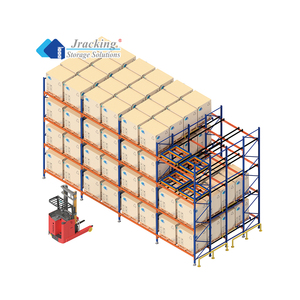
High-Performance Storage Equipment
Engineered Pallet Racking & Shuttle Subsystems
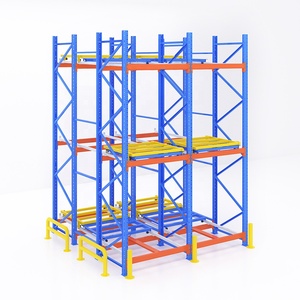
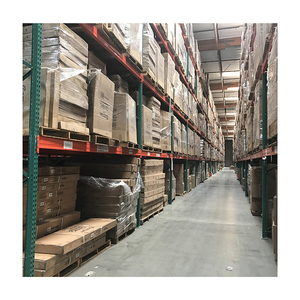
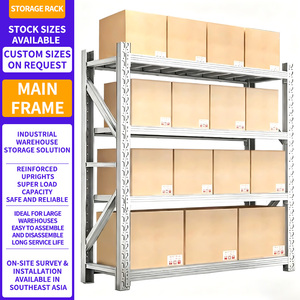
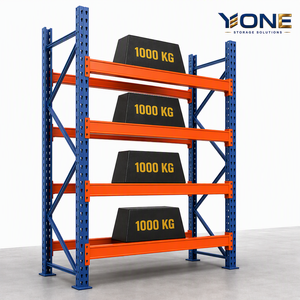
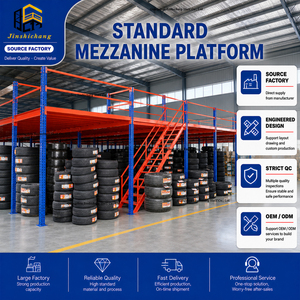
Manufactured from heavy structural channel and precision roll-formed alloy steel, designed to integrate seamlessly with automated shuttle carts, push-back mechanisms, and complex multi-tier platforms.
San Antonio Logistics & Intralogistics Whitepaper
Engineering Custom OEM Shuttle Racking for the South Texas Inland Port Corridor
An in-depth analysis of structural integrity, cold chain thermal efficiency, and high-density deep-lane material handling across the Greater San Antonio distribution ecosystem.
San Antonio, Texas, has cemented its status as one of North America's most critical inland logistics gateways. Situated squarely at the intersection of Interstate 35 (the primary trade artery between Central Mexico and the American Midwest) and Interstate 10 (linking the Port of Houston to the American Southwest and West Coast), Bexar County and its peripheral industrial zones—including Schertz, New Braunfels, Cibolo, and south to Elmendorf—demand industrial storage systems capable of handling rigorous, non-stop material throughput. In this punishing operating environment, ordinary commercial-grade teardrop racking routinely fails under operational fatigue. As enterprise supply chains face soaring industrial square footage lease rates, unpredictable labor costs, and surging regional cross-border commerce driven by USMCA nearshoring, warehouse operators are pivoting decisively toward custom OEM shuttle racking systems.
Engineering Insight: Pallet shuttle automation eliminates the need for forklifts to enter storage lanes. High-precision structural steel rails guide intelligent battery-powered carts deep into 20-to-50 pallet positions, increasing usable floor cubic capacity by up to 75% compared to selective racking and preventing devastating rack frame impacts.
Why OEM Shuttle Racking Outperforms Traditional High-Density Systems
For decades, warehouse managers seeking high density relied on traditional Drive-In or Push-Back racking systems. While these configurations increase volume, they introduce severe systemic operational bottlenecks. In a standard Drive-In rack, forklift operators must physically navigate deep into the narrow steel uprights. In fast-paced South Texas distribution centers, this results in continuous, inevitable mast collisions, upright deflection, sheared anchor bolts, and catastrophic structural failure risks. Furthermore, push-back carts are typically limited to 5 or 6 pallets deep due to gravity feed slope requirements and cart nesting height constraints.
Custom OEM Shuttle Racking completely revolutionizes this paradigm through semi-automated deep-lane material handling. By pairing ultra-rigid, hot-rolled structural steel upright frames with custom cold-rolled or laser-profiled shuttle guide rails, the forklift merely places the pallet onto the outer docking profile. A semi-autonomous, remote-controlled or WMS-integrated pallet shuttle vehicle lifts the pallet, accelerates smoothly down the steel tracks, and spots it precisely at the next available deep-lane index.
Key Structural Advantages for High-Volume Facilities:
1. Substantial Damage Mitigation: Forklifts remain in the main transfer aisle at all times. Since lift trucks never penetrate the internal rack structure, maintenance costs associated with forklift upright strikes are reduced by more than 90%.
2. Flexible FIFO and LIFO Optimization: Unlike drive-in racks that inherently lock operators into LIFO (Last-In, First-Out) operations, shuttle racks can be engineered for two-sided access, creating a true high-density FIFO (First-In, First-Out) flow indispensable for date-controlled pharmaceutical and food logistics.
3. Maximized Vertical and Cubic Footprint: Shuttle channels can reach heights exceeding 40 feet without compromising operator safety, allowing warehouses to take full advantage of San Antonio’s new Class-A 36-foot and 40-foot clear-height warehouse developments.
Strategic Localized Applications in Greater San Antonio
The implementation of custom OEM shuttle racking is not a one-size-fits-all undertaking; it is intrinsically linked to the macroeconomic and geographical profile of South Texas. Below are the primary industrial clusters throughout Bexar, Comal, and Guadalupe counties experiencing high-yield ROI from automated shuttle deployments:
Cross-Border Cold Storage (I-35 South)
Deep-lane shuttle racks drastically reduce the cubic volume that refrigeration units must cool. In sub-zero freezers along South San Antonio, reducing open aisles lowers power bills by up to 35% while protecting temperature integrity for fresh produce and meat imported via Laredo.
Automotive Tier-1 & Stamping (Southside)
Directly serving major automotive assembly plants in South San Antonio. Structural shuttle channels carry dense automotive components, stamped steel parts, and returnable dunnage with heavy load capacities exceeding 3,000 lbs per pallet position.
CPG, Grocery & Beverage Distribution
San Antonio serves as the retail consolidation hub for statewide supermarket and convenience chains. Shuttle channels allow staging of high-velocity SKU buffers, enabling complete trailer load staging in under 25 minutes with fewer lift trucks.
Localized Supply Chain Trends Reshaping San Antonio Industrial Real Estate
Three primary market dynamics are accelerating the adoption of custom shuttle racking systems across the Alamo City and the wider South Texas market:
1. Escalating Land Costs & Speculative Building Height: Historically, San Antonio enjoyed abundant, affordable industrial acreage. However, industrial absorption rates over the past decade have driven land costs to unprecedented heights. New logistics construction along I-10 East and the I-35 corridor is building upward rather than outward. Warehouses featuring 36’ to 40’ clear heights cannot be efficiently serviced by traditional forklift reach trucks without extreme safety margins. Shuttle racking provides the structural and mechanical stability required to build 5 to 7 tiers high safely.
2. The USMCA Nearshoring Wave: With multinational manufacturing shifting from East Asia to Northern Mexico (Monterrey, Saltillo, and Querétaro), freight crossing at Laredo, Eagle Pass, and Pharr must be deconsolidated, staged, and redistributed. San Antonio represents the first major inland dry-port capable of supporting regional distribution. Shuttle systems enable high-throughput cross-dock staging where pallets stay in high-density buffers for short cycles of 12 to 72 hours before being routed to Dallas-Fort Worth, Houston, or Atlanta.
3. Extreme Climate Resiliency & Thermal Management: South Texas summers consistently bring temperatures exceeding 100°F (38°C). Facilities storing pharmaceuticals, temperature-sensitive electronics, cosmetics, and packaged food must minimize heat gain. By maximizing storage density, shuttle systems minimize the overall building footprint, reducing the conditioned warehouse envelope, exterior wall surface exposure, and HVAC operating expenses.
Optimize Your San Antonio Warehouse Footprint
Speak directly with our heavy-duty racking structural engineers to calculate your cube utilization and calculate system ROI.
Enterprise Manufacturing & Wholesale Engineering Capabilities
When specifying an automated shuttle racking facility, wholesale distributors, 3PL developers, and material handling integrators require a manufacturing partner backed by decades of documented engineering rigor. Our manufacturing heritage dates back to 1949, pioneering structural steel racking systems that resist impact, withstand seismic forces, and operate dependably across heavy industrial cycles.
100% Hot-Rolled Structural Steel
We build our heavy-duty upright frames and load beams using hot-rolled channel steel, not flimsy sheet metal. This provides supreme structural rigidity, resilience to forklift impacts, and unmatched longevity in cold storage and high-cycle depots.
Direct OEM Customization
From proprietary shuttle track extrusions compatible with all major global shuttle cart brands to customized entry guides, pallet centering stoppers, and heavy-duty bollards, we manufacture to your exact millimeter specifications.
Rigorous ANSI MH16.1 & IBC Standards
Every shuttle racking project is fully engineered and stamped to comply with local San Antonio municipal building codes, seismic acceleration criteria, and Rack Manufacturers Institute (RMI) standards, guaranteeing rapid permitting approvals.
North American Production Proximity
With ten advanced manufacturing centers across the United States, Canada, and Mexico (including prominent operations in Escobedo and Mexicali), we provide San Antonio and South Texas operations with unmatched freight advantages. Regional plant distribution means drastically reduced freight lead times, immediate emergency replacement member availability, and competitive direct-from-factory wholesale pricing without intermediary markups.
San Antonio Procurement Guidance
Frequently Asked Questions on Shuttle Racking
Critical engineering, operational, and permitting questions answered for Bexar County warehouse executives and logistics engineers.
What makes shuttle racking preferable to drive-in racking for San Antonio cold storage facilities?
In cold storage and sub-zero freezer environments, forklift drivers entering drive-in racks experience visibility challenges due to windshield fogging, bulky thermal suits, and diminished operator reflexes. This results in frequent structural column strikes. Furthermore, opening aisles in sub-zero freezers dramatically increases electrical refrigeration loads. Shuttle racking keeps forklifts strictly in the exterior transfer aisle, cutting forklift-induced rack maintenance costs by up to 90%, speeding pallet cycle times by 40%, and condensing storage cubic space to slash commercial utility bills in hot South Texas climates.
Can your custom shuttle racks integrate with our existing third-party shuttle carts?
Yes. As an OEM manufacturer, our engineering team custom-fabricates shuttle running profiles, lead-in horns, docking tabs, and photoelectric sensor reflector brackets to match the exact dimensional and load requirements of all major shuttle vehicles (including Mole IQ®, Euro-pallet shuttles, 4-way shuttles, and custom robotic AGV carts). We coordinate rail tolerances down to millimeter precision to eliminate track binding or shuttle misalignment.
What building permits and seismic considerations are required in San Antonio and Bexar County?
Industrial storage racks exceeding 8 feet in height require building permits from the City of San Antonio Development Services Department (DSD) or Bexar County Public Works. While South Texas generally has lower seismic acceleration risk than the West Coast, racking must still adhere to International Building Code (IBC) regulations, ASCE 7 load criteria, and RMI ANSI MH16.1 specifications. Our in-house engineering team provides professional engineer (PE) stamped drawings, base plate calculation packages, and anchor bolt shear verifications tailored to your building’s concrete slab specifications (thickness and compressive PSI rating).
How does hot-rolled structural steel compare to roll-formed teardrop steel in high-throughput shuttle installations?
Roll-formed steel is manufactured by bending thin gauge sheet metal, creating open-back uprights vulnerable to twisting and severe impact buckling. Structural steel pallet racking is fabricated from hot-rolled structural channel members with solid steel flanges and bolted connections. In continuous 24/7 cross-dock and shuttle environments along the I-35 corridor, structural steel delivers superior impact resistance, higher weight capacities, and substantially lower lifetime total cost of ownership (TCO). In addition, our structural frames are backed by an industry-leading 2-year rack damage warranty.
What is the typical manufacturing and delivery lead time for wholesale orders to San Antonio?
Because we operate ten strategic manufacturing facilities across North America—including advanced production centers in Texas, the Mid-South, and Northern Mexico—we provide industry-leading logistics lead times. While imported overseas racks often face 16 to 24-week delays, customs holds at seaports, and exorbitant ocean freight costs, our regional plants can fabricate, coat, and deliver custom structural shuttle racking to San Antonio sites in a fraction of that time, supporting aggressive project schedules.
Ready to scale your San Antonio distribution center with high-density automated shuttle racking?
Contact Us