100%
Hot-Rolled Structural Steel Components
300%
Usable Warehouse Footprint Multiplier
2-Year
Comprehensive Rack Damage Warranty
RNC-07
Nicaraguan Seismic Code Compliant
Export Inventory Portfolio
Heavy-Duty Warehouse Storage Solutions Engineered for Export
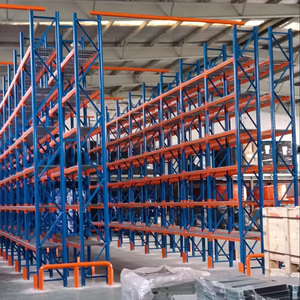
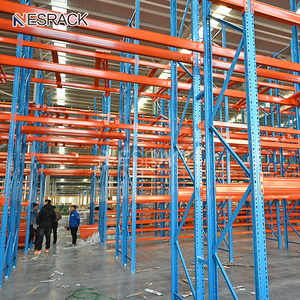
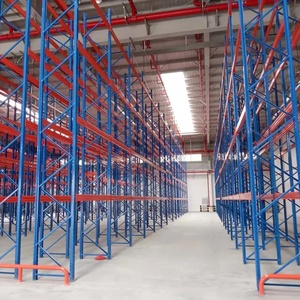
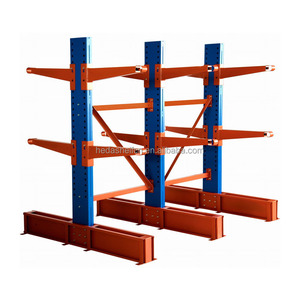
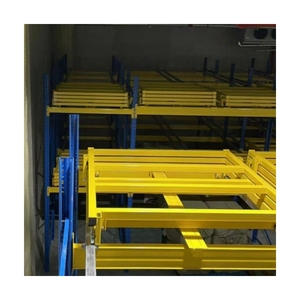
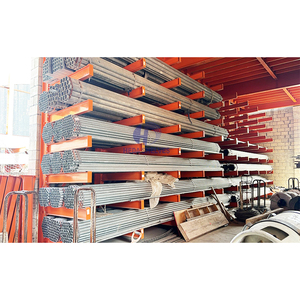
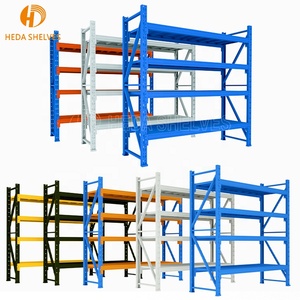
Each system is fabricated to international specifications (RMI ANSI MH16.1, ASTM A36) with modular flexibility to serve as independent racking or integrate directly as the load-bearing framework of rack-supported multi-tier platforms.
Engineering Whitepaper
Structural Channel vs. Roll-Formed Steel in Mezzanine Substructures
In logistics operations throughout the Department of Masaya and the surrounding Pacific industrial corridor of Nicaragua, warehouse operators face unique physical constraints: skyrocketing real estate acquisition costs, strict building footprint limitations, and rigorous seismic dynamics driven by the active volcanic chain of the Central America Volcanic Arc. Under these operational parameters, a Rack Supported Mezzanine (RSM) serves as a high-density structural asset that multiplies floor space without expanding the building exterior.
However, the longevity, safety, and load integrity of an elevated mezzanine system hinge entirely on the structural metallurgy of the upright frames. Conventional teardrop roll-formed racking, fabricated from light-gauge sheet steel (typically 12 to 16 gauge), relies on open-back, cold-rolled profiles with punched perforations along the front face. While roll-formed steel provides an appealing initial price point, its open geometry leaves it exceptionally susceptible to torsional buckling under eccentric floor loads and permanent structural failure from minor forklift impacts at lower levels.
Structural C-Channel Integrity
Fabricated using ASTM A36 / Q235B & Q355B hot-rolled structural steel channels. The solid, unpunched structural profile delivers up to 250% higher torsional rigidity and massive impact resistance compared to thin-gauge roll-formed uprights.
Bolted Frame-to-Beam Joints
Utilizing Grade 5 or Grade 8 high-tensile hardware with heavy structural gussets instead of friction-fit teardrop clips. This bolted connection eliminates accidental beam dislodgement under seismic vibration and localized uplift loads.
Lower Total Cost of Ownership
Field data over a 15-year operational lifecycle reveals that structural steel rack supported mezzanines reduce downtime and structural maintenance costs by over 68% in high-traffic distribution hubs where equipment collisions are inevitable.
In our OEM manufacturing facility, we engineer rack supported mezzanines using heavy-flange structural channels where the upright frames perform double duty: acting as conventional heavy-duty pallet racks on the ground level while simultaneously serving as high-strength primary columns transferring live floor loads, seismic shear, and dead weight from the upper decks directly into the engineered slab foundation.
| Engineering Criteria | Structural Hot-Rolled Channel Mezzanine | Conventional Roll-Formed (Teardrop) System | Compliance / Standard |
|---|---|---|---|
| Steel Member Material | ASTM A36 / Hot-Rolled Structural Channel | Cold-Rolled Light Gauge Coil (12–16 Ga.) | RMI ANSI MH16.1 |
| Front Column Impact Resistance | Extremely High (Channel Web > 5.0mm) | Low (Susceptible to irreversible creasing) | ASTM Impact Standard |
| Mezzanine Live Load Capacity | 500 kg/m² to 2,000+ kg/m² (Customizable) | 250 kg/m² to 500 kg/m² (Strictly limited) | IBC 2021 / ASCE 7-16 |
| Seismic Ductility Class | High Ductility (R=3 to R=4 Moment Frame) | Low Ductility (Brittle local buckling) | Nicaraguan RNC-07 / FEMA 460 |
| Beam-to-Column Attachment | Structural 2-Bolt to 4-Bolt Rigid Connection | Tabbed Snap-in Hook / Mechanical Pin | AISC 360-16 Bolted Specs |
| Decking Substructure Adaptability | Heavy B-Deck, Bar Grating, Concrete, Resin | Light Plywood, Particle Board, Wire Mesh | OSHA 1910.28 / EN ISO 14122 |
| Manufacturer Damage Warranty | 2-Year Rack Damage Warranty | Standard 1-Year (Excludes impact damage) | OEM Manufacturer Direct |
Regional Supply Chain Integration
Localized Application Scenarios Across Masaya & Western Nicaragua
Masaya serves as a critical strategic node within the Pacific macro-region of Nicaragua, situated directly between the national consumption capital of Managua and the agricultural/industrial output of Granada, Rivas, and Carazo. Bisected by National Highway 4 (Carretera a Masaya), the region is undergoing a massive transformation from traditional handicraft workshops to modern light-industrial assembly parks, agro-processing facilities, and regional fulfillment hubs.
Optimizing Masaya's Industrial Zonas Francas
In the industrial parks and Free Trade Zones (Zonas Francas) around Masaya, Nindirí, and T ラ-axis routes, ceiling heights in standard speculative industrial bays frequently reach 8.5 to 11 meters, yet floor storage is chronically underutilized with conventional single-tier floor racking. Our custom OEM rack supported mezzanines address these exact localized challenges:
- Textile & Apparel Operations: High-density fabric roll storage on lower structural pallet racks with elevated manual garment cutting, packing, and QA inspection decks above.
- Agro-Industrial Warehousing: Storing bagged green coffee beans, roasted consumer packaged coffee, honey barrels, and processed fruit products with distinct separation between raw pallets and export-ready palletization.
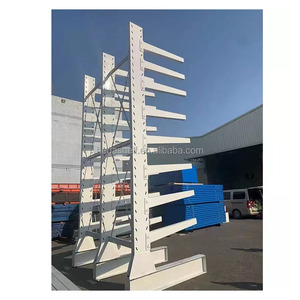
- Wholesale Construction Materials & Hardware: Combining heavy structural cantilever systems at ground level with second-tier long-span shelving for plumbing, electrical components, and industrial fasteners.
- Fast-Growing 3PL Logistics: Multi-tiered order-picking modules equipped with gravity flow lanes, pallet gates, and conveyor discharge spirals handling omnichannel e-commerce orders for the greater Managua metropolitan area.
Pacific Corridor Logistics Advantages
Deploying rack supported mezzanines across Masaya facilities shortens order turnaround times and streamlines freight consolidation before goods move outward through Puerto Corinto or overland across the Peñas Blancas border.
Port Access: Direct highway haulage to Puerto Corinto (~165 km) for export container stuffing.
Regional Hub: Immediate staging capacity serving retail stores throughout Masaya, Granada, and Southern Managua.
Seismic & Environmental Resilience
Seismic Engineering Under RNC-07 & Tropical Atmospheric Protection
Masaya lies directly within an active seismic zone characterized by complex fault networks associated with the Masaya Caldera and the subduction dynamics of the Cocos and Caribbean tectonic plates. Consequently, erecting an elevated storage mezzanine in this jurisdiction requires far more than rudimentary gravity load calculations. Uncertified mezzanine systems risk cataclysmic structural collapse under moderate ground accelerations if lateral drift and joint ductility are not rigorously modeled.
Our engineering team performs comprehensive finite element analysis (FEA) calibrated specifically to the Reglamento Nacional de Construcción (RNC-07) de Nicaragua and the American Society of Civil Engineers (ASCE 7-16 / RMI ANSI MH16.1) guidelines. We engineer our structures to withstand the high Peak Ground Acceleration (PGA) values typical of the Masaya department.
X-Braced Seismic Portals
Engineered diagonal and cross-bay structural steel bracing elements counteract horizontal torsional loads. Bracing configurations are customized to preserve forklift drive aisles and pallet drop zones without compromising lateral stiffness.
Heavy-Duty Baseplate Anchoring
Oversized structural footings featuring dual or quad Hilti/chemically set seismic anchors per post distribute intense moment forces into the reinforced concrete slab, preventing edge blowouts and foundation punch-through.
Volcanic & Humid Anti-Corrosion
Masaya's proximity to volcanic gases (sulfur dioxide) combined with tropical relative humidity (>80%) accelerates oxidation. We offer hot-dip galvanizing (ASTM A123) and high-build thermosetting epoxy powder coatings to prevent steel degradation.
Manufacturing Prowess & OEM Authority
Why Central American Enterprises Partner with Our Manufacturing Group
With more than 75 years of collective structural engineering lineage, our enterprise is not a trading intermediary. We are an integrated designer, manufacturer, and global exporter of high-integrity warehouse systems. Operating cutting-edge production facilities with scalable output, our export operations service industrial distributors, multinational logistics corporations, and large-scale manufacturing plants across North, Central, and South America.
Custom OEM/ODM Engineering
Every building layout is distinct. We customize bay widths, frame heights, beam profiles, mezzanine joist spacing, floor finishes, stairways, and automated pallet safety swing gates to match your specific SKU handling profile.
RMI & ISO Certified Fabrication
Strict structural steel material tracing, robotic welding, ultrasonic weld testing, and adherence to Rack Manufacturers Institute (RMI) standards ensure every component arriving at your job site matches specified engineering tolerances.
Export Crating & Freight Optimization
Components are precision-bundled, tagged, and packed into 40-foot High Cube (40HC) containers to maximize shipping density, eliminate maritime in-transit abrasion, and facilitate straightforward staging at job sites in Masaya.
Procurement Guidance & Due Diligence
Frequently Asked Questions by Industrial Buyers in Masaya
Direct answers addressing municipal permitting, structural engineering, sea freight logistics, and warehouse slab requirements.
How does a Rack Supported Mezzanine differ from a Structural Post-and-Beam Platform?
A structural post-and-beam mezzanine uses heavy wide-flange (I-beam) columns spaced at wide intervals (e.g., 6m to 8m), creating open floor space below. While versatile, it leaves the vertical space underneath empty unless separate racking is installed beneath it. In contrast, a Pallet Rack Supported Mezzanine (RSM) uses structural steel pallet rack frames themselves as the vertical support columns for the elevated mezzanine floor. This integrated approach saves substantial structural steel costs, cuts fabrication lead times, and allows simultaneous palletized storage below with open or shelf storage above, maximizing cubic efficiency.
Can our existing concrete warehouse slab support a multi-level rack supported mezzanine?
Most industrial warehouses in Masaya possess concrete slabs ranging between 150mm and 200mm in thickness, with compressive strengths of 210 kg/cm² to 280 kg/cm² (3,000 to 4,000 PSI). Our structural engineering team calculates point loads under each upright leg based on your maximum live load requirements (e.g., 500 kg/m² to 1,200 kg/m² on the deck plus pallet weights below). By utilizing custom-engineered, oversized baseplates, we distribute vertical loads over a broader slab area, preventing punching shear failure and avoiding costly slab saw-cutting or pier foundation pouring in the vast majority of retrofit installations.
How are container shipments handled from your factory to Masaya, Nicaragua?
We coordinate turnkey international ocean freight shipping directly to Puerto Corinto (Nicaragua's primary Pacific commercial port). From Puerto Corinto, containers travel via bonded commercial carriers along Highway NIC-12 and NIC-28 directly to your facility in Masaya. All steel structural members are labeled with alphanumeric identifiers matching our step-by-step CAD assembly drawings and bills of materials (BOM), ensuring rapid customs clearance under Central American Tariff System (SAC) codes and smooth job-site staging.
What flooring and decking options are best suited for tropical, volcanic environments?
For operations in Masaya, we offer three primary mezzanine decking surfaces tailored to specific handling profiles:
1. Heavy-Duty Bar Grating: Welded, serrated steel grating allows natural airflow, maximizes ambient lighting, and satisfies NFPA fire protection requirements by permitting sprinkler water to pass through to lower tiers without requiring in-rack sprinkler heads.
2. B-Deck with Anti-Slip Plywood/Resindek: Corrugated steel 20-gauge B-deck overlaid with high-density resin boards or tongue-and-groove structural composite panels. Ideal for manual hand-truck or order-picking cart operations.
3. Solid Diamond Steel Checkered Plate: Welded directly onto structural steel joists for heavy industrial assembly, tool rooms, or staging zones requiring extreme point-load durability and wash-down resistance.
What engineering documentation is provided to satisfy local Nicaraguan municipal permits?
Every OEM mezzanine project includes a comprehensive engineering design package. This contains full 2D layout drawings, 3D structural perspective renderings, detailed connection diagrams, and a comprehensive structural calculation book (Memoria de Cálculo) signed off by structural engineers. The design calculations detail dead loads, live loads, wind uplift (if partially enclosed), and seismic spectral accelerations matched to the seismic zone requirements of Masaya under RNC-07 regulations, ensuring seamless review by local municipal building inspectors and insurance underwriters.
What is covered under your 2-Year Rack Damage Warranty?
Unlike standard industrial equipment warranties that cover solely manufacturing weld defects, our 2-Year Rack Damage Warranty reflects our absolute confidence in hot-rolled structural steel channel durability. If an upright column or beam member sustains operational forklift damage that breaches safety tolerances during normal warehouse usage within the two-year period, we supply replacement structural components under our rapid warranty response program, minimizing logistical disruption.