Industrial Whitepaper & Strategic Sourcing Guide
Engineering Structural Integrity for Greater Vancouver’s High-Density Warehousing
Industrial warehousing across Metro Vancouver—encompassing Richmond, Delta, Surrey, Burnaby, and the Fraser Valley—faces a unique dual operational pressure: some of the highest industrial land lease rates in North America combined with stringent seismic engineering mandates governed by the British Columbia Building Code (BCBC) and CSA A344 / CSA S16 standards. For third-party logistics (3PL) providers, retail distributors, cold storage operators, and maritime import depots, maximizing vertical cube storage is no longer optional—it is a vital financial imperative.
Procuring industrial racking systems directly from China's premier structural fabrication centers bridges the critical gap between costly local capital equipment expenses and the uncompromising structural engineering demands of Pacific Northwest logistics hubs. By sourcing factory-direct structural channel members and cold-formed high-yield steel beams, Vancouver procurement directors achieve 30% to 45% capital expenditure reduction while receiving custom structural calculations stamped and sealed for municipal building permits across Lower Mainland jurisdictions.
Key Engineering Fact for Vancouver Buyers: Metro Vancouver resides within Canada's highest seismic hazard zone (Cascadia Subduction Zone). Standard off-the-shelf roll-formed teardrop uprights often fail Canadian racking ductility standards under dynamic seismic loading unless upgraded with oversized baseplates, heavy frame bracing, and certified structural steel channels. Our engineering division custom-calculates baseplate surface areas and seismic anchor bolt depths (Hilti/Simpson Strong-Tie specs) tailored to Richmond silt soils and Delta Deltaic sediments.
Localized Application Scenarios in British Columbia
From cross-docking import cargo near Port of Vancouver’s Roberts Bank to temperature-controlled cold chains along Highway 99, distinct operational conditions require bespoke structural profiles:
Port Import & Cross-Dock Hubs (Delta & Richmond)
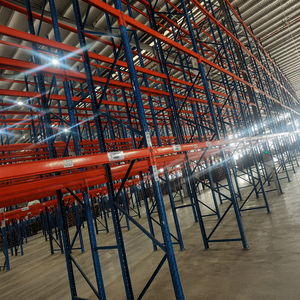
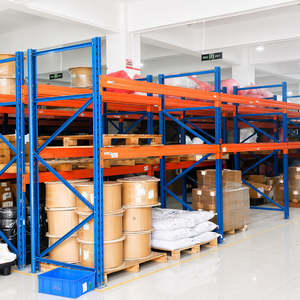
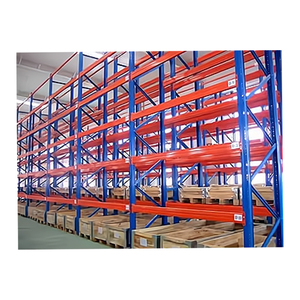
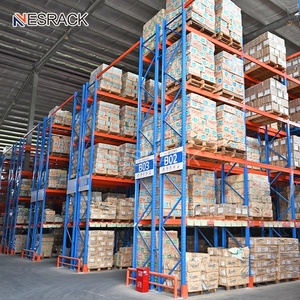
Handling heavy 40ft container de-stuffing requires robust selective racking with dynamic impact-absorbing column guards and reinforced front legs. Built to endure round-the-clock counterbalanced forklift cycling without structural fatigue.
Cold Chain & Seafood Freezers (Fraser River / Burnaby)
Freezer facilities operating down to -28°C require structural steel that prevents low-temperature embrittlement. Push-back and drive-in high-density racks maximize expensive chilled volume while hot-dip galvanized finishes prevent rust caused by condensation.
Building Supplies & Forestry (Surrey & Langley)
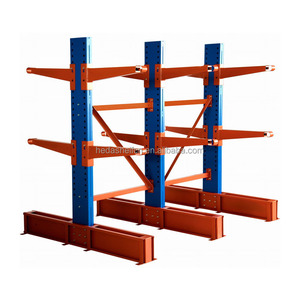
Long goods including B.C. timber, extruded PVC pipes, and aluminum sheets necessitate high-load cantilever racking systems. Engineered with tapered structural columns and bolt-on pivoting arms that yield under load to prevent structural frame deformation.
Engineering Specification Matrix: Structural Steel vs. Roll-Formed Teardrop
Choosing between structural steel channel sections and lightweight roll-formed teardrop profiles has profound implications on structural lifespan, impact resilience, and lifetime maintenance overhead in demanding operations:
| Evaluation Parameter |
China Structural Steel Channel Racks |
Standard Roll-Formed Teardrop |
Direct Operational Benefit in BC |
| Raw Material Formulation |
Hot-rolled structural C-channel (Q235B / Q355B / ASTM A36) |
Cold-rolled light gauge strip steel (14-16 Gauge) |
Yield strength up to 355 MPa; zero brittle failure in sub-zero freezers. |
| Forklift Impact Resistance |
Exceptional (High Torsional Rigidity) |
Moderate to Low (Prone to Buckling) |
Eliminates catastrophic column crumple in narrow-aisle Port operations. |
| BCBC Seismic Capacity |
Heavy ductile frames with bolted moment connections |
Requires expensive supplemental bracing |
Effortlessly complies with Lower Mainland high acceleration spectral response (Sa 0.2). |
| Corrosion & Humidity Protection |
Electrostatic thermoset powder (70-90µm) or Hot-Dip Galvanized |
Standard single-coat wet spray paint |
Resists coastal moisture and salt air typical in Delta & Richmond maritime docks. |
| Lifetime Maintenance Cost |
Minimal (Bolted members field-replaceable) |
High (Frequent upright replacements) |
Lowest Total Cost of Ownership (TCO) over a 20+ year facility service life. |
Future Logistics Trends Across the Lower Mainland Logistics Sector
The industrial landscape in southwest British Columbia is undergoing unprecedented transformation driven by land constraints and automation imperatives:
1. Vertical High-Bay and VNA Conversion: With industrial vacancy rates historically remaining below 3% across Greater Vancouver and prime land costs exceeding $4 million per acre in central submarkets, greenfield expansions are increasingly rare. Warehouse operators are converting conventional 24-foot clear height buildings into 36-to-40-foot Very Narrow Aisle (VNA) configurations. This requires high-rigidity structural uprights with zero frame deflection under dual-pallet loads.
2. Automation Integration & Shuttle-Ready Systems: Autonomous Mobile Robots (AMRs) and automated pallet shuttle systems are rapidly supplanting manual reach trucks. Modern racking must be fabricated with exact dimensional tolerances (within ±1.0mm per bay) to enable four-way shuttle tracks and Automated Storage and Retrieval System (ASRS) crane travel.
3. Direct-to-Port Supply Chain Acceleration: Vancouver's position as Canada’s primary Pacific gateway means supply chains can capitalize on direct maritime consolidation. Industrial racks manufactured in our automated Chinese facilities ship in standardized 40HQ ocean containers straight to Roberts Bank or Burrard Inlet, cutting intermediary distribution markups and landing directly at project sites in Burnaby, Richmond, or Surrey.