Technical White Paper & Sourcing Matrix
Optimizing Greater Philadelphia Warehousing: High-Density Structural Engineering Meets Factory-Direct Export Economics
The Greater Philadelphia logistics market—spanning southeastern Pennsylvania, Southern New Jersey, and Northern Delaware—has emerged as the vital inland interchange of the Northeastern US supply chain. With industrial vacancy hovering at historically low rates, logistics operators and cold-storage enterprises face soaring square-footage leasing rates across the I-95, I-76, and Pennsylvania Turnpike corridors. As an established high-capacity structural steel rack manufacturer and OEM/ODM exporter from China, we deliver high-performance pallet storage solutions designed specifically to withstand harsh material-handling environments while reducing capital expenditure by 28% to 42% compared to North American domestic suppliers.
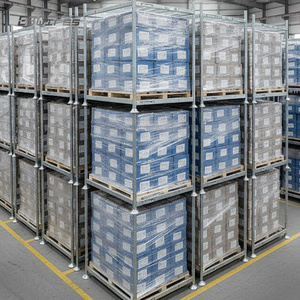
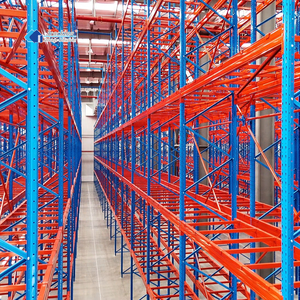
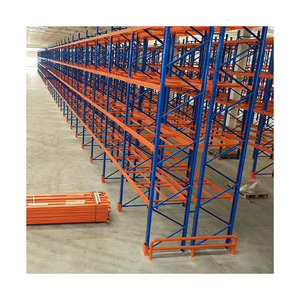
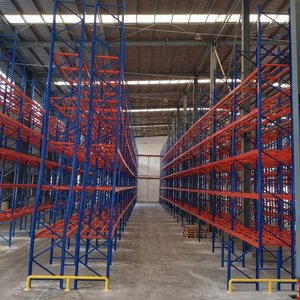
Delaware Valley Regional Application
Localized Engineering: Navigating Philadelphia’s Logistics Ecosystem
Designing warehouse storage systems for Philadelphia requires acute awareness of local zoning laws, ceiling height characteristics of legacy vs. modern facilities, seismic and soil classifications, and tight fire suppression integration under Philadelphia Fire Code & NFPA standards.
Port of Philadelphia (PhilaPort) Cold Chain Corridors
PhilaPort is the undisputed premier US gateway for imported perishable cargo, including South American winter fruit, fresh produce, meat, and European pharmaceuticals. Facilities located throughout South Philadelphia, the Food Distribution Center, and along Delaware Avenue demand heavy-duty structural steel racking engineered for blast-freezers (-20°F to -10°F). Structural hot-rolled steel channels outperform roll-formed teardrop profiles by resisting brittleness and severe forklift impacts common in high-tempo cold chain distribution.
Lehigh Valley & I-81/I-78 Industrial Core Extension
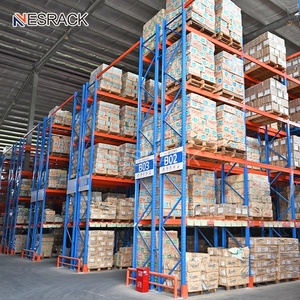
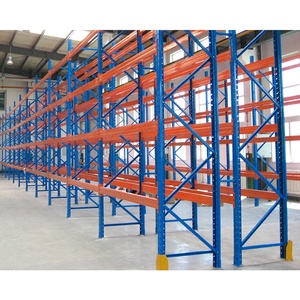
Logistics operators servicing the Philadelphia metro from Bethlehem, Allentown, and Reading manage sprawling automated fulfillment centers with 36-foot to 42-foot clear heights. We engineer high-bay selective, drive-in, and ASRS-ready pallet racking modules tailored for Narrow Aisle (VNA) turret trucks and automated shuttle vehicles, multiplying pallet position density without exceeding structural slab load tolerances.
Southern NJ & Bucks County Last-Mile Fulfillment
Secondary distribution hubs clustered in Bucks County, King of Prussia, and Camden/Pennsauken across the river often occupy retrofitted brownfield spaces with legacy 20-to-24-foot clear heights. For these footprints, our customized push-back and semi-automated pallet shuttle configurations turn low-cube limitations into high-density storage lanes, unlocking 50% more pallet slots over floor stacking.
Material Engineering
Structural Hot-Rolled Channel Steel vs. Roll-Formed Racking
When selecting racking systems for high-throughput Philadelphia fulfillment terminals, distribution engineers must balance initial purchase price against total lifecycle durability. Roll-formed (teardrop) racking utilizes thin-gauge sheet metal shaped through cold roll rollers; while light, it is acutely susceptible to catastrophic corner buckling when clipped by 9,000-lb forklifts.
Our structural steel storage lines utilize heavy hot-rolled C-channels built from virgin Q235B and Q355B structural steel grades. With solid, unpunched structural flanges, hot-rolled columns withstand up to 300% more torsional and shear impact before yielding, drastically curtailing warehouse downtime and rack replacement expenditures.
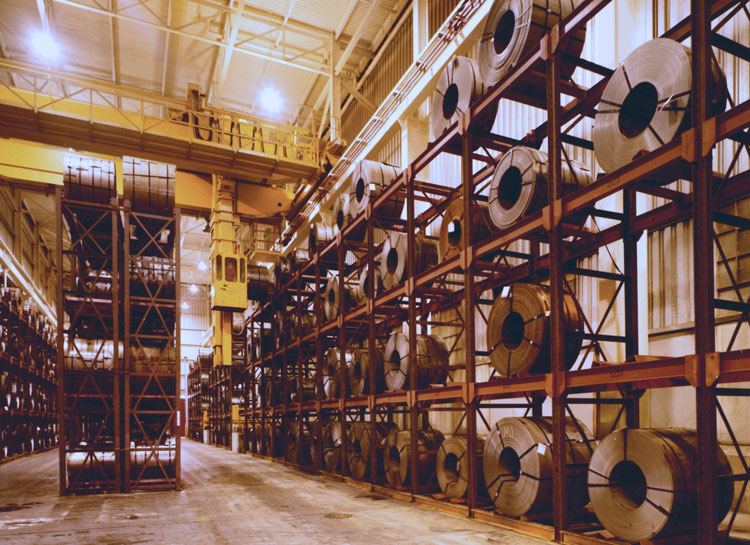
| Performance Metric | Structural Hot-Rolled Channel Rack | Lightweight Roll-Formed Rack | Impact on Philadelphia Operations |
|---|---|---|---|
| Steel Thickness & Spec | ASTM A36 / Q235B Channel (0.19" to 0.25"+) | 12 to 16 Gauge Sheet (0.059" to 0.105") | Prevents frame deformation in high-traffic 3PL hubs |
| Forklift Impact Resistance | Ultra-High (Solid structural channel flanges) | Moderate to Low (Open tubular roll edge) | Eliminates frequent upright replacements along busy transfer aisles |
| Sub-Zero Cold Storage Rating | Certified to -25°F without embrittlement risk | Prone to micro-fractures along punched slots | Essential for PhilaPort seafood and produce distribution |
| Seismic Code Compliance | RMI ANSI MH16.1 & IBC 2021 Engineered | Requires extra horizontal/diagonal bracing | Simplifies municipal permitting with Philadelphia L&I |
| Frame Connections | Grade 5 / Grade 8 Bolted Rigid Connections | Teardrop gravity pins / snap-in tabs | Ensures frame stability against seismic shear & cyclic loading |
Emerging Regional Trends
Trends Reshaping Delaware Valley Warehouse Material Handling
Modern supply chain dynamics in southeastern Pennsylvania are driving significant evolutions in warehouse physical design and industrial rack procurement.
Vertical Cube Maximization
With prime industrial land around King of Prussia, Bensalem, and Airport Industrial Park commanding high land premiums, new facility developers are building 40-foot clear-height spaces. Racking systems are engineered with heavy multi-tier splices to maximize vertical pallet positions without compromising lateral stiffness.
Cold-Chain Automation Surge
Delaware River port expansions have led to substantial investments in temperature-controlled facilities. Operators are moving away from manual reach trucks in freezers toward semi-automated 4-way pallet shuttle systems and automated ASRS cranes, requiring millimetric manufacturing tolerances on all rack beams and runner rails.
Stringent Fire & Flue Regulations
The Philadelphia Department of Licenses and Inspections (L&I) alongside commercial property insurers strictly enforce NFPA 13 pallet flue clearance standards. Every rack configuration we engineer includes welded transverse and longitudinal flue stops, ensuring mandatory 6-inch vertical chimneys remain unblocked by palleted freight.
Direct-from-Source Ex-Factory Sourcing
Rather than purchasing from traditional domestic distributor tiers with 30-50% markups, Mid-Atlantic procurement teams are establishing direct partnerships with large-scale Chinese steel fabricators capable of meeting US structural engineering codes, expediting delivery via ocean containers directly through PhilaPort and Port of Elizabeth.
Enterprise Manufacturing Advantage
Decades of Structural Engineering Excellence & Turnkey Export Execution
Engineered like heavy industrial infrastructure rather than lightweight warehouse fixtures. Backed by rigorous automated production, automated welding cells, and international certifications.
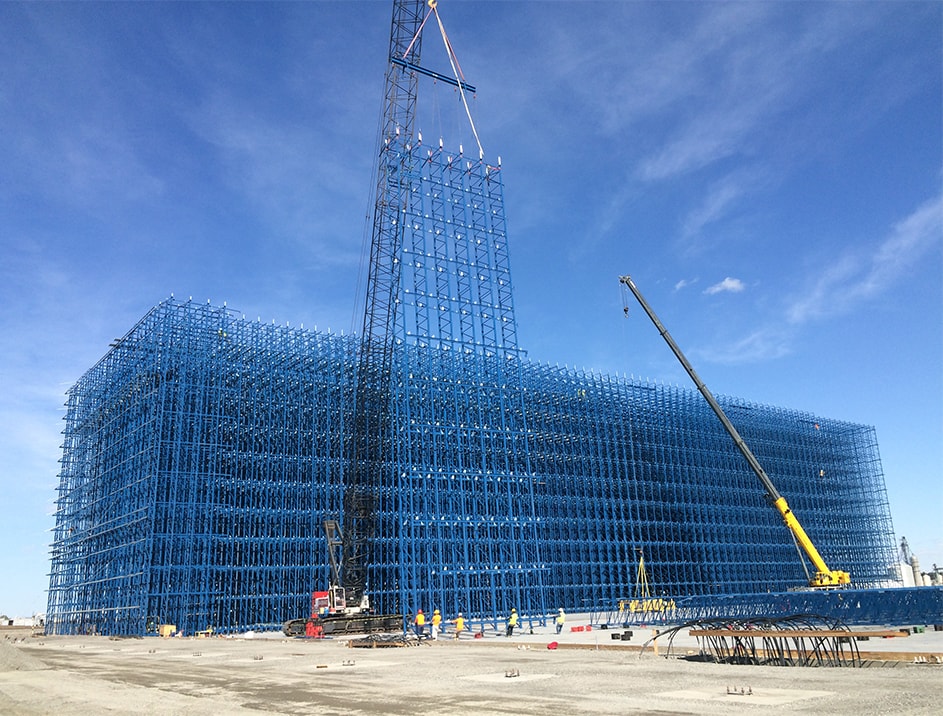
Comprehensive In-House Engineering & PE Stamping Support: Our specialized structural engineering division collaborates directly with North American engineering consultants and automation system integrators. We design and analyze every installation according to the Rack Manufacturers Institute (RMI) ANSI MH16.1 specification, seismic coefficients defined in ASCE 7, and building codes aligned with Pennsylvania Uniform Construction Code (UCC) requirements.
Advanced Production Lines & Precision Tolerances: With over 100,000 square meters of production facilities, our plants deploy automated CNC laser cutting, robotized continuous welding stations, and fully automated multi-stage shot-blasting and electrostatic powder-coating systems. This ensures unmatched surface adhesion, zero corrosion in refrigerated microclimates, and straightness tolerances compliant with high-bay ASRS cranes.
Complete Packaging & Ocean Logistics Management: We manage export crating, bundle-banding, container packing layout optimization, ocean freight booking directly to US East Coast ports, and custom clearance documentation. Containers can be routed through Packer Avenue Marine Terminal (PhilaPort) or Port Newark/Elizabeth, guaranteeing streamlined drayage straight to your jobsite.
Procurement Intelligence
Philadelphia Material Handling Buyer's FAQ
Critical answers to questions surrounding engineering compliance, permits, customs, and installation logistics in the Delaware Valley.
Are Chinese-manufactured pallet racks compliant with Philadelphia Building Code & RMI standards? +
Yes. All of our industrial racking systems exported to the US market are engineered strictly compliant with RMI (Rack Manufacturers Institute) Specification ANSI MH16.1, as well as the International Building Code (IBC 2018/2021) adopted under the Pennsylvania Uniform Construction Code (UCC). We routinely provide structural calculation packages, steel mill certs, and can arrange for third-party licensed Pennsylvania Professional Engineer (PE) stamped review drawings for municipal permit approval with the City of Philadelphia Department of Licenses and Inspections (L&I).
What are the freight lead times and best shipping routes to the Philadelphia metro? +
Production lead time for standard containers typically ranges between 3 to 4 weeks depending on order volume and custom finishes. Ocean transit to East Coast marine hubs takes approximately 24 to 28 days via all-water routes to PhilaPort (Packer Avenue Marine Terminal) or the Port of New York & New Jersey (Maher/APM terminals). From there, local drayage to regional logistics parks across Philadelphia, Southern New Jersey, and the Lehigh Valley requires only 1 to 2 business days.
How do you handle fire sprinkler and flue spacing regulations for high-density storage? +
NFPA 13 and local Philadelphia Fire Marshals mandate specific longitudinal and transverse flue clearances (usually 3" to 6" open space between pallet loads) to allow ceiling ESFR sprinklers to penetrate stack fires. We engineer physical pallet stop brackets, snap-in back-to-back ties, and wire mesh decks to structurally prevent forklift operators from pushing pallets into required flue corridors, guaranteeing safe, permit-ready facility operation.
Can structural channel rack withstand humid summer dock operations and freezer transitions in Delaware Valley? +
Yes. Philadelphia experiences high ambient humidity in summer and freezing temperatures in winter. Rapid temperature variations cause condensation along storage frames. Our structural steel systems undergo chemical cleaning, shot-blasting to Sa 2.5 purity, and high-adhesion thermosetting epoxy-polyester powder-coating baked at 200°C. For extreme freezer conditions down to -25°F or wet wash-down zones, we supply hot-dip galvanized structural profiles that resist corrosion indefinitely.
How does the total procurement cost compare to domestic US manufacturers like Frazier or Interlake? +
While domestic US structural racking typically carries higher production labor costs and distribution markups, our direct-from-source manufacturing model yields total delivered savings between 25% and 40%—even after accounting for international ocean freight, Section 301 tariffs, and port handling. Furthermore, our flexible production scheduling allows rapid customization of upright profiles, footplates, and beam lengths without domestic custom-shop surcharges.
Plan Your Greater Philadelphia Warehouse Racking Project with Direct Factory Engineering
Whether you are expanding a cold-storage distribution hub in South Philadelphia, retrofitting an e-commerce fulfillment site in Bucks County, or designing an automated high-bay facility in the Lehigh Valley, our structural engineering team is ready to analyze your load data and supply competitive turnkey proposals.
Get a Quote