Engineered Racking Systems for Automotive Industrial Facilities
From dense stamping die storage in Marysville-adjacent manufacturing corridors to high-velocity Just-In-Sequence (JIS) line-side delivery hubs near Rickenbacker International Airport, explore certified heavy-duty storage configurations ready for deployment.
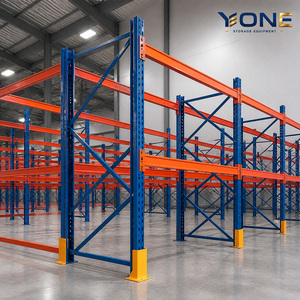
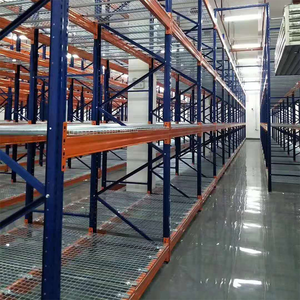
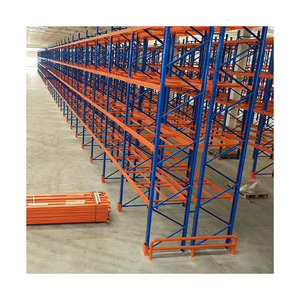
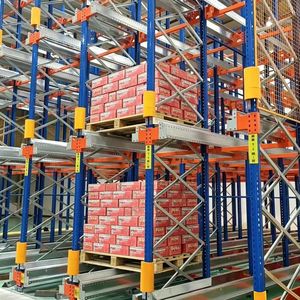
The Columbus Automotive Nexus & Storage Engineering Dynamics
The Columbus Region in Central Ohio represents one of North America's most critical manufacturing and automotive logistics crossroads. Encompassing Franklin, Union, Delaware, Fairfield, Madison, and Licking counties, this industrial cluster sits within a 10-hour drive of 46% of the U.S. population and nearly half of its manufacturing production. With historic anchor original equipment manufacturers (OEMs) in Marysville and East Liberty, alongside modern multi-billion-dollar electric vehicle (EV) battery manufacturing investments along the Route 33 Smart Mobility Corridor, warehouse reliability is synonymous with assembly line uptime.
In modern automotive operations, warehouse storage systems are structural assets integrated into production execution systems (MES). Stamping presses, automated guided vehicles (AGVs), robotic de-palletizing cells, and high-frequency tugger trains interact continually with racking infrastructure. Storage failure, bay deflection exceeding strict tolerances, or localized upright shearing instantly cascades into line-down situations at the vehicle assembly plant—incurring downtime costs that routinely exceed $22,000 to $50,000 per minute.
As Columbus expands its multi-modal freight network through Rickenbacker International Airport (LCK), CSX, and Norfolk Southern intermodal terminals, automotive exporters and Tier-1 suppliers require racking configurations that reconcile dense cubic storage with zero-latency selectivity. Material handling engineers must design upright frames, beam profiles, and row spacers according to Rack Manufacturers Institute (RMI) ANSI MH16.1 specifications, accounting for heavy, non-standard unit loads including engine cradles, body-in-white (BIW) stamping dies, battery chemistry modules, and knock-down (CKD) export crates.
Structural Channel vs. Roll-Formed Steel in Tier-1 Automotive Environments
When engineering high-density storage for automotive operations, procurement authorities frequently face the initial capital cost comparison between standard roll-formed (teardrop) racking and hot-rolled structural steel channel racking. In high-traffic automotive facilities where material handlers operate Class 1, 2, and 4 forklifts on 3-shift production cycles, roll-formed rack systems often demonstrate an unsustainable Total Cost of Ownership (TCO).
Roll-formed columns are cold-shaped from light-gauge sheet coil (typically 12 to 14 gauge, roughly 0.074" to 0.104" wall thickness) with open rear faces and repetitive keyhole punchouts that induce high localized stress concentrations. When a 9,000-lb capacity sit-down forklift carrying an automotive engine block contacts an open roll-formed column corner, the kinetic energy instantly exceeds the yield point of the metal, crimping the flange and requiring immediate structural unloading.
| Structural Parameter | Structural Steel Channel (Hot-Rolled) | Roll-Formed Steel (Teardrop Cold-Formed) | Automotive Operational Advantage |
|---|---|---|---|
| Steel Grade & Yield Strength | ASTM A36 / Q235B (min. 36,000 to 50,000 PSI) | Commercial Light Sheet (40,000–55,000 PSI) | Uniform structural ductility prevents brittle fracture |
| Flange / Column Thickness | 3/16" to 5/16" solid structural hot-rolled flange | 0.074" – 0.104" (12 to 14-gauge) light profile | Over 250% more steel mass at critical impact zones |
| Impact Kinetic Absorption | High corner radius with solid C-channel geometry | Open-back tubular or sigma shape; prone to twisting | Absorbs heavy forklift collisions without bay failure |
| Connection Architecture | Heavy Grade-5 / Grade-8 structural bolted connections | Snap-in friction pins / teardrop lug slots | Zero dislodgement risk under dynamic load shocks |
| Torsional Resistance | Rigid structural steel channel bracing welded all-round | Stitched or lightweight riveted round tubing | Prevents frame wracking under uneven automotive loads |
| Life Expectancy in 3-Shift Plant | 25–40+ years with modular replaceable components | 3–7 years prior to major frame patching/replacement | Lower overall lifecycle capital expense for Columbus hubs |
Structural hot-rolled steel channels (such as C3x4.1, C4x5.4, or heavy C5 structural upright sections) feature solid corners, uniform metallurgical properties, and heavy bolted beam connections. Bolted connections eliminate the risk of accidental beam dislodgement caused by upward operator lifting errors. Furthermore, structural steel maintains full yield ductility under freezing temperatures, making it the premier choice for automotive climatic test chambers, chemical paint warehouses, and unheated cross-dock staging bays.
Specialized Automotive Racking Implementations
Automotive parts are rarely uniform standard pallets. Racking systems deployed across Central Ohio logistics corridors must accommodate asymmetrical centers of gravity, extreme concentrated weights, and delicate Class-A exterior surface protection requirements.
Stamping Die & Tooling Storage
Metal stamping dies for door panels, quarter panels, and subframes weigh from 8,000 to over 35,000 lbs per tool. These point-loads demand heavy structural steel channel beams with welded interior web stiffeners, thick steel cover plates, and heavy floor-anchored baseplates designed to spread concentrated soil-bearing loads across concrete slabs.
EV Battery Pack Buffers
Lithium-ion battery packs require purpose-engineered structural storage. Racks must integrate thermal runaway mitigation channels, dry-pipe in-rack sprinkler drops at every pallet tier per NFPA 855 / FM Global guidelines, and heavy capacity limits (1,500–2,500 lbs per battery) with precision pallet centering guides.
JIT / JIS Dynamic Sequencing Flow
To supply Marysville assembly lines every 52 seconds, suppliers utilize structural pallet flow lanes and multi-deep radio shuttle systems. Gravity-driven rollers with dynamic magnetic speed controllers advance engine blocks and instrument panel carriers smoothly to the picking face under strict FIFO rotation.
Cantilever Racks for Long-Stock Profiles
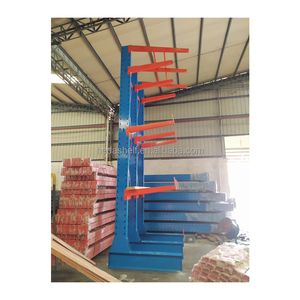
Structural cantilever configurations support automotive exhaust systems, hydroformed frame rails, extruded aluminum cross-members, and raw tube bundles. With free-standing column heights reaching 30 feet and unencumbered front access, continuous arms handle varied profile lengths without damage to finished parts.
ASRS Precision High-Bay Racking
In Columbus automated distribution centers, structural racks interface with automated crane masts and automated shuttles. Tighter manufacturing tolerances (less than 1/8" total plumb variance across 80 vertical feet) guarantee that high-speed optical scanners and load inserters operate without mechanical snagging.
North American Engineering Footprint & Technical Capabilities
Reliable supply chains require manufacturing capacity that eliminates international shipping bottlenecks and geopolitical tariff uncertainties. Built on over 75 years of structural steel racking design since 1949, our integrated manufacturing and engineering network spans ten dedicated production facilities across the United States, Canada, and Mexico.
Every automotive racking order designed for Central Ohio is detailed by in-house structural engineers licensed in the State of Ohio. Our production leverages 100% hot-rolled structural steel, certified mill test reports (MTRs), state-of-the-art robotic welding cells, and automated multi-stage powder coat or hot-dip galvanized finishing. This multi-plant geographic redundancy guarantees that whether you are fitting out a 1.2-million-square-foot logistics campus in Groveport or expanding a stamping line in Union County, structural components arrive on job sites on scheduled sequencing flatbeds.
Frequently Asked Questions for Columbus Warehouse Engineers
Material handling project directors, facilities teams, and industrial warehouse developers in Franklin, Union, and Madison counties regularly address specific regional considerations during procurement.
What building codes and seismic criteria govern pallet rack permitting in Columbus and Franklin County? +
How does structural channel racking protect against heavy forklift impacts compared to roll-formed? +
Can these systems be customized for automated electric vehicle (EV) battery pack staging? +
What lead times can Columbus automotive suppliers expect for large-scale distribution projects? +
How does the 2-Year Rack Damage Warranty function in practice? +
Do you offer turnkey engineering, layout design, and municipal permitting support? +
Accelerate Your Columbus Automotive Facility Planning
Connect with our structural engineering team to review site plans, calculate slab load distributions, or configure heavy-duty stamping die, EV battery, or automated high-density shuttle storage systems.