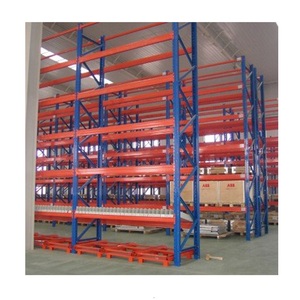
Enterprise Product Inventory
Industrial Grade Pallet Racking Storage Systems
Direct-from-factory wholesale storage equipment designed for extreme load cycles, automated material handling, and rigorous cold-chain conditions.
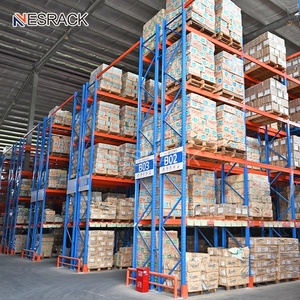
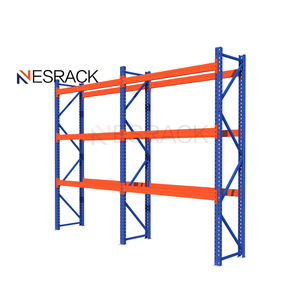
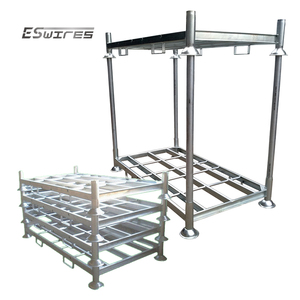
Stacking & Boltless
Industrial Steel Heavy Duty Corrosion Protection Stacking Shelving Pallet Rack
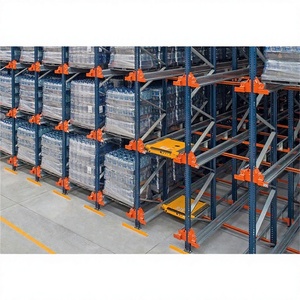
Cold Chain Solutions
Customization Detachable Forklift Movable Post Pallet Rack for Cold Warehouse
High Capacity Steel
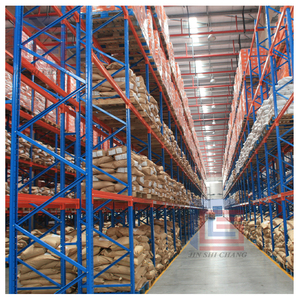
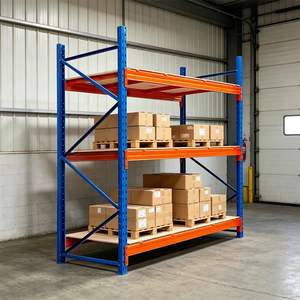
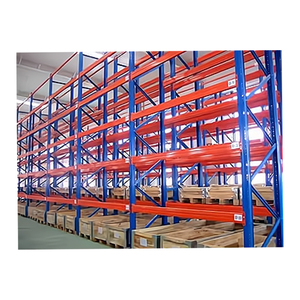
High Capacity Metal Steel Racks Heavy Duty Racking Warehouse Storage System
Enterprise Operational Scale
Engineered Structural Reliability for Modern Distribution
Integrating 75+ years of precision engineering heritage with scalable production footprints across North America and international supply chains.
75+
Years Engineering Pedigree (Since 1949)
100%
Certified Structural Steel Integrity
10
Regional Manufacturing Facilities (US, CA, MX)
2-Year
Comprehensive Impact & Rack Damage Warranty
Hot-Rolled Structural Channel
Fabricated from mill-certified C-channels with thick corners and closed lips, delivering 250% higher torsional rigidity and exceptional forklift collision resistance over roll-formed sheet steel.
Bolted Hybrid Framing
Eliminates dislodgement hazards common to teardrop clip connections. High-strength Grade 5 bolted hardware allows fast component replacement without total bay discharge or frame structural compromise.
Precision ASRS & Shuttle Tolerances
Engineered to sub-millimeter tolerances required by automated crane rails, four-way radio shuttles, and autonomous mobile robots (AMRs), preventing tracking deviations under live capacity loads.
Engineering White Paper
Structural Steel vs. Roll-Formed Pallet Racking: Total Cost of Ownership (TCO)
In industrial supply chain management, procurement decisions often hinge prematurely on initial capital expenditure (CapEx). Light-gauge cold roll-formed teardrop systems present lower upfront purchase prices. However, in modern high-throughput distribution hubs handling thousands of pallet moves daily, material handling equipment (MHE) collisions are statistically inevitable. When a standard 0.075-inch-thick roll-formed upright sustains a lateral impact from a 9,000-pound loaded counterbalanced forklift, the open-back profile suffers structural buckling, necessitating bay de-loading and complete frame replacement.
Conversely, structural steel pallet racking is engineered from heavy-duty ASTM A36 hot-rolled structural steel C-channels. Featuring solid webs up to 0.30 inches thick and heavy-gauge bolted bracing, structural frames withstand catastrophic impacts that crumple tubular or roll-formed competitors. Over a standard 10-year operational lifecycle, facilities utilizing hot-rolled structural framing experience up to 72% lower maintenance, repair, and operational downtime expenditures, achieving an unmatched Total Cost of Ownership (TCO) in cold storage, manufacturing, and high-velocity 3PL environments.
| System Architecture | Storage Density | Pallet Selectivity | Inventory Logic | Impact Resistance | Primary Industrial Use-Case |
|---|---|---|---|---|---|
| Sentinel® Selective Rack | Baseline (Standard) | 100% (Direct Access) | FIFO / LIFO Variable | Extreme (Structural) | High-SKU E-commerce, 3PL Fulfillment, Retail DCs |
| Glide-In® Push Back Rack | High (2-6 Deep) | Lane-Selective | LIFO (Last-In, First-Out) | High Channel Durability | Grocery Wholesale, Beverage Cold Storage, Cross-Docking |
| Drive-In / Drive-Through | Ultra-High | Low (Bay Dedicated) | LIFO (Drive-In) / FIFO (Drive-Thru) | Heavy Channel Guarded | Bulk Raw Materials, Agricultural Cold Storage, Freezers |
| Pallet Flow (Gravity Feed) | Ultra-High (Deep Lane) | Aisle-Face Optimized | Strict FIFO (First-In, First-Out) | Heavy-Duty Roller Bed | Date-Sensitive Food & Beverage, Pharmaceuticals |
| Radio Shuttle & ASRS | Maximum Vertical & Cube | Automated Dynamic | Software Managed (WCS/WMS) | Precision Engineered | Lights-Out Warehouses, Cold Vaults, 24/7 Mega Hubs |
| Rack Supported Buildings | Absolute Volumetric Max | Fully Automated Integration | Integrated Automation | Integrated Building Frame | Greenfield Distribution Infrastructure, Rapid Depreciating Assets |
Strategic Forecasting
Future Trends in Pallet Racking Procurement & Engineering
How material science, industrial robotics, nearshoring, and micro-fulfillment are reshaping industrial warehouse racking investments.
High-Bay Volumetric Densification
With industrial land costs and regional lease rates hitting historic peaks, enterprise supply chains are moving away from sprawling horizontal layouts. Procurement is shifting towards 40-foot to 130-foot vertical clear heights via automated high-bay racking and Rack Supported Structures that double cube capacity without increasing building footprint.
Extreme Cold-Vault Resilience
Biopharmaceutical requirements and booming frozen food e-commerce demand specialized metallurgy. Micro-alloyed structural steels treated with hot-dip galvanization and low-temperature epoxy powder coatings prevent embrittlement down to -30°C (-22°F), avoiding micro-fissures caused by rapid thermal cycling.
AMR & 4-Way Shuttle Native Racking
Traditional forklift aisles consume up to 60% of warehouse floor space. Modern specifications mandate deep-lane shuttle tracks and robotic picking interfaces. Structural frames are engineered with tight deflections (<1/500th of beam length) to support autonomous robotic fleets traversing multi-tier rail grids.
Seismic & ESG Procurement Standards
Supply chain governance now demands rigorous compliance with International Building Code (IBC) seismic design categories (D, E, F) and RMI ANSI MH16.1 specifications. Simultaneously, Fortune 500 ESG mandates favor 100% recyclable structural steel with EPD (Environmental Product Declaration) lifecycle certifications.
Enterprise Manufacturing Capabilities
Single-Source Factory Precision & North American Distribution
As an industry-leading industrial storage manufacturer, our operational infrastructure eliminates intermediary wholesale markup, reduces transpacific shipping vulnerabilities, and guarantees end-to-end engineering accountability. Operating 10 high-capacity manufacturing centers across the United States, Canada, and Mexico, we provide agile production, localized freight routing, and seamless project execution.
Full In-House Engineering & PE Stamping
Our dedicated engineering division includes standard structural designers, ASRS automation integration specialists, and licensed Professional Engineers (PE) registered across all 50 U.S. states and Canadian provinces. We supply certified slab calculation packages, seismic anchor analysis, and complete permitting support.
Multi-Facility Regional Production
With advanced fabrication plants in Long Valley (NJ HQ), Milton (PA), Waterloo (NY), Lamar (SC), Dyersburg (TN), Idaho Falls (ID), Trenton (Ontario, Canada), and Escobedo/Mexicali (Mexico), our distributed footprint cuts inter-state freight transit times and minimizes carbon impact.
Industry-Leading 2-Year Damage Warranty
Unlike standard roll-formed manufacturers who void warranties upon any equipment collision, our structural steel storage systems carry an industry-exclusive 2-year rack damage warranty. Bolted, hot-rolled steel channel designs allow economical segment repairs without compromising system structural capacity.
Consult With Our Senior Warehouse Solutions Engineers
Provide your building dimensions, clear height, forklift fleet models, and pallet SKU profiles for a comprehensive CAD layout and structural quotation.
Technical FAQ
Industrial Pallet Racking Procurement Questions Answered
Key engineering, code compliance, load capacity, and lifecycle queries addressed by senior storage systems engineers.
What fundamentally distinguishes hot-rolled structural steel racking from standard roll-formed racking?
Hot-rolled structural steel racking is manufactured using heavy-gauge ASTM A36 structural C-channels with solid flat flanges and thick webs (up to 0.30" steel thickness), fastened using heavy-duty Grade 5 structural bolts. Roll-formed racking is cold-shaped from light-gauge sheet steel (typically 12-gauge to 16-gauge) into open-back, tubular, or slotted profiles using friction-fit teardrop clips. Hot-rolled structural steel delivers over twice the impact strength, cannot be accidentally dislodged by forklifts, and provides vastly superior torsional resistance in heavy-load, high-traffic distribution hubs and cold storage environments.
What specific data parameters are required to generate an engineered warehouse racking layout?
To produce an OSHA and RMI-compliant architectural CAD layout and structural calculation package, our engineering team requires: (1) Architectural drawings indicating clear ceiling heights, building column grids, and egress doors; (2) Concrete slab thickness, compressive strength (PSI), and sub-base compaction; (3) Pallet specifications (width, depth, height, overhang) and maximum loaded weights; (4) Material Handling Equipment (MHE) specs including forklift lift height, right-angle stack turning radius, and outrigger dimensions; and (5) Facility geographic location to calculate site-specific seismic and wind loads per ASCE 7 and IBC codes.
Can our racking systems be certified for high-risk seismic zones?
Yes. All structural storage systems are fully engineered to comply with the Rack Manufacturers Institute (RMI) ANSI MH16.1 specification and local building codes across North America (including California Seismic Categories D, E, and F, and Canada's National Building Code). We calculate baseplate dimensions, anchor bolt diameters, weld stress distributions, and post-yield ductility to guarantee life-safety performance during seismic accelerations. Certified PE-stamped drawing packages are provided for municipal permitting.
How does a Rack Supported Building compare financially to conventional warehouse construction?
In a Rack Supported Structure, the structural racking framework serves as the primary load-bearing structural support for the facility’s exterior wall cladding and roof, completely eliminating the need for independent structural building columns. This design approach achieves three major advantages: (1) Optimized Volumetric Density: Eliminates column interference, allowing total storage cube utilization up to 130+ feet; (2) Accelerated Construction Schedules: Racking erection and building envelope installation occur concurrently, compressing build times by up to 25%; and (3) Accelerated Tax Depreciation: In many jurisdictions, rack-supported structures qualify as capital equipment rather than commercial real estate, enabling accelerated write-offs and superior return on capital.
What protective finishes are recommended for sub-zero food and cold storage operations?
For sub-zero freezers and ambient food warehouses subject to washdowns, condensation, and sanitation chemicals, we offer hot-dip galvanization per ASTM A123, which provides a metallurgically bonded zinc layer that is self-healing against abrasion. For dry cold storage down to -20°F, high-solids thermoset polyester or epoxy powder coatings applied over iron-phosphate-pretreated steel offer exceptional chip resistance, low-temperature flexibility, and a non-porous finish that prevents bacterial harborages.
How do automated radio shuttles integrate with existing structural racking footprints?
Our structural high-density frames can be precision-equipped with heavy-duty cold-rolled shuttle running rails, pallet centering guides, and dynamic safety stops. Automated radio shuttles (both 2-way and 4-way systems) navigate beneath pallet lanes, controlled via Wi-Fi/RF terminals from the forklift or centrally coordinated by Warehouse Execution Systems (WES). This increases storage capacity by up to 80% compared to standard selective racks by eliminating interior lift truck access aisles.