Engineered Equipment
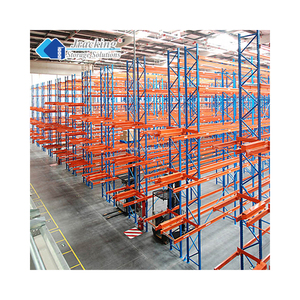
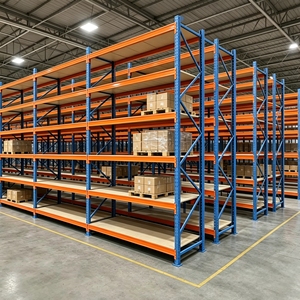
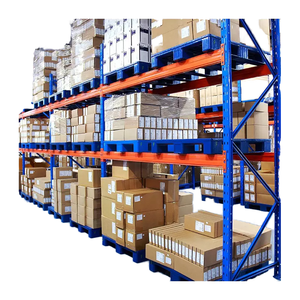
Precision-Engineered Beam Pallet Racking Portfolio
Manufactured to meet stringent international seismic codes, dynamic heavy-load tolerances, and versatile high-throughput logistics demands.
75+
Years Combined Engineering Heritage (Est. 1949)
100%
High-Yield Certified Structural Q235B / Q355B Steel
10+
Global Multi-Tier Production & Distribution Facilities
2-Year
Direct Factory Impact & Deflection Damage Warranty
Technical Depth
Structural Steel Integrity vs. Conventional Roll-Formed Profiles
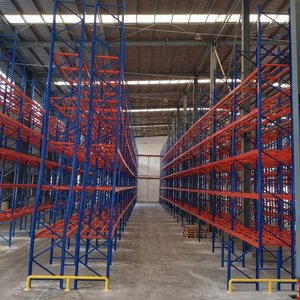
Within modern high-throughput intralogistics, pallet racking functions not as passive warehouse furniture, but as safety-critical structural infrastructure. Traditional roll-formed teardrop profiles utilize thin-gauge, open-back roll profiles (typically 1.5mm to 2.0mm thickness) vulnerable to severe torsional buckling upon routine forklift impact.
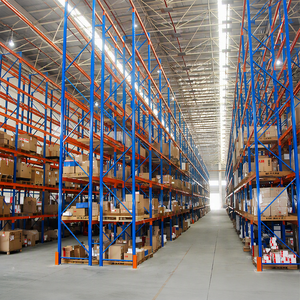
By contrast, tier-one China beam pallet racking factories utilize structural C-channel members hot-rolled from certified Q235B/Q355B structural steel, coupled with high-strength structural grade-5/grade-8 bolted joints. This delivers superior absorption of kinetic impact energies and guarantees uncompromised continuous load distribution across heights up to 24 feet and beyond.
Engineered strictly to RMI ANSI MH16.1 specifications, AS4084-2023, and FEM 10.2.02 codes, structural steel racking guarantees negligible deflection margins under continuous 1,000kg to 4,500kg pallet loads, delivering a demonstrably lower total cost of ownership (TCO) across twenty years of intensive 24/7 terminal operations.
Comparative Engineering Metrics
Structural Parameter Verification: Heavy-Duty Racking Benchmarks
| Evaluation Parameter | Standard Roll-Formed Pallet Racks | Tier-1 Factory Structural Beam Racks | High-Bay Smart ASRS Racking Profiles |
|---|---|---|---|
| Raw Material Yield Strength | Commercial Cold-Rolled Strip (≤ 215 MPa) | Q235B / Q355B Structural Steel (235-355 MPa) | Modified Micro-Alloy Structural Hot Roll (≥ 355 MPa) |
| Impact Resistance (Forklift Contact) | Low; column tears or buckles permanently | Exceptional; hot-rolled channel withstands direct impacts | Engineered rigid deflection guards; zero tolerance |
| Deflection Limit Ratio (L/d) | 1/200 permissible beam deflection | 1/250 to 1/300 rigid threshold | < 1/400 ultra-precision robotic tolerance |
| Seismic Damping Compliance | Basic prescriptive pin-joint behavior | Moment-resistant semi-rigid bolted connections | Finite Element Method (FEM) seismic simulated anchoring |
| Corrosion & Surface Treatment | Flash electrostatic powder (40-60 μm) | Thermoset epoxy thermosetting coating (80-120 μm) | Duplex hot-dip galvanization or dual-cure powder |
Enterprise Competitive Moat
Why Tier-1 Chinese Manufacturing Hubs Lead Global Supply Chains
Vertical metallurgy integration, automated continuous profiling, and international project execution capabilities deliver unrivaled procurement leverage.
Direct Mill Steel Procurement
Leveraging immediate proximity to national upstream steelmakers ensures continuous batch-tested steel certifications (EN 10204 3.1) with predictable cost structures insulated from short-term spot market swings.
Automated Multi-Axis CNC Profiling
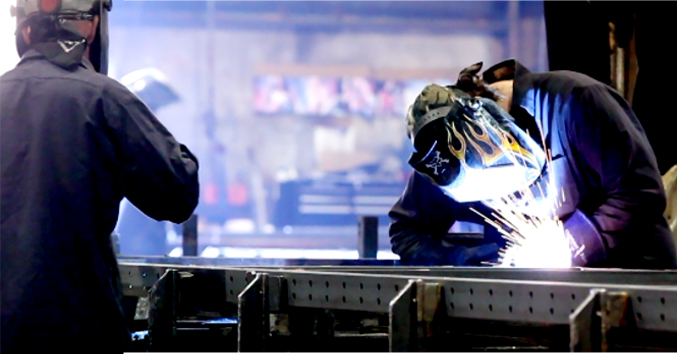
Laser cut-to-length systems, automatic robotic welding lines, and cold roll forming stations guarantee beam connector pitches (including 50mm, 75mm, 76.2mm Dexion, and teardrop geometry) within ±0.5mm tolerances.
Certified RMI & Global Compliance
Structural calculation reports stamped for international jurisdiction approval: certified to ANSI MH16.1, Australian Standard AS4084-2023, European EN 15512, and regional UBC/IBC seismic building codes.
Turnkey OEM/ODM Engineering
Custom fabricated solutions extending from conventional selective racking to multi-tier mezzanine decks, drive-in systems, push-back carts, gravity pallet flow, and high-density automated shuttle runs.
Comprehensive Load Deflection Testing
In-house destructive and non-destructive load stress rigs validate ultimate load capacities, weld integrity, and column base-plate shear resistance prior to seaworthy containerized packing.
Rigorous Surface Pre-Treatment
Automated 5-stage chemical pre-treatment and degreasing tanks paired with heavy-duty electrostatic thermosetting powder coating ensure long-term corrosion resistance in extreme cold storage (-30°C) environments.
Supply Reliability
End-to-End Scalable Production Capabilities
By pairing flexible manufacturing capacity with multi-facility regional distribution, large project footprints exceeding 100,000 pallet positions can be partitioned and sequenced precisely according to general contractor delivery phases.
Direct factory packaging utilizing custom steel strapping, protective corrugated interleaves, and reinforced timber skids mitigates maritime transit deformation, guaranteeing immediate on-site bolting alignment upon container discharge.
Strategic Foresight
Future Procurement Trends: Modern Intralogistics Shifts (2025–2030)
How supply chain executives, warehouse developers, and operations directors are adapting to automation, carbon footprints, and spatial optimization.
1. Fusion of Conventional Racks with Autonomous Robotics
The boundary between static shelving and robotic systems is vanishing. Procurement managers increasingly require hybrid selective racks engineered to integrate top-tier Autonomous Mobile Robots (AMRs), automated guided vehicles (AGVs), and multi-directional 4-way pallet shuttle systems directly into the rack bays.
2. High-Rise Verticality & Rack-Clad Architecture
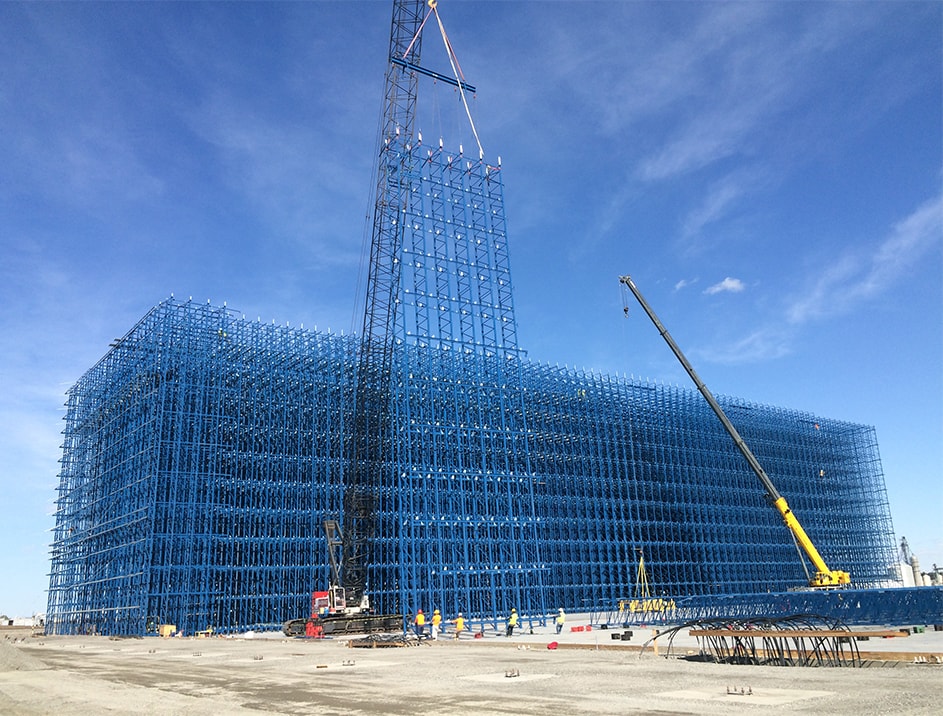
With industrial land acquiring immense premiums globally, vertical storage expansion has become imperative. Demand is transitioning toward ultra-tall high-bay racking (exceeding 30 to 40 meters) where the racking framework serves as the building envelope (Rack Supported Buildings), slashing civil engineering expenditures.
3. Decarbonization & EPD Environmental Declarations
North American and European logistics developers are mandating Environmental Product Declarations (EPD). Tier-one Chinese manufacturers are actively transitioning to electric-arc furnace (EAF) steel sourcing and zero-VOC powder finishes to satisfy corporate ESG targets and carbon border adjustments.
4. Smart Sensor Integration & Structural Health Monitoring
Modern mega-fulfillment centers require IoT-driven real-time impact sensors and deflection strain gauges affixed directly to critical lower-upright strike zones. Early warning telemetry instantly flags forklift collisions, mitigating progressive system collapses and simplifying regulatory compliance audits.
5. Accelerated Cold-Chain Infrastructure Development
Global pharmaceutical, fresh produce, and frozen food supply chains demand specialized low-temperature alloy steels that resist ductile-to-brittle transitions at -30°C. Structural beam racking optimized for cold warehouse airflow and automated shuttles is seeing unprecedented procurement volume.
Procurement Knowledge Base
Frequently Asked Questions: Industrial Pallet Racking Procurement
Essential engineering, compliance, and commercial answers for logistics directors and procurement engineers.
How does a certified China racking factory ensure compliance with RMI (ANSI MH16.1) and seismic requirements?
Compliance is established through rigorous engineering validation. Tier-one factories collaborate with accredited structural engineering firms to perform finite element analysis (FEA) and physical component test runs. This includes beam-to-column rotational stiffness tests, column stub compressive tests, and base-plate anchorage pull-out simulations. Complete engineering packets, stamped by licensed professional engineers (PE) for local jurisdictions across North America, Europe, or Australia, are provided to support building permit issuance.
What are the critical distinctions between Q235B and Q355B steel grades in pallet racking?
Q235B steel offers a minimum yield strength of 235 MPa and is the worldwide standard for selective pallet racks, offering balanced ductility, weldability, and impact resilience. Q355B is a low-alloy, high-strength structural steel boasting a yield strength of 355 MPa. In heavy-duty logistics systems, Q355B is specifically engineered into the lower upright sections of high-bay towers, high-load cantilever arms, and seismic bracing, permitting thinner profiles while carrying elevated axial forces without risk of buckling.
Why is structural steel pallet racking preferred over roll-formed teardrop racks in freezer applications?
In sub-zero cold storage facilities (-20°C to -30°C), steel exhibits reduced impact toughness, while forklift operator reaction times decrease due to chilled working conditions. Standard roll-formed teardrop uprights feature open-back profiles that easily crimp or tear when bumped by a forklift. Hot-rolled structural C-channel members possess substantially thicker flanges and webs (typically 3mm to 6mm), absorbing heavy forklift strikes without catastrophic section failure, thereby eliminating catastrophic collapse risks in continuous cold-chain operations.
What technical data is mandatory before requesting an engineering layout and quotation?
To produce an optimized CAD proposal and load calculation, engineers require: (1) Architectural floor plan indicating clear building height, slab load ratings, column spacing, and sprinkler risers; (2) Pallet dimensions (Length × Width × Height) including load overhang; (3) Maximum and average unit weights; (4) Forklift specifications (maximum lift height, mast collapsed height, minimum right-angle aisle turning radius); and (5) Regional site seismic zone parameters.
What quality assurance measures prevent paint peeling and premature rust on imported racks?
Top China beam pallet racking factories utilize automated multi-stage continuous pre-treatment lines. This includes high-pressure chemical degreasing, iron phosphate conversion coating, dual deionized water rinses, and a dry-off oven. Uprights and beams subsequently enter automated electrostatic powder coating booths applying 80–120 μm of cured thermoset epoxy-polyester powder. This process delivers salt-spray corrosion resistance exceeding 500 hours, preventing blistering, peeling, and corrosion even in humid coastal storage facilities.