Enterprise Solutions
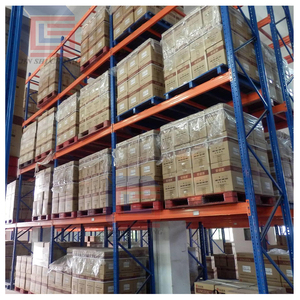
High-Density Dynamic Storage Systems & Engineered Racks
Explore standard, customized, and seismic-certified industrial storage systems built to maximize cube utilization and reduce forklift cycle intervals across demanding operations.
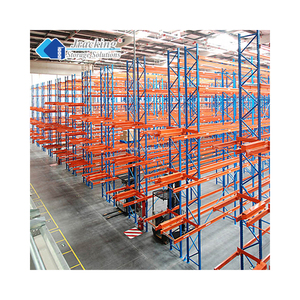
High Compatibility
Jracking Dexion Pitch 76.2 mm Style Warehouse Beam Pallet Rack System
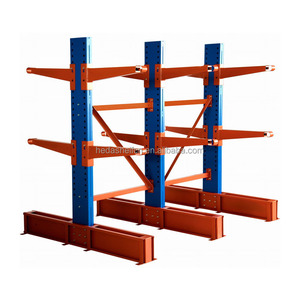
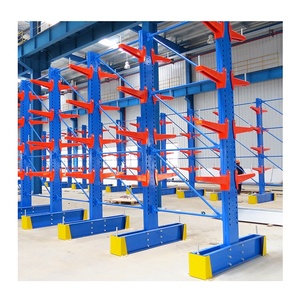
Long Goods Specialist
Jracking Selective Warehouse Equipment Industrial Cantilever Rack
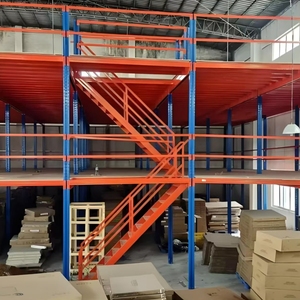
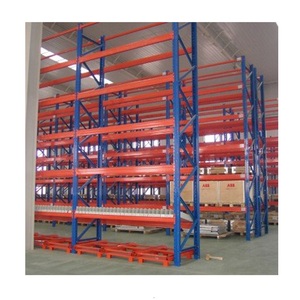
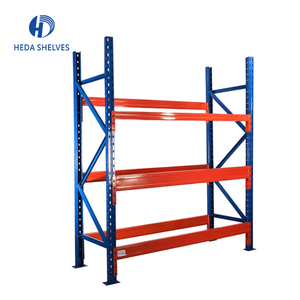
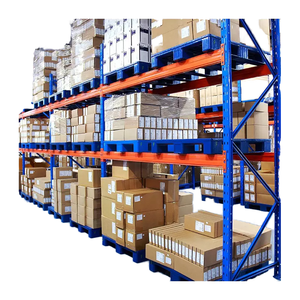
Structural Integrity
Heavy Duty Rack Warehouse Storage Rack, Pallet Racking Manufacturer
75+
Years Engineering Pedigree (Since 1949)
100%
Hot-Rolled Structural Steel Member Integrity
10
Direct Manufacturing Facilities (US, CA, MX)
2-Yr
Direct Forklift Damage Warranty Protection
Engineering Evaluation: Top 10 Push Back Racking Suppliers & Wholesalers
In modern high-velocity distribution centers, cold chain freezers, and dense manufacturing staging yards, floor footprint represents one of the largest ongoing operational expenditures. Push back racking systems have emerged as the industry's premier compromise between high storage density and selective SKU accessibility. Operating on an inclined rail infrastructure with a sequence of nested rolling carts, these Last-In, First-Out (LIFO) structures allow warehouse operators to store inventory anywhere from 2 to 6 pallets deep per lane while granting lift truck operators immediate access to every SKU lane at the pick face.
Selecting an industrial push back racking supplier or wholesale manufacturing partner demands a comprehensive analysis extending far beyond purchase price per pallet position. When engineering teams and supply chain executives evaluate prospective manufacturing partners, the differentiation lies in raw material metallurgy, cart wheel bearing assembly durability, pitch precision, seismic load compliance, and total lifecycle impact resistance.
Core Evaluation Metrics for Tier-1 Racking Manufacturers
Global procurement teams must benchmark rack manufacturers across four non-negotiable operational vectors:
- Structural Steel vs. Roll-Formed Gauge Profiles: While light roll-formed steel can satisfy modest loads, heavy structural steel (hot-rolled channel) provides impact resistance against industrial counterbalanced lift trucks. In high-turnover staging and sub-zero storage, hot-rolled structural steel absorbs repeated bumps that bend roll-formed columns.
- Cart Kinematics and Flow Mechanics: Premium push back systems utilize welded structural tubing for nested carts, heavy-duty flanged steel wheels, and sealed industrial bearings. Ensuring fluid cart travel without binding requires micro-tolerances along the full incline slope.
- Structural Deflection Standards (RMI ANSI MH16.1): Strict adherence to Rack Manufacturers Institute standards guarantees structural members remain well within permissible elastic strain limits under full dynamic pushing and gravity retrieval loads.
- Regional Manufacturing Footprint: Access to regional facilities significantly mitigates freight costs, avoids supply chain bottlenecks, and guarantees timely structural certifications required by municipal building inspectors.
Top 10 Global Push Back Racking Suppliers Benchmark
The following tier-1 manufacturers represent global leaders in push back rack design, wholesale fabrication, and warehouse optimization:
- 1. Frazier Industrial Company: The pioneer and largest North American manufacturer of 100% structural steel racking solutions. Renowned for its Glide-In® Push Back Racking line, standard bolted connections, 10 manufacturing plants across the US, Canada, and Mexico, and a full 2-year warranty against rack impact damage.
- 2. Jracking Group: A premier global exporter and high-capacity manufacturer specializing in standard European and American pitch profiles, automated manufacturing cells, teardrop and Dexion patterns, and scalable wholesale distribution across dozens of international hubs.
- 3. Advance Storage Products: Widely recognized in North America for their engineered push back solutions, offering robust 2-to-6 deep cart configurations engineered for diverse industrial pallet footprints.
- 4. Mecalux: A European-origin automation and racking powerhouse offering standardized dynamic push back push-cart systems and roller-track push back options across global distribution centers.
- 5. SSI Schaefer: Renowned for turnkey enterprise intralogistics, integrating automated high-density shuttle architectures and robust static/dynamic structural storage lines for Fortune 500 logistics hubs.
- 6. Ridg-U-Rak: A dedicated manufacturer of roll-formed and structural steel storage solutions, featuring push back systems designed with specialized cart linkages and seismic anchoring packages.
- 7. Stow Group: A European powerhouse providing heavy-duty industrial storage racks, pallet runners, and dynamic push back solutions engineered to European EN and FEM specifications.
- 8. Dexion (Gonvarri Material Handling): A staple across Europe and Australasia, offering versatile storage configurations, precision-punched beam profiles, and field-tested push back nested cart assemblies.
- 9. Steel King Industries: An established North American rack builder manufacturing both roll-formed and structural channel push back designs tailored for dry goods, 3PL storage, and food processors.
- 10. Unarco Material Handling: Known for versatile dynamic carton flow, pallet flow, and multi-deep push back designs serving high-volume retail fulfillment and grocery distribution.
Strategic Procurement
Future Procurement Trends in Industrial Storage
Procurement directors and facility planners are modernizing their balance sheets by adopting data-backed structural investments designed for automation readiness and operational longevity.
Total Cost of Ownership (TCO)
Buyers are shifting focus from initial capital expenditure to lifetime ROI. While structural steel push back systems require higher upfront capital, they eliminate recurring column replacement, pallet down-time, and rack collapse liability common to lighter roll-formed racks.
Cold Chain Optimization
Refrigerated and blast freezer cubic space carries the highest energy cost per cubic foot in logistics. Push back systems (2 to 5 pallets deep) provide maximum storage density while ensuring immediate selectivity, eliminating the dedicated drive-in aisles that cause thermal loss.
Stringent Seismic Compliance
With revised IBC (International Building Code) and regional seismic mandates across North America and Europe, suppliers are pre-engineering high-ductility bolted connections and thickened base plates capable of absorbing seismic forces without progressive structural collapse.
Nearshoring & Supply Proximity
Global supply chain volatility has made lead times a primary buying criterion. Facilities sourcing from regional manufacturing bases (such as US, Canadian, and Mexican factory networks) save weeks on deliveries while ensuring local engineering support for site permitting.
Technology Evolution
Push Back System Developments & Engineering Innovations
Next-generation dynamic push back architectures are merging mechanical stability with smart monitoring and automation compatibility.
Sealed-Bearing Cart Engineering
Pioneering manufacturers now use permanently lubricated, maintenance-free bearing systems wrapped in heavy cast alloy housings. This completely eliminates cart binding and uneven pallet drift, even when subjected to the condensing moisture of food distribution facilities.
Hybrid Low-Profile Nested Tracks
Vertical clearance losses in multi-deep push back systems once constrained pallet count. Advanced nested profiles allow four to six cart beds to collapse into a minimal vertical profile, returning up to 8 inches of lift height per bay to clear roof truss interference.
AGV & Reach Truck Integration
Modern push back pick faces are optimized with visual indicators and laser-guided alignment stops. This enables automated guided vehicles (AGVs) and standard turret trucks to push and retrieve loads without operator error or impact strikes.
| Racking Architecture | Space Density | SKU Selectivity | Pallet Rotation | Impact Resistance | Ideal Application |
|---|---|---|---|---|---|
| Glide-In® Push Back Racking | High (Up to 90% Cube) | Lane-Selective (LIFO) | Fast Dynamic Retrieval | Maximum (100% Hot-Rolled Structural) | Cold Storage, Food & Beverage, 3PL Warehousing |
| Standard Selective Racking | Low to Moderate | 100% Immediate Direct | FIFO or LIFO | Standard to Heavy Duty | High SKU Variety, Active Case Picking Facilities |
| Drive-In / Drive-Thru | Extremely High | Very Low (Deep Bay) | Strict Batch Rotation | Prone to Repeated Forklift Strikes | Homogeneous Bulk Stocks, Staging Seasonal Goods |
| Pallet Flow (Gravity Fed) | Very High | Lane-Selective (FIFO) | Automatic Flow FIFO | Moderate to Heavy Duty | Perishables, Strict Expiration Date Management |
Enterprise Value
The Frazier Manufacturing Advantage
Combining heavy-duty engineering discipline, extensive North American manufacturing power, and comprehensive structural warranties to protect your material handling investments.
100% Hot-Rolled Structural Steel
Every column, beam, and nested cart rail is fabricated exclusively from hot-rolled structural steel channel. Unlike sheet metal roll-formed teardrop uprights, our systems withstand everyday warehouse strikes without structural failure.
Direct 2-Year Rack Damage Warranty
Because structural channel steel is robust and fully bolted, we provide a 2-year warranty against forklift impact damage. This reduces insurance exposure and lowers maintenance costs across continuous multi-shift operations.
Integrated High-Bay & Automation Teams
From standalone push back installations to multi-tier pick modules and rack-supported buildings, our in-house engineering team works directly with logistics integrators to ensure code compliance from concept to final sign-off.
Procurement Knowledge Base
Push Back Racking Procurement FAQ
Critical engineering and operational answers to guide facility designers and procurement managers.
How does push back racking compare to drive-in racking for operational throughput?
Drive-in systems require forklifts to physically enter the rack structure to drop or pick pallets, creating slower cycle times and increasing the risk of column strikes. Push back racking keeps the forklift in the main aisle; the truck pushes preceding pallets backward on rolling carts. This cuts forklift cycle times by up to 40% and keeps drivers out of the structure.
What depth profiles are most economical for push back configurations?
Push back systems are most commonly configured 2 to 5 pallets deep per lane. Two- and three-deep configurations offer the lowest cart profiles and highest velocity. Four- and five-deep configurations maximize cubic density for medium-velocity SKUs. Systems can be built 6-deep, though this requires high-capacity reach trucks to handle the accumulated pushing force.
How does ambient moisture or freezing temperatures affect push back carts?
Sub-zero freezer warehouses cause condensation and frost that can seize low-grade commercial bearings. Frazier Glide-In® push back systems utilize high-grade flanged wheels and sealed, permanently lubricated industrial bearings. These maintain smooth rolling resistance without freeze-up in temperatures down to -30°F.
Why is bolted structural steel preferred over roll-formed teardrop in push back bays?
Push back storage involves dynamic forces during loading and unloading. Structural steel channel profiles offer thicker walls and bolted connections that absorb repeated horizontal bumps. If a damaged component ever needs service, bolted uprights and rails can be replaced quickly without cutting, welding, or taking down adjacent bays.
Modernize Your High-Density Storage with Frazier
Connect with our senior logistics application engineers. We will analyze your SKU profiles, ceiling clearances, and equipment fleet to model an optimized, structural steel push back layout engineered to maximize your facility's return on investment.
Contact Us