Featured Heavy-Duty Warehouse Storage Systems
Precision-manufactured structural steel and high-tensile industrial racking systems certified for maximum load integrity, high-throughput fulfillment, and seismic resiliency.
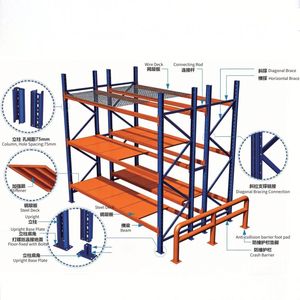
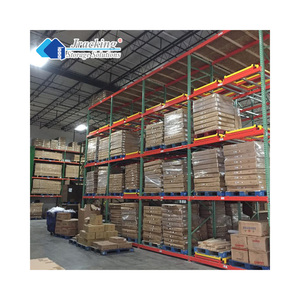
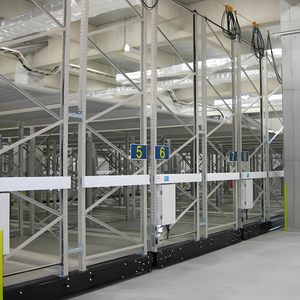
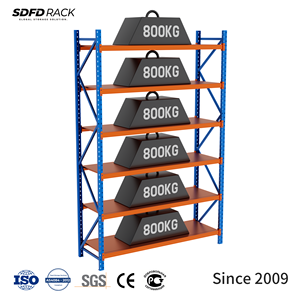
Executive Procurement Intelligence: The Global Racking Landscape
Procurement leaders tasked with specifying warehouse storage equipment face a crowded international field. While dozens of fabricators market industrial storage products, fewer than ten percent possess the in-house structural engineering authority, high-throughput automated roll-forming lines, hot-rolled channel fabrication capabilities, and certified compliance (such as ANSI MH16.1 by the Rack Manufacturers Institute and Eurocode EN 15512) required for mission-critical logistics facilities.
Selecting a top-tier racking manufacturer is not simply a procurement cost per pallet position exercise. It represents a life-safety decision, a multi-decade capital allocation, and the structural foundation upon which all downstream automation (automated storage and retrieval systems, autonomous mobile robots, pallet shuttles, and overhead conveyors) operates. A failure in structural calculation or steel yield strength can lead to catastrophic warehouse collapses, protracted downtime, and millions in inventory loss.
Comparative Analysis: Structural Hot-Rolled Steel vs. Roll-Formed Cold-Rolled
The most critical structural choice when commissioning high-density racking is the metallurgical and geometric composition of the vertical upright columns and horizontal load beams. Warehouses operate in high-impact environments where repeated forklift collisions are inevitable.
| Engineering Attribute | Hot-Rolled Structural Steel Racking | Roll-Formed Teardrop Steel Racking | Logistics Impact & ROI Profile |
|---|---|---|---|
| Raw Material & Metallurgy | ASTM A36 / ASTM A572 Grade 50 structural C-channels with solid web plates. | Light-gauge cold-rolled coil steel formed into open-back hollow profiles. | Structural steel maintains 50,000+ PSI tensile yield with thick impact-absorbing flanges. |
| Forklift Impact Resistance | Exceptional resistance. Absorbs heavy glancing blow kinetics without torsional buckling. | Vulnerable to catastrophic corner twisting, crimping, and column shear failures. | Eliminates frequent column collapse incidents in high-velocity forklift aisles. |
| Connection Method | Grade 5 heavy-duty hex bolts with serrated locking flange nuts. | Keyhole teardrop friction tabs, roll-pins, or spring safety clips. | Bolted assemblies cannot dislodge accidentally during aggressive pallet retrieval. |
| Torsional Rigidity & Load Capacity | Significantly higher moment capacity; supports 5,000+ kg per beam level easily. | Moderate; prone to torsional twisting under unevenly distributed pallet weights. | Enables ultra-tall high-bay configurations over 40 feet without intermediate building supports. |
| Cold Storage & Blast Freezer Duty | Immune to low-temperature embrittlement cracking down to -35°C; thick structural profiles. | Micro-fractures can propagate at cold-drawn punch holes and formed corners under deep freeze. | Structural steel provides unmatched life expectancy in temperature-controlled cold chains. |
| Repairability & Maintenance Cost | Bolted sub-assemblies allow quick splicing and individual component replacement without unstacking entire bays. | Requires complete column replacement or costly welded sleeve repair kits. | Lowers Total Cost of Ownership (TCO) by over 42% over a 15-year lifecycle. |
Global Top 10 Industrial Warehouse Racking Manufacturers: Benchmarking Framework
Through intensive evaluations across international distribution networks, manufacturing scalability, structural engineering sophistication, and quality accreditation, top global racking leaders are distinguished by specific structural capabilities. Below is the technical scorecard utilized by supply chain engineering teams:
1. Heavy Structural Engineering Capacity Score: 98/100
Pioneered by structural industry titans such as Frazier Industrial Racking Systems Co., Ltd. (producing structural hot-rolled channel systems since 1949), top manufacturers maintain in-house finite element analysis (FEA), professional engineering (PE) stamp capabilities in all 50 US states and Canadian provinces, and seismic zone 4 dampening calculations.
2. Robotic Welding & Tolerance Standardization Score: 96/100
ASRS and crane-fed automated facilities require beam level tolerances under ±1.5 mm across heights exceeding 100 feet. World-class factories utilize multi-axis automated robotic welding jigs and CNC punching lines ensuring repeatable load seat integrity across hundreds of thousands of components.
3. Cold Chain Resilience & Sub-Zero Formulations Score: 95/100
Low-temperature environments create metal fatigue and lubrication failure. Elite manufacturers engineer specialized mobile racking carriages with synthetic low-temperature gearboxes, anti-freeze floor rail heaters, and high-tensile hot-dip galvanized structural finishes impervious to condensation cycles.
4. Automated Shuttle & High-Bay Integration Score: 97/100
Modern rack manufacturers no longer operate in a static silo. The best plants maintain dedicated systems-integration engineering divisions that partner directly with Swisslog, Dematic, SSI Schaefer, and Daifuku to coordinate rail guidance, pallet shuttle charging hubs, and dynamic crane mast deflection envelopes.
Future Procurement Trends in Industrial Warehouse Racking (2025–2035)
Logistics real estate analysts project that global industrial leasing costs will continue to climb through the decade. To maintain operating margins, engineering teams must build upward, automate deeper, and purchase with multi-decade flexibility.
Rack-Supported Building Envelopes (Clad-Rack)
The fastest-growing trend in greenfield logistics is eliminating conventional structural building columns entirely. In rack-supported buildings, the storage rack itself supports the facility walls, roof trusses, wind forces, and snow loads. This cuts construction timelines by 30% and achieves vertical storage heights beyond 45 meters.
Semi-Automated Pallet Shuttles & 4D Navigation
Deep-lane drive-in racking is giving way to high-speed radio shuttle carts and omnidirectional 4-way shuttles. By moving pallets independently through channels up to 40 pallets deep, operators achieve maximum storage density while keeping forklifts out of internal storage channels, slashing impact damage to near zero.
Nearshored Multi-Plant Manufacturing Agility
Supply chain shocks have highlighted the high freight penalties, transit delays, and geopolitical vulnerabilities of single-source offshore racking. Enterprise buyers increasingly demand regional production clusters (such as North American manufacturing hubs across the US, Canada, and Mexico) to compress project shipping schedules and reduce carbon footprints.
Structural Engineering Advantages of our Manufacturing Platform
Building upon more than 75 years of manufacturing excellence, our enterprise infrastructure merges hot-rolled structural durability with turnkey custom engineering. Unlike conventional equipment distributors, we control the entire lifecycle from raw steel billet processing to field bolt-up:
Why Operations Directors Partner With Our Factory Network
Our structural steel pallet racking systems are engineered like heavy industrial infrastructure, not commercial office furniture. We deliver one accountable partner from preliminary CAD layout through final municipal occupancy inspection.
- 100% Hot-Rolled Channel Construction: Unmatched resilience against forklift outrigger and mast strikes.
- Industry-Leading 2-Year Damage Warranty: Direct warranty protection against material operational impact failures.
- 10 Flexible Regional Facilities: Manufacturing footprint spanning the USA, Canada, and Mexico for rapid regional dispatch.
- RMI & ANSI MH16.1 Certified: Full seismic calculation packets ready for municipal permitting review.
Gain immediate access to full structural profile drawings, beam deflection tables, load limit capacity data, and standard seismic engineering models.
Get CatalogComprehensive Industrial Procurement FAQ
What is structural steel pallet racking and how does it compare to roll-formed teardrop systems? +
Where are your manufacturing plants located and how does multi-plant capability help project schedules? +
Can your racking systems be engineered for high seismic risk zones and strict municipal building codes? +
What specific terms are covered under the 2-Year Rack Damage Warranty? +
Do your engineers collaborate directly with third-party automated ASRS and shuttle integrators? +
What critical data is required from our facility team to initiate a preliminary layout and engineering quotation? +
Ready to Engineer Your High-Density Storage Facility?
Connect with our senior logistics engineering team. Get complete architectural layout guidance, custom seismic structural calculation packages, and direct factory pricing on our structural steel racking lines.
Get Catalog