Selective Rack
Warehouse Heavy Duty 5 Layer Steel Adjustable Selective Pallet Rack System
50mm Pitch
100% Selectivity
Heavy-Duty
Precision-engineered selective pallet racks, heavy-duty cantilever racks, and modular distribution center systems calibrated for high fork-truck traffic and rigorous structural codes.
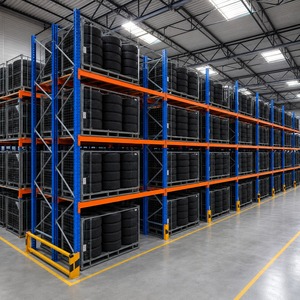
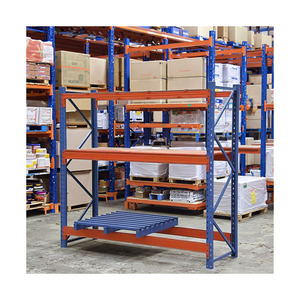
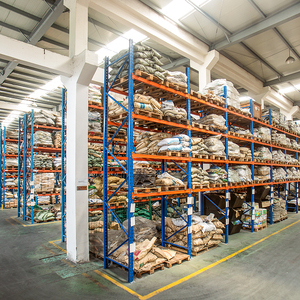
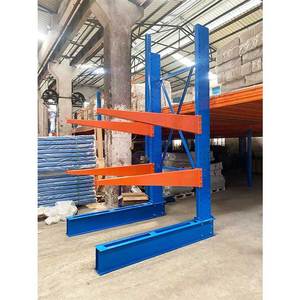
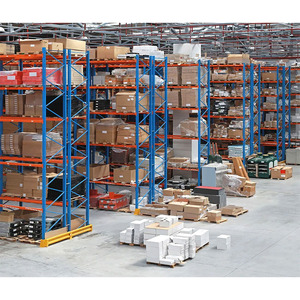
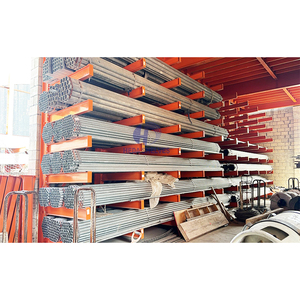
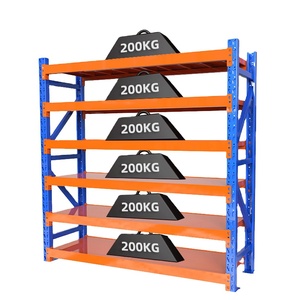
In logistics procurement, selecting warehouse racking often collapses into an oversimplified evaluation of initial capital expenditure (CapEx) per pallet position. However, sophisticated supply chain executives, industrial architects, and facility directors recognize that the true cost of industrial shelving is dictated by life-cycle resilience, impact resistance, and continuous operational uptime. Facilities handling continuous multi-shift reach truck or counterbalance traffic regularly subject racking columns to severe torsional and lateral impacts.
A typical loaded reach truck maneuvering within a 3.0-meter narrow aisle creates significant kinetic energy even at creep speeds. Roll-formed uprights typically utilize 12-to-16-gauge cold-coiled strip steel formed into an open C-channel with punched connection slots. These perforation holes induce stress concentrations. When hit by a heavy steel pallet or forklift wheel outrigger, roll-formed columns are prone to localized plastic deformation, requiring immediate offloading of multiple adjoining bays, costly engineering recertification, and downtime.
Conversely, structural steel racking uses solid hot-rolled steel channels joined with high-strength structural grade bolted connectors. The closed geometry and thick flanges can absorb substantial impact energy without structural yield, keeping warehouse operations running smoothly while ensuring personnel safety in compliance with OSHA 1910.176(b) and RMI ANSI MH16.1 standards.
The following performance matrix contrasts core rack categories manufactured within our North American production network, detailing loading limits, impact mitigation, and optimal throughput velocities:
| Racking Topology | Standard Load Rating | Steel Metallurgy | Forklift Impact Resistance | Throughput & SKU Rotation | Best Industrial Fit |
|---|---|---|---|---|---|
| Selective Pallet Racking | 1,000 – 2,500 kg / Beam Pair | Hot-Rolled C-Channel / Structural Tube | Maximum Durability | 100% Direct Selectivity (FIFO/LIFO) | High-SKU 3PLs, Retail DCs, General Freight |
| Push-Back Racking | 1,500 kg / Cart Platform | Heavy-Duty Guided Structural Rails | Protected Entry Face | 2 to 6 Pallets Deep (LIFO Rotation) | Cold Storage, Food & Beverage, Cross-Docking |
| Drive-In Racking | 1,200 – 1,800 kg / Pallet Spot | Hot-Rolled Columns with Cantilever Arms | Reinforced Lower Posts | High-Density Bulk Lanes (LIFO) | Homogeneous Seasonal Inventory, Deep Freezers |
| Heavy Cantilever Racks | Up to 5,000 kg / Arm | Universal Beam (UB) & Solid I-Beam | High Lateral Rigidity | Continuous Open Span Access | Steel Coils, Lumber, Piping, Extrusions |
| ASRS High-Bay Racks | Precision Engineered per Shuttles | Mill-Tolerance Structural Steel Sections | Automated / Isolated | Unmanned 24/7 High-Velocity In/Out | Rack-Supported Warehouses, Mega-Fulfillment |
Modern industrial storage facilities in regions like coastal California, British Columbia, or Latin America must factor in significant ground acceleration parameters ($S_s$ and $S_1$). Standard off-the-shelf teardrop systems often struggle to meet seismic baseline equations without bulky external frame bracing that compromises operational aisle clearance.
By engineering systems using finite element analysis (FEA) calibrated to the Rack Manufacturers Institute (RMI) ANSI MH16.1 specification and local municipal building codes, structural members provide predictable ductility and load paths under seismic events. Heavy baseplates with anchoring studs securely transmit seismic shear and overturning moments directly into the building's reinforced concrete slab.
How automation convergence, cold chain expansion, and sustainability targets are reshaping industrial racking engineering over the next decade.
Warehouses are rapidly transitioning from manual forklift bays to semi-automated pallet shuttle lanes and Autonomous Mobile Robot (AMR) multi-level pick towers. This demands millimetric fabrication tolerances and zero floor deflection.
With industrial land prices at record highs, developers favor rack-supported buildings where the structural steel framework serves as the primary load-bearing skeleton for the facility's roof, insulated walls, and clad envelopes.
Global enterprises and REIT warehouse investors require third-party audited Environmental Product Declarations (EPD). Racks fabricated from electric arc furnace (EAF) recycled hot-rolled steel provide significant LEED and Scope 3 carbon credit advantages.
Pharmaceutical cold chain and quick-frozen grocery demands are accelerating sub-zero storage construction. Low-temperature steels with high Charpy V-notch impact values prevent cryogenic embrittlement at temperatures as low as -30°C.
Sensor-augmented rack uprights now incorporate continuous strain gauges and triaxial accelerometers to immediately detect and log dangerous forklift impact collisions, sending real-time safety alerts directly to warehouse management systems.
With insurance guidelines such as NFPA 13 evolving, rack designs must provide precise flue space maintenance (longitudinal and transverse open channels) to ensure early suppression fast response (ESFR) ceiling sprinklers can penetrate deep storage matrices.
Combining in-house structural engineering, responsive cross-border manufacturing, and proven field durability across thousands of mission-critical facilities.
Since establishing structural steel storage benchmarks in 1949, our systems are built from hot-rolled channel profiles that deliver unmatched reliability, outlasting thinner alternatives.
With heavy fabrication hubs spanning the USA (NJ, PA, NY, SC, TN, ID), Canada (Trenton, Ontario), and Mexico (Monterrey, Mexicali), we shorten freight transit times, optimize lead times, and mitigate regional supply chain risks.
Forklift collisions happen in fast-paced distribution centers. Unlike vendors who exclude mechanical contact, our structural systems are backed by a dedicated 2-year rack damage warranty alongside standard structural guarantees.
Welded open-back columns often require complete frame cutouts when damaged. Our structural channel uprights feature modular, bolted bracing panels that can be individually unbolted and repaired in place with minimal bay unloading.
Active standing members of the Rack Manufacturers Institute (RMI), Material Handling Industry (MHI), Global Cold Chain Alliance (GCCA), and IWLA ensure every project strictly complies with current building and fire codes.
Our high-rise engineering unit works directly with leading automated crane and shuttle integrators, delivering precise tolerance engineering, anchor detailing, and defection modeling from initial design to final signoff.
Detailed answers to critical questions regarding structural specifications, seismic permitting, maintenance, and warehouse design.
Hot-rolled structural steel is formed at elevated temperatures above 1,700°F into heavy C-channel cross-sections with solid, unpunched structural corners and thick flanges. Roll-formed racking is cold-shaped from thin sheet metal coils (12 to 16 gauge) with punched teardrop holes. Hot-rolled channels offer far greater impact resistance against forklift abuse, higher overall torsional stiffness, and can be repaired via bolted connections without discarding entire frames.
Our licensed engineering department requires: (1) Architectural drawings showing clear ceiling height and column grids; (2) Detailed pallet load profiles (width, depth, overall height including pallet, and maximum gross weight); (3) Forklift specifications including mast height and right-angle stacking aisle requirements; (4) Floor slab details (thickness and compressive strength $f'_c$); (5) Building location for site-specific seismic design coefficients ($S_s, S_1$) and wind/snow loads for rack-supported structures; and (6) Fire sprinkler layout (e.g., ceiling ESFR vs. in-rack sprinkler demands).
Sub-zero conditions cause standard thin-gauge steel to become brittle and lose ductile impact energy absorption. Our structural channels utilize structural grades with verified Charpy impact properties to prevent cold brittle fracture. Additionally, hot-dip galvanized or high-solids polyurethane coatings resist moisture condensation and prevent corrosion during freezer defrost cycles.
When an upright column or diagonal brace is struck by a lift truck in a welded frame, the entire multi-bay assembly often needs shoring and full replacement, requiring significant labor and offloading. With our bolted structural system, damaged braces or column splices can be unbolted and replaced using factory parts, substantially reducing downtime and maintenance costs.
Yes. We routinely partner with tier-one global logistics automation integrators. Our high-bay engineering group designs both free-standing and rack-supported ASRS systems reaching heights over 130 feet (40 meters). We ensure tight manufacturing and installation tolerances for crane guide rails, shuttle runs, and automated top ties while coordinating with system load profiles and local seismic building codes.
Standard material handling warranties only cover manufacturing defects in materials and workmanship, completely excluding forklift impacts. Because our structural channel uprights are engineered for harsh warehouse environments, we offer an industry-leading 2-year rack damage warranty that protects your investment against operational forklift damage under defined operating conditions.