High-Performance Pallet Racking Systems
Explore our custom OEM/ODM certified pallet racking assemblies engineered to withstand rigorous forklift operations, dense cold storage cycles, and autonomous multi-shuttle logistics networks.
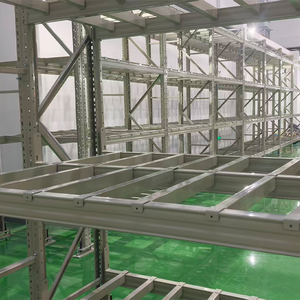
Thickened Industrial Pallet Racking System 2000kg Load Heavy Duty Warehouse Storage Rack for Large Goods Steel
- Load Capacity: 1,000 – 4,500 kg/tier
- Material Grade: Q235B / Q355B Hot Steel
- Pitch Hole Adjustment: 50mm / 75mm
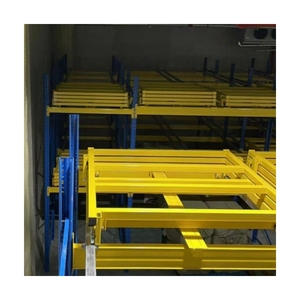
Chinese Manufacturing Supplies Heavy Duty Warehouse Racking System Storage Shelf Stacking Racks Shelves Push Back Pallet Racks
- Lane Configuration: 2 to 6 Pallets Deep
- System Rotation: LIFO Nested Trolleys
- Safety Incline: Gravitational Return
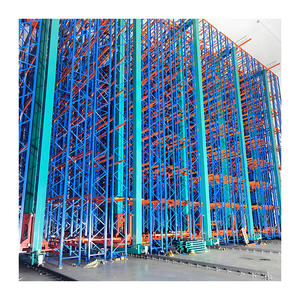
High-Density Pallet Shuttle Racking System Automatic Steel Storage Frame 3000kg Load Capacity Heavy Duty Warehouse
- Payload Envelope: Up to 3,000 kg/pallet
- Control System: RF Remote / WMS Wi-Fi
- Temperature Range: -30°C to +45°C
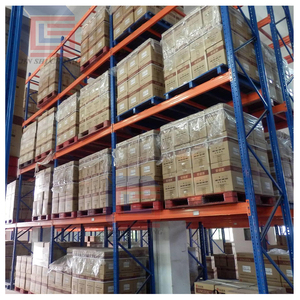
Industrial Heavy Duty Steel Pallet Rack Warehouse Shelving System for Storage, Distribution Center and Factory Use
- Upright Section: 80/90/100/120mm Box/Omega
- Safety Pins: Spring-Loaded Positive Lock
- Finish: Electrostatic Epoxy Coating
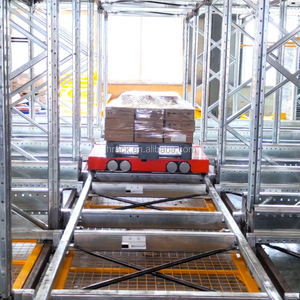
Automatic Autonomous Logistics Warehouse 4 Way Pallet Shuttle Racking System Mobile Pallet Heavy Duty Rack Shelves Storage Racks
- Kinematics: Omnidirectional 4-Way Travel
- Vertical Transfer: High-Speed Pallet Lifter
- Software Bridge: Native WCS/WMS Protocols
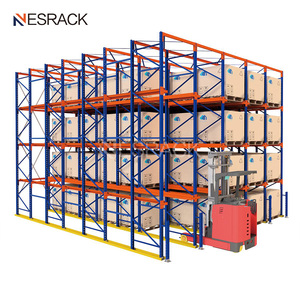
Steel Drive-In Pallet Racking Warehouse Shelving System Heavy Duty Industrial Storage Rack
- Cube Utilization: Up to 85% Volume Efficiency
- Guide Rails: Heavy-Duty Ground Guides
- Support Arms: Single / Double Sided Cast
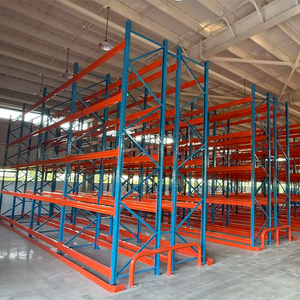
Engineering Design Pallet Rack System with Wire Deck Option
- Sprinkler Compliance: NFPA 13 Certified Open Area
- Flange Styles: Step, Flared, Inverted Waterfall
- Wire Mesh Gauge: 4 Gauge / 5 Gauge Ribbed
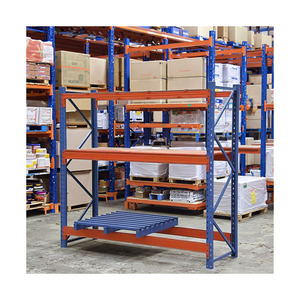
Selective Pallet Racking System Stable Modular Steel Distribution Center Warehouse Storage Rack 2000kg Heavy Duty
- Frame Depths: 800mm – 1200mm Standard
- Beam Connector: 3 / 4 / 5 Claw Integrated Hook
- Deflection Ratio: Exceeds L/200 Safety Limit
System Selection by Inventory Dynamics & Deflection Tolerance
Balancing vertical clearance, floor space capitalization, equipment aisle requirements, and load duty profiles across major industrial racking architectures.
| Racking Architecture | Storage Density | Selectivity Level | Handling Dynamics | Typical Payload (kg/bay) | Recommended Application Profile |
|---|---|---|---|---|---|
| Selective Pallet Racking | Standard (40-50%) | 100% Immediate Direct Access | FIFO / LIFO General | Up to 15,000 kg | High-SKU 3PL warehouses, e-commerce fulfillment hubs, retail distribution centers. |
| Push-Back Cart Racking | High (65-75%) | Lane Selective (LIFO) | Gravitational Cart Slide | Up to 24,000 kg | Fast-moving bulk SKUs, cold chain staging, food & beverage regional buffers. |
| Drive-In / Drive-Thru | Very High (75-85%) | Low (Tunnel Sequential) | LIFO (Drive-In) / FIFO | Up to 28,000 kg | Homogeneous manufacturing stock, deep cold freezers, raw ingredient containment. |
| Pallet Flow (Gravity Roller) | High (70-80%) | Strict FIFO by Lane | Brake Rollers & Separators | Up to 22,000 kg | Perishable food, date-sensitive pharmaceuticals, rapid cross-dock assembly. |
| Semi-Automated Pallet Shuttle | Ultra-Dense (80-90%) | Channel Automated Access | Autonomous Lithium Shuttle | Up to 35,000 kg | Heavy SKU consolidation, freezer facilities (-25°C to -30°C), beverage distributors. |
| ASRS & Rack-Supported Structures | Maximum Cube (90%+) | Fully Computerized Automated | Stacker Cranes / 4-Way Movers | Up to 50,000+ kg | Mega-distribution high-bays (>40m height), greenfield automation facilities. |
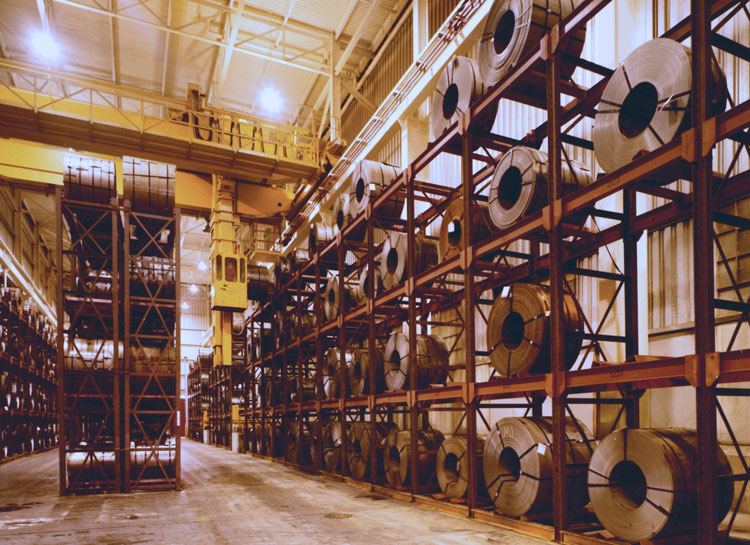
Heavy Industrial Resilience
Fabricated using 100% hot-rolled channel steel, eliminating puncture risks from heavy forklift operations.
Built Like Infrastructure: Structural Steel Over Light Roll-Formed Profiles
In high-throughput industrial supply chains, structural failure from low-speed forklift collisions accounts for millions of dollars in annual downtime, pallet damage, and occupational safety violations. While commercial roll-formed teardrop systems provide initial budget appeal, their thin-gauge open-back channels frequently collapse when impacted by standard counterbalanced reach trucks.
Our OEM/ODM manufacturing protocols prioritize heavy-duty hot-rolled structural steel channels (ASTM A36 / Q355B equivalent). Featuring solid flange corners and thickened web profiles, our structural uprights absorb lateral impact forces that would shear lighter sheet metal systems, dramatically lowering your 10-year Total Cost of Ownership (TCO).
-
Substantial Impact Resilience: Thickened structural channel steel withstands up to 250% higher torsional forklift impact before yield point compared to thin-wall steel.
-
Rigid Bolted Beam Connections: High-tensile Grade 5/Grade 8 bolted assemblies eliminate unintentional dislodgement while streamlining upright replacement.
-
2-Year Rack Damage Warranty: Full replacement protection against forklift damage, reflecting unmatched manufacturing integrity.
Full-Scale OEM/ODM Engineering Customization for Global Projects
Whether you require standard teardrop punched profiles for quick retrofit matching or proprietary structural frames engineered for high-seismic zones (IBC Category D, E, F with spectral acceleration factors above 1.5g), our factory provides in-house Finite Element Analysis (FEA), automated CNC punching lines, robotic submerged arc welding, and continuous conveyorized electrostatic powder coating or hot-dip galvanizing for marine and outdoor settings.
Strategic Global Supply Chains & USMCA Certified Footprint
Global warehouse projects face extreme vulnerability when relying on single-point fabrication suppliers susceptible to maritime freight spikes, geopolitical tariffs, and delayed lead times. Our distributed manufacturing network strategically spans primary fabrication centers with deep port access alongside regional production plants across the United States, Canada, and Mexico.
This localized regional approach delivers distinct benefits for tier-one multinational logistics providers: rapid freight staging, optimized ocean shipping container packout configurations that prevent transit deformation, duty-free tariff status under USMCA protocols, and localized project engineering supervision directly compatible with local municipal building code inspections.
-
Precision CNC Beam Alignment: High-precision robotized fabrication guarantees cumulative plumb tolerances under 1:1000 for seamless automated crane interface.
-
Hot-Dip Galvanizing & Food-Safe Finishes: ASTM A123 hot-dip zinc coatings and antimicrobial powder coats tailored for strict cold storage and food grade sanitary audits.
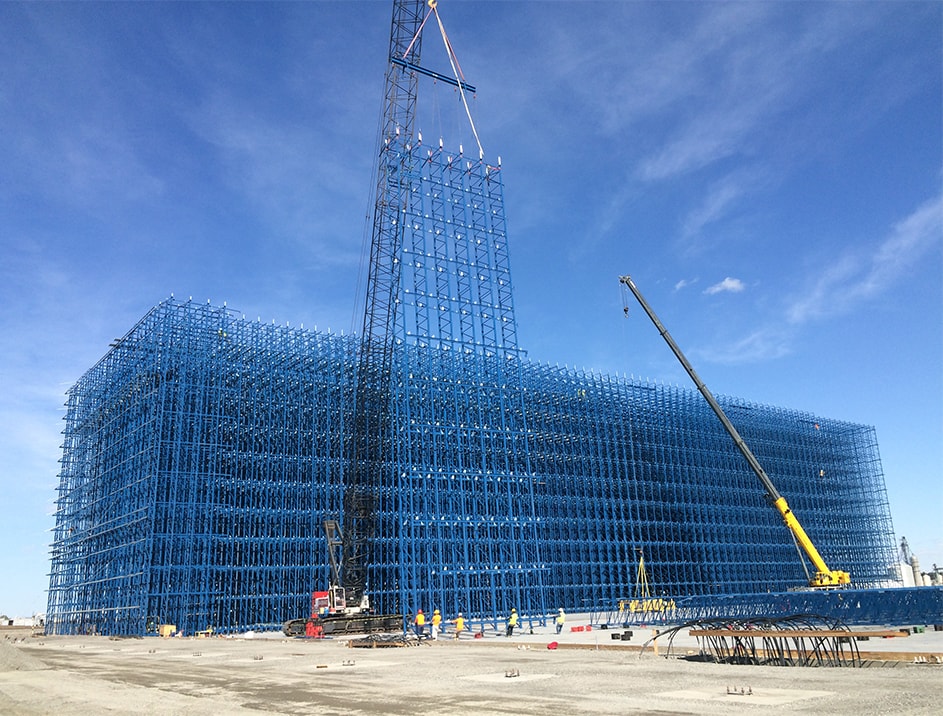
Certified Structural Compliance
RMI ANSI MH16.1, EN 15512, and AS4084 certified engineering calculations provided for every project layout.
Future Trends in Pallet Racking Procurement (2025–2035)
How automation convergence, cold chain expansion, carbon neutrality metrics, and dynamic robotic storage are revolutionizing commercial warehousing specifications.
1. Convergence of Racking with Autonomous Mobile Shuttles (4-Way AMR)
Traditional static storage is transitioning toward dynamic semi-automated and fully automated multi-directional shuttle systems. Modern rack profiles must now integrate micro-machined running rails, inductive power tracking, and sensor positioning tabs with sub-millimeter tolerances to accommodate 4-way robotic carriers.
2. Rack-Supported High-Bay Buildings (Clad-Rack Architecture)
Skyrocketing land acquisition costs have catalyzed the adoption of clad-rack buildings where the racking structure itself supports the external roof cladding, insulated sandwich panels, and dynamic environmental wind/snow loads. This methodology eliminates conventional building columns and cuts civil construction schedules by 30%.
3. Decarbonized "Green Steel" & ESG Procurement Mandates
Global supply chain executives now face Scope 3 carbon reduction quotas. Future procurement contracts explicitly demand certified Environmental Product Declarations (EPDs), utilizing steel smelted via Electric Arc Furnaces (EAF) powered by renewable energy, and low-VOC powder finishes that lower product carbon footprints by up to 45%.
4. Rigorous Seismic Micro-Zoning & Dynamic Damping
With massive e-commerce hubs expanding near dense urban zones and tectonic fault lines, standard racking catalogs are obsolete. Procurement specifications demand non-linear time-history seismic analyses, enlarged baseplate anchoring assemblies, and energy-dissipating elastomeric dampers to prevent catastrophic warehouse domino collapses.
5. Ultra-Low Temperature Deep Cold Chain Engineering
Biomedical mRNA therapies and rapid frozen food logistics require constant temperatures ranging from -25°C to -40°C. Standard carbon steels undergo severe ductile-to-brittle transitions under these thermal conditions. Procurement mandates notch-toughness tested Q355D/E steels or structural hot-rolled sections with specialized cold-flow ductile coatings.
6. Smart IoT Structural Health Monitoring (SHM)
Next-generation racking frameworks integrate built-in triaxial MEMS accelerometers, strain gauges, and wireless load cells. Real-time telemetry detects overload infractions, beam sag deflection anomalies, and impact occurrences, communicating directly with your Enterprise Asset Management (EAM) platform for predictive safety maintenance.
Frequently Asked Questions for Warehouse Planners
Detailed engineering answers regarding international design codes, beam deflection limits, steel metallurgy, seismic certification, and turnkey installation management.
What structural criteria distinguish hot-rolled channel pallet racking from standard roll-formed teardrop systems?
Hot-rolled structural steel racking is manufactured from molten structural channels (ASTM A36 / European standard UPN profiles) characterized by thick, uniform flanges and heavy structural webs. Roll-formed racking, by contrast, is cold-stamped from lightweight coiled sheet steel (often 12 to 16 gauge) into an open-back omega column with teardrop-shaped punch holes.
Structural racking provides substantial impact resistance, superior torsional stiffness, and full bolted rigidity. In high-traffic distribution centers and cold chain freezers, forklift strikes that buckle thin roll-formed columns typically leave hot-rolled structural steel intact. This reduces rack maintenance costs, eliminates structural down-rating risks, and protects personnel.
Which international design and safety codes govern your OEM/ODM racking systems?
All our custom-manufactured and exported racking assemblies comply strictly with the governing structural body of the destination jurisdiction:
- North America: RMI (Rack Manufacturers Institute) ANSI MH16.1 - Specification for the Design, Testing and Utilization of Industrial Steel Storage Racks, combined with IBC structural seismic standards.
- European Union & UK: EN 15512 (Principles for structural design), EN 15620 (Tolerances, deformations and clearances), and FEM 10.2.02 codes with mandatory CE certification.
- Australia & New Zealand: AS 4084-2023 Steel Storage Racking.
Full stamped engineering calculation packages signed by licensed professional engineers (PE) are supplied for municipal permitting and insurance validation.
How is maximum beam deflection calculated, and what safety thresholds are enforced?
Under ANSI MH16.1 and EN 15512 standards, maximum permissible beam vertical deflection under design load must not exceed L/180 (or 0.55% of the clear beam span) for conventional manually operated forklift racking. However, for specialized robotics, Automated Storage and Retrieval Systems (AS/RS), and narrow-aisle wire-guided turrets, our manufacturing standard strictly adheres to a more conservative L/200 or L/300 deflection ratio.
Furthermore, our beams undergo continuous loading finite element testing with a safety factor of 1.65 to 1.9 against plastic collapse, guaranteeing zero residual permanent deflection once pallets are retrieved.
Can your pallet racking systems be customized for sub-zero cold storage and blast freezers?
Yes. Sub-zero environments (-20°C down to -40°C) cause cold brittleness in commercial commercial steel due to reduced Charpy V-notch impact toughness. For cold chain applications, we utilize fine-grain silicon-killed low-temperature steel (such as Q355D/E or ASTM A572 Grade 50 modified) certified for Charpy impact values exceeding 27 Joules at -20°C to -40°C.
For surface protection in condensation-prone environments, we offer high-spec hot-dip galvanizing according to ISO 1461 or ASTM A123, ensuring self-healing anti-corrosion protection that eliminates coating flaking or food contamination risks.
What specific engineering data must be provided to initiate an OEM/ODM racking layout quote?
To produce an optimized CAD proposal, load schedule, and budgetary quotation within 48 hours, our structural engineering team requires:
- Building Architectural Drawings: Clear ceiling height under joists, column grid spacing, slab floor thickness, concrete compressive strength (f'c), and fire sprinkler layout.
- Pallet & Unit Load Profile: Pallet dimensions (W x D x H including overhang), maximum gross pallet weight, pallet construction style (GMA, Euro, Chep, runner orientation).
- Handling Equipment Specifications: Forklift make/model, maximum mast lift height, collapsed mast height, and minimum right-angle stacking aisle clearance requirement.
- Geographic Location & Environmental Factors: Site zip code for seismic spectral response acceleration coefficients ($S_s, S_1$), wind load, or floor refrigeration design.
How are international export logistics and container loading handled to prevent transit damage?
Improper export staging can result in warped uprights, scratched coatings, and crushed beam connectors during long maritime journeys. We utilize proprietary steel crating dunnage, high-density polyethylene edge guards, cross-laminated moisture-resistant wrapping, and customized heavy-duty steel banding.
Upright frames and box beams are bundled in balanced center-of-gravity groups with fork entry channels, allowing warehouse receiving staff to unload 40ft High Cube (HC) containers in under 45 minutes using standard forklift attachments without damaging component geometry.