Precision Heavy-Duty Pallet Racking Systems
Direct OEM/ODM manufacturing engineered to RMI ANSI MH16.1 specifications. Select from high-throughput selective arrays to ultra-dense semi-automated radio shuttle topologies.
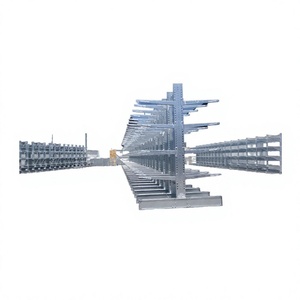
Heavy Duty Cantilever Storage Racks Orange Blue Steel Systems
Unobstructed arm access designed for pipes, lumber, tubing, and non-standard long profiles with variable load centers.
View Specifications →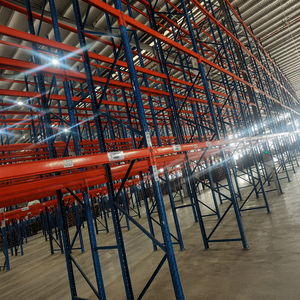
Factory Price Heavy Duty Industrial Selective Pallet Racks
Universal accessibility for mixed inventory SKUs, compatible with all counterbalance and reach fork truck classes.
View Specifications →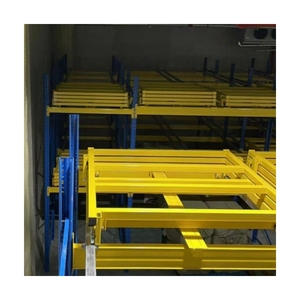
Heavy Duty Warehouse Push Back Pallet Racking Systems
Nested cart channels allowing 2-to-6 deep pallet staging, maximizing footprint utilization while reducing travel aisles.
View Specifications →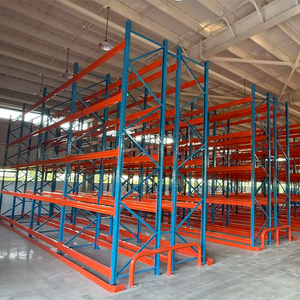
Engineering Design Pallet Rack System with Wire Deck Option
Welded waterfall wire mesh decking certified for uniform load support, sprinkler penetration, and enhanced overhead visibility.
View Specifications →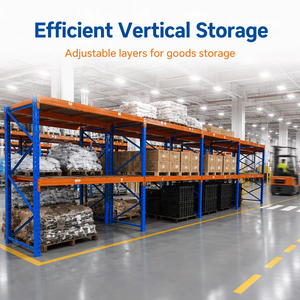
OEM ODM Adjustable Industrial Heavy Duty Selective Pallet Racking
Custom structural steel gauges, beam beam pitch adjustments, and custom upright depths engineered for heavy loads.
View Specifications →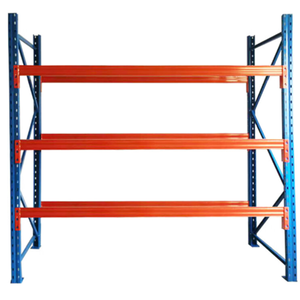
Heavy Duty Industrial Warehouse Pallet Shelving System
Versatile frame architectures seamlessly integrating floor-level carton flow with multi-tier upper pallet bays.
View Specifications →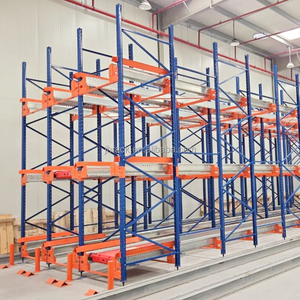
Automated Radio Shuttle Racking System for High Density
Self-powered deep-lane shuttle carts operating inside dedicated rail channels for minimal fork truck cycle transit.
View Specifications →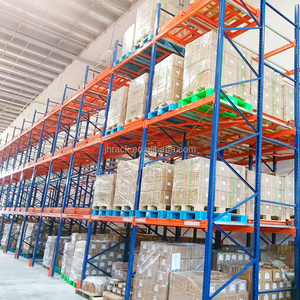
Industrial Push-Back Pallet Racks: Heavy-Duty Steel System
High-yield structural channel rails and enclosed cart bearing assemblies designed to operate reliably in sub-zero freezers.
View Specifications →OEM/ODM Structural Steel Storage Mechanics: Engineering Beyond Roll-Formed Limits
In high-velocity distribution centers and temperature-controlled logistics, industrial pallet racking functions not as passive warehouse furniture, but as a critical, load-bearing structural framework. As global supply chains demand denser storage footprints and increased cycle speeds from automated handling equipment, the fundamental engineering choices behind rack fabrication dictate long-term operational resilience, workplace safety, and bottom-line Total Cost of Ownership (TCO).
Our OEM/ODM manufacturing facilities produce storage systems engineered from 100% hot-rolled structural steel channel members. Unlike conventional roll-formed (teardrop) racking formed by cold-stamping thin sheet gauge coils, hot-rolled structural steel provides substantial cross-sectional thickness, uniform mechanical isotropic properties, and superior yield strength. Cold-formed steel profiles rely on open-back channel configurations that are inherently vulnerable to torsional bucking and localized crumpling under forklift impact.
| Structural Parameter | Hot-Rolled Structural Steel (OEM/ODM) | Roll-Formed Teardrop Steel | Operational Impact & Safety Compliance |
|---|---|---|---|
| Steel Composition & Thickness | Heavy C-Channel (Minimum 3/16" to 1/4" wall thickness) | Cold-rolled sheet coil (12 to 16 gauge, open seam) | Structural Superiority Hot-rolled channels resist 250% higher torsional twisting. |
| Forklift Impact Resistance | Absorbs dynamic collisions; structural flanges deflect impact | Column buckles or tears at punch slots; catenary failure risk | 2-Year Damage Warranty Structural components withstand daily operational impacts. |
| Connection Architecture | Heavy-duty bolted structural connections with Grade 5 bolts | Clip-in pin / teardrop gravity locking tabs | Seismic Stability Rigid bolted connections prevent dislodgement under cyclic seismic vibration. |
| Sub-Zero / Cold Storage Behavior | Ductile transition properties; resists low-temperature embrittlement | Prone to micro-fractures along cold-bent stress points | Cold Chain Standard Engineered for blast freezers operating down to -30°F (-34°C). |
| Field Repairability & Modularity | Damaged upright segments can be unbolted and replaced on-site | Requires field splicing or full frame tear-down & unloading | Zero Business Interruption Lower maintenance overhead and minimal downtime. |
Structural Load Physics and Seismic Integrity
Dynamic rack failure rarely originates solely from vertical dead loads; failure is overwhelmingly triggered by the compounding combination of horizontal dynamic braking forces, off-center live pallet loads, and lateral impact collisions at the floor level. Under RMI (Rack Manufacturers Institute) ANSI MH16.1 specifications, structural racking engineered with heavy hot-rolled C-channel frames dissipates kinetic impact energy throughout the interconnected column lattice.
Furthermore, in seismic design categories (SDC D, E, and F), structural steel systems utilize oversized, thick-gauge base plates anchored with heavy expansion or epoxy anchors. The rigid beam-to-column bolted joint geometry maintains rotational stiffness, effectively limiting drift displacement and preventing catastrophic progressive collapse during ground acceleration events.
Why Enterprise Brands Rely on Our Manufacturing Footprint
Decades of continuous production, complete supply chain ownership, and fully integrated North American manufacturing facilities.
10 Regional Production Facilities
Operating manufacturing facilities across the United States (New Jersey, Pennsylvania, New York, South Carolina, Tennessee, Idaho), Canada (Trenton, Ontario), and Mexico (Escobedo, Mexicali). Localized production eliminates costly cross-ocean shipping delays and supports rapid project timelines.
Custom OEM/ODM Engineering
From custom beam profiles and heavy-capacity cantilever arms to specialized coil-cradle storage racks, our engineering teams build to your exact operational parameters. We provide full structural PE (Professional Engineer) stamps and permit calculations for every installation jurisdiction.
Industry-Leading 2-Year Impact Warranty
While generic suppliers exclude forklift collisions from standard warranties, our confidence in heavy-duty hot-rolled structural steel allows us to offer an unprecedented 2-year rack damage warranty. This bolted, field-repairable design ensures dependable durability under continuous warehouse cycles.
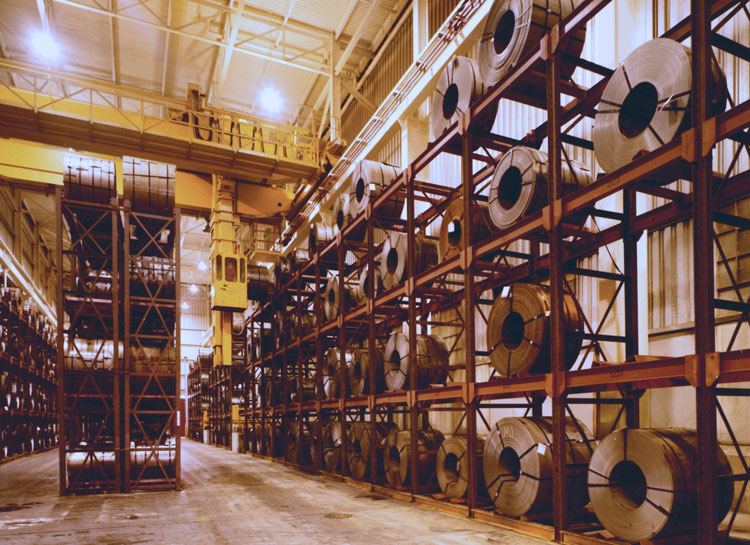
End-to-End Control: From Raw Mill Billets to On-Site Commissioning
As a dedicated OEM/ODM manufacturer, we maintain absolute custody of material quality. We procure certified prime mill structural steel, ensuring tensile strength compliance before precision punching, robotic welding, and shot-blasting procedures.
Our finishing systems include electrostatically applied lead-free thermoset powder coatings for high-visibility indoor longevity, as well as optional hot-dip galvanizing for harsh outdoor yards and chemical storage environments.
Pallet Racking Procurement Trends (2025–2035)
How supply chain executives, warehouse developers, and procurement managers are navigating modernization and risk mitigation.
Regionalization & USMCA Compliance
Global supply chain volatility has accelerated the shift away from fragile overseas freight lanes. Sourcing from domestic and USMCA-integrated manufacturing networks guarantees stable lead times and rapid access to replacement components.
Transition to Rack-Supported Buildings
Rising land costs and high interest rates make conventional warehouse construction less viable. Rack-supported buildings (where the structural rack framework supports the roof and walls) maximize vertical cube utilization while reducing civil construction costs.
ASRS and Shuttle Readiness
Modern procurement demands structural racking engineered to sub-millimeter tolerances. Racks must accommodate high-speed automated storage and retrieval systems (ASRS), robotic pallet shuttles, and autonomous mobile robot (AMR) interfaces.
Decarbonized, High-Yield Steel
Corporate ESG targets require materials with documented low embodied carbon. Facilities built with repairable, fully recyclable structural steel maintain operational utility for decades, preventing frequent frame replacements.
Next-Generation Technological Trajectories in Pallet Storage
The industrial storage industry is undergoing a digital and mechanical transformation. Pallet racks are shifting from static warehouse frames into intelligent, connected structural platforms. Enterprise operators should anticipate and specify several forward-looking advancements:
IoT Structural Health Telemetry
Embedded fiber-optic strain gauges and wireless accelerometers built into upright frames provide real-time alerts on localized forklift impacts and seismic settlement, enabling proactive safety management and compliance logging.
Robotic Interface Tolerances
As Autonomous Mobile Robots (AMRs) and automated shuttle carts replace manual forklifts, racking engineering tolerances have tightened from 1/4" to sub-millimeter precision, requiring CNC robotic punching and laser-calibrated guide rails.
Thermal Efficiency Aerodynamics
Modern push-back and shuttle racking systems in sub-zero cold chain facilities incorporate aerodynamically profiled structural channels, maximizing conditioned airflow between pallet tiers and reducing refrigeration energy consumption.
Frequently Asked Questions by Industrial Buyers
Technical guidance for warehouse directors, industrial architects, and global procurement teams.
How does hot-rolled structural steel compare to roll-formed teardrop racking in Total Cost of Ownership (TCO)?
What engineering documentation is required to achieve warehouse permitting in North America?
How do regional production facilities in the USA, Canada, and Mexico benefit procurement timelines?
Can OEM/ODM pallet racking be customized for integration with automated ASRS and pallet shuttle carts?
Why is bolted structural connection considered superior to teardrop connection in seismic zones?
What parameters do our structural engineers require to generate a custom system layout and quotation?
Consult with an Industrial Storage Structural Engineer
Planning a high-density DC expansion, cold storage facility, or automated distribution center? Connect directly with our manufacturing engineering team for complete structural calculations, CAD space layouts, and competitive factory-direct OEM/ODM pricing.