Certified Industrial Systems
High-Performance Storage Equipment & Selective Systems
Direct manufacturer-engineered structural steel and cold-formed rack systems built to satisfy demanding warehouse, cold-chain, and high-density distribution center criteria.
Industrial Strength Built-In
Why Tier-1 Warehouses Partner With Our OEM Facilities
Combining proprietary structural steel hot-rolling technology with turn-key project management, we eliminate the structural vulnerabilities commonly found in budget thin-gauge alternatives.
100% Hot-Rolled Structural Channel
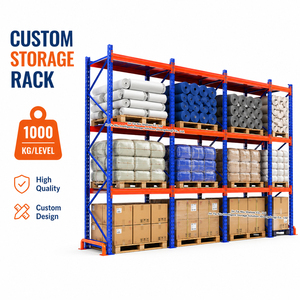
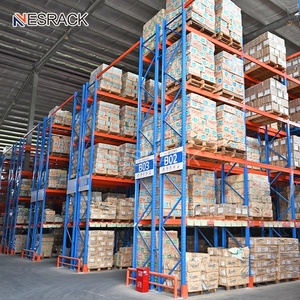
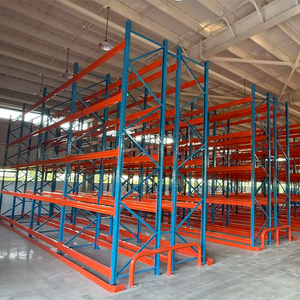
Unlike standard cold-rolled roll-formed (teardrop) designs, our uprights utilize heavy-duty structural channel steel. This delivers maximum impact resistance against forklift abuse in high-velocity transit environments.
Precision Engineering & Custom OEM
Every racking system is custom-configured using advanced FEA simulation models to match specific building clear heights, concrete slab capacities, seismic zone profiles, and local municipal structural building codes.
Direct Exporter & Global Integration
With high-volume multi-facility production spanning North America and global trade hubs, our streamlined supply chain minimizes intercontinental freight lead times and guarantees unified tolerances across massive multi-site facilities.
Engineering Insights: Sourcing Trends & Technological Evolution in Industrial Racking
Modern global logistics networks face immense structural challenges: skyrocketing cost-per-square-foot of industrial land, persistent warehouse labor shortages, and aggressive throughput requirements driven by omnichannel retail. Sourcing enterprise warehouse racking is no longer a matter of simple commodity steel procurement; it is a long-term capital deployment that defines logistical operational capacity for decades.
1. The Shift to High-Rise ASRS and Rack-Supported Buildings
Traditional warehouses operating at standard clear heights of 28 to 32 feet are increasingly superseded by high-bay automated architectures reaching upwards of 100 to 140 feet. In these ultra-dense installations, racking serves a dual purpose:
- Structural Rigidity: Rack-supported structures eliminate the need for conventional structural building frames. The racking grid carries the building envelope, wall cladding, and roof wind/snow loads directly.
- Sub-Millimeter Tolerances: Automated Storage and Retrieval Systems (ASRS) and robotic shuttles operate with zero tolerance for beam deflection. Sourcing requires manufacturers capable of maintaining robotic-grade structural steel straightness and deflections under 1/500th of clear span.
2. Cold-Chain Durability and Micro-Climate Resiliency
With pharmaceutical cold chains and rapid-frozen food logistics expanding globally, cold-storage warehouse design has become a major sourcing discipline. Standard thin-gauge steel experiences significant embrittlement in deep-freeze environments (-20°F to -40°F). Leading global enterprises are moving exclusively toward bolted hot-rolled structural shapes, where thicker structural channel web profiles absorb persistent forklift strikes without brittle catastrophic failures, ensuring continuous cold-chain compliance and lowering lifetime cost of maintenance.
3. Lifecycle Sourcing Economics: Total Cost of Ownership (TCO)
Procurement directors increasingly analyze racking investments across a 15-to-20-year lifecycle rather than initial invoice price per pallet position:
- Impact Resistance vs. Replacement Cycle: Roll-formed teardrop uprights frequently succumb to corner damage, requiring costly column repair kits, safety netting, or entire bay teardowns. Hot-rolled structural steel columns resist torsional bending, maintaining structural integrity under repeated direct impact.
- Modular Bolted Connections: Structural racking systems utilize bolted frame-to-beam connectors that transfer moments reliably. This design prevents beam dislodgement under high load dynamics, reducing operational downtime and ongoing safety audits.
| System Architecture | Material Engineering | Space Optimization | Inventory Rotation | Optimal Deployment |
|---|---|---|---|---|
| Structural Selective Rack | Hot-Rolled Structural Channel | Baseline (Standard Aisles) | 100% Direct Access (FIFO/LIFO) | High-SKU Logistics & 3PL Hubs |
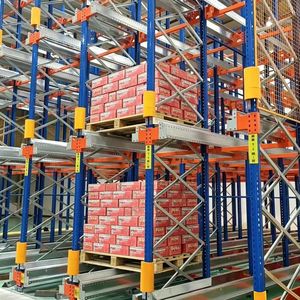
| Radio Shuttle Automation | Heavy-Duty Q235/Structural | Ultra-High (Deep Lane) | Configurable (FIFO/LIFO) | Cold Storage & Food Processing |
| Push-Back Nested Carts | Heavy Gauge Steel Tracks | High (2-6 Pallets Deep) | LIFO Strategy | Medium Velocity Wholesalers |
| ASRS Rack-Supported Structure | Certified Structural Grade H-Beam | Maximum Cube Volume | Automated System-Controlled | Mega-Scale Automated Fulfillment |
4. Seismic Code Compliance & Regulatory Permitting
Securing municipal warehouse operating permits in modern industrial zones requires comprehensive engineering documentation validated against ANSI MH16.1 specifications, seismic category evaluations, and concrete anchor shear calculations. Enterprise sourcing teams must verify that OEM manufacturers provide complete stamping capability, site-specific base plate dimensioning, and structural certification to avoid regulatory shutdowns during occupancy reviews.
Procurement Due Diligence
Frequently Asked Questions on OEM Industrial Racking Sourcing
Essential technical and logistical answers for supply chain executives, warehouse directors, and industrial procurement professionals.
What are the structural differences between hot-rolled structural steel and cold-formed roll-formed racking?
Hot-rolled structural steel racking is manufactured by hot-rolling raw steel billets into uniform C-channel shapes at temperatures exceeding 1,700°F, creating a dense, ductile, and uniform microstructure with typical column thickness of 3/16" to 1/4". In contrast, roll-formed (teardrop) racking is shaped at room temperature from thin sheet coils (typically 12 to 16 gauge). Structural steel provides up to 200% higher impact resistance against forklift collisions, superior torsional rigidity, and does not buckle under localized impacts, significantly lowering maintenance costs in high-volume environments.
How do OEM custom manufacturers handle seismic design loads and engineering permits?
OEM engineering teams utilize professional Finite Element Analysis (FEA) software to model seismic performance based on site-specific geotechnical data, building codes (such as IBC, NFPA 13, and RMI ANSI MH16.1), and local seismic acceleration values (Ss and S1). We calculate precise anchor bolt embedment depths, seismic base plate thicknesses, and bracing patterns to provide certified structural calculation packages ready for municipal engineering review.
Can automated radio shuttles and robotic integrations be retrofitted into existing selective systems?
Yes. OEM structural manufacturing allows for custom conversion kits. Deep-lane pallet channels, radio shuttle tracks, and sensor-aligned entry guides can be engineered to mount directly into standard structural uprights, provided the concrete slab capacity and frame vertical load ratings meet the concentrated weight loads of high-density shuttle storage.
What surface treatment is best suited for cold storage versus standard manufacturing environments?
For standard temperature-controlled warehouses, high-durability electrostatic powder coating (epoxy-polyester hybrid baked at 400°F) provides superior scratch resistance, color stability, and mechanical wear protection. For external yards, blast freezers (-40°C), or highly corrosive chemical storage environments, Hot-Dip Galvanization (HDG) conforming to ASTM A123 is recommended, creating a metallurgically bonded zinc-iron alloy layer that permanently prevents corrosion.
What data is required from our engineering team to generate an exact layout and quotation?
To produce an optimized CAD proposal and load matrix, we require: (1) Architectural drawings showing clear height, column spacing, and sprinkler drops; (2) Pallet dimensions (width, depth, height including overhang) and maximum pallet gross weight; (3) Material handling equipment specs (forklift mast maximum reach, outrigger width, and required aisle clearance); (4) Inventory turnover profile (FIFO vs. LIFO); and (5) Project location for regional seismic and environmental loading calculations.