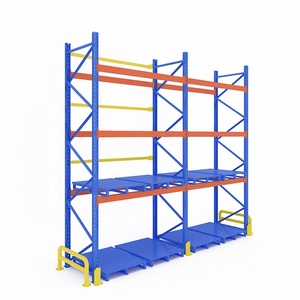
Specialized OEM Storage Racking Systems
Custom-engineered racking assemblies manufactured from premium Q235B and hot-rolled structural steel, optimized for heavy load capacities, forklift durability, and automated retrieval accuracy.
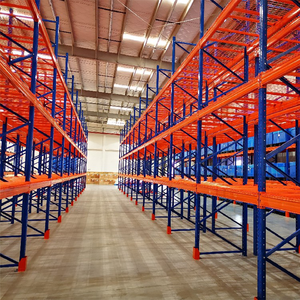
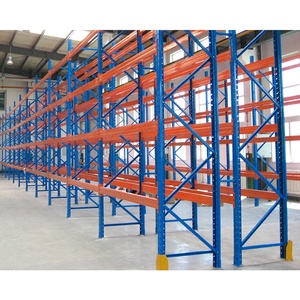
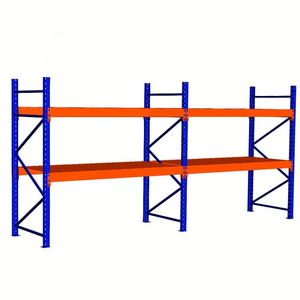
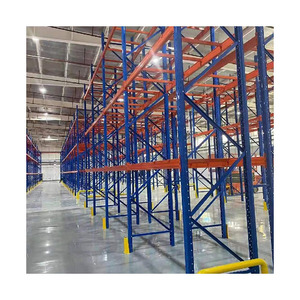
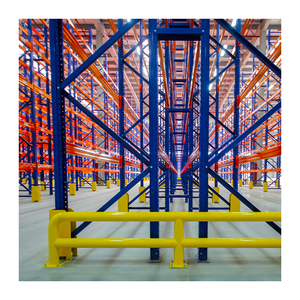
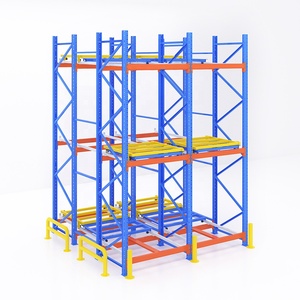
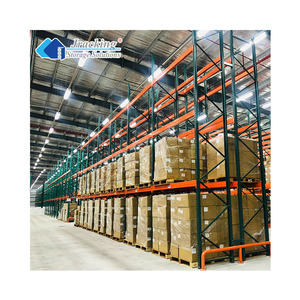
Structural Design Paradigms in Modern Industrial Warehousing
An in-depth analysis of metallurgical specifications, load dissipation physics, and global compliance benchmarks for supply chain engineers and procurement executives.
Modern distribution complexes, regional logistics centers, and FMCG cold chains no longer view warehousing racking as simple modular shelving. In an era dominated by hyper-speed fulfillment and high-cube vertical optimization, racking infrastructure represents the mechanical backbone of industrial operations. Specifying the wrong engineering profile can lead to catastrophic structural creep, deflection under high deadweight, or devastating progressive collapses caused by minor forklift impacts.
Metallurgical Distinctions: Hot-Rolled Structural Channels vs. Cold-Rolled Teardrop Systems
As a global OEM manufacturer, one of the most vital technical decisions our clients face is selecting between hot-rolled structural steel (ASTM A36 / Q355B equivalents) and cold roll-formed steel (Q235B teardrop styles). Roll-formed racking provides an economical, rapid-assembly solution suited for moderate load environments and non-impact logistics. Manufactured by feeding coiled sheet metal through continuous forming rollers, its open-back post profiles rely heavily on torsional geometry for strength.
In contrast, structural steel pallet racking is fabricated from hot-rolled structural C-channels with massive web thicknesses (ranging from 3" to 5" profiles). The corners of structural channels feature significantly denser molecular steel grain distribution, rendering them exponentially more resistant to impact collisions from reaching counterbalanced forklifts. Because structural frames utilize solid welded or high-tensile bolted connections rather than plug-in clips, they do not pop free or fatigue under dynamic cycling, yielding unmatched durability in harsh freezer temperatures (-30°C) and heavy-manufacturing distribution hubs.
| Evaluation Parameter | Cold Roll-Formed (Teardrop) | Hot-Rolled Structural Steel | Automated High-Bay AS/RS |
|---|---|---|---|
| Steel Grade Standards | Q235B / Cold-Rolled Coils | ASTM A36 / Q355B Structural Channel | High-Tolerance Ultra-Straight Alloy |
| Forklift Impact Resistance | Moderate (Prone to local buckling) | Exceptional (Absorbs high-energy shear) | Reinforced with Floor-Mounted Armor |
| Max Capacity per Bay | Up to 12,000 kg | Up to 30,000+ kg | Exceeds 45,000 kg (Engineered) |
| Operating Temperature | Ambient to -10°C | Proven down to -35°C (No embrittlement) | Controlled Cold Storage to Ambient |
| Code Compliance | RMI ANSI MH16.1 / EN 15512 | AISC 360 / RMI / CSA S16 | FEM 9.831 / DIN 18800 Structural |
Dynamic Seismic Dissipation and Finite Element Analysis (FEA)
Global warehouse deployments across North America, Latin America, and the Pacific Rim require rigorous seismic analysis. Racks act as tall, unbraced or semi-braced vertical steel cantilevers holding hundreds of tons of live inventory. Through advanced Finite Element Analysis (FEA), our design team models baseplate rotational stiffness, frame sway, and dynamic P-Delta secondary moments under seismic excitation (mapped against ASCE 7 and IBC Seismic Design Categories A through F). By incorporating heavy-gauge floor anchoring, reinforced horizontal seismic ties, and back-to-back row spacers, our industrial racks maintain operational stability during earth accelerations, avoiding devastating catastrophic structural failure.
Future Sourcing & Technological Trends in Warehousing
Strategic technological evolutions altering global procurement criteria, capital expenditure planning, and modular logistics configurations over the coming decade.
AS/RS Precision Tolerances
The global shift toward unmanned robotics and crane-fed Automated Storage and Retrieval Systems (AS/RS) demands racking straightness tolerances down to ±1.5 mm over a 30-meter height, driving the transition to CNC-punched structural steel uprights.
Smart IoT Structural Health
Next-generation racking components integrate embedded strain gauges and acceleration sensors, providing real-time telemetry on beam micro-deflections, overload hazards, and unauthorized impact collisions via cloud SCADA interfaces.
Low-Carbon Recycled Steel
Multinational procurement mandates now evaluate embodied carbon. Electric Arc Furnace (EAF) structural steel production utilizing up to 90% recycled scrap reduces supply chain Scope 3 emissions for enterprise ESG certification.
Modular Rack-Supported Buildings
Rising construction costs favor "Clad-Rack" structures, where racking uprights form the load-bearing frame for warehouse walls and roofs, bypassing conventional structural steel columns and accelerating commission timelines by 40%.
Why Tier-1 Integrators Partner With Us
Combining seventy-five years of structural innovation with extensive North American and transcontinental production capacity to eliminate logistics supply chain risks.
Certified Global Compliance
Our production facilities maintain active ISO 9001:2015 certifications, fabricating racking strict to RMI ANSI MH16.1, AISC 360, EN 15512, and Canadian CSA S16 specifications. We furnish professional engineer (PE) stamped structural calculation packages for local permitting throughout North America, Europe, and Australia.
End-to-End OEM / ODM Engineering
From custom beam profiles and heavy-duty coil storage cradles to specialized cantilever arms and push-back cart track pitch optimization, our dedicated AS/RS and structural engineering groups design tailored solutions matched directly to your unique pallet geometry, unit deadweights, and forklift handling clearances.
Tri-National Nearshoring Network
Operating ten high-capacity manufacturing centers across the United States, Canada, and Mexico, our supply network dramatically shortens freight distances, circumvents international port delays, and lowers trans-border tariffs under USMCA regulations, guaranteeing guaranteed project delivery deadlines.
Frequently Asked Questions for Storage Rack Sourcing
Essential considerations for supply chain directors, facility engineers, and industrial procurement teams.
What engineering variables must be provided to initiate an accurate custom OEM rack quotation?
To produce an authoritative structural design, layout blueprint, and cost model, our engineering group requires: (1) Building Architectural Plans: Clear building height under bar joists, column grids, slab thickness, concrete compressive strength (PSI), and sub-base soil classifications; (2) Pallet & Load Profiles: Total width, depth, height, and maximum deadweight per pallet (including pallet overhang parameters); (3) Material Handling Equipment: Turning radius, lift mast height, outrigger profiles, and aisle width clearances for your specific reach trucks, VNA wire-guided turrets, or counterbalance forklifts; (4) Site Geo-Data: Building address for local seismic acceleration parameters (Ss, S1), frost depth, and wind exposure if designing exterior or clad-rack buildings; (5) EHS & Fire Protection: In-rack sprinkler pipe requirements and flue space regulations (NFPA 13 standards).
Why does hot-rolled structural steel deliver a lower Total Cost of Ownership (TCO) than roll-formed teardrop?
While cold roll-formed teardrop systems carry a lower initial purchase price, they have thin wall profiles (often 12-to-14 gauge) with an open-channel back that buckles readily when impacted by forklifts. In high-velocity distribution centers, upright damage rates necessitate recurring replacement downtime, expensive engineered repairs, and potential safety shutdowns. Structural steel hot-rolled C-channels possess thick, solid flanges and webs that resist heavy mechanical blows, feature field-boltable repairability, and are backed by comprehensive warranties—drastically lowering lifetime warehouse maintenance and liability expenses.
How are surface treatments selected for cold storage (-30°C) versus exterior ambient facilities?
For standard dry ambient warehousing, our industrial racks receive an automated electrostatic thermoset powder coat applied over a multi-stage phosphate conversion wash, yielding a scratch-resistant, uniform finish. In sub-zero cold storage facilities and high-humidity chemical environments, we recommend heavy-duty structural steel profiles finished with either a specialized low-temperature epoxy powder or Hot-Dip Galvanizing (ASTM A123). Galvanizing provides complete sacrificial cathodic protection inside and out, preventing internal corrosion caused by continuous condensation cycling.
What documentation is provided to satisfy local municipal building permits and OSHA inspections?
Every commercial racking system engineered by our organization is accompanied by full engineering documentation. This includes detailed plan view layouts, elevation drawings, anchor bolt shear/tension verification calculations, slab load dispersal metrics, and official calculation packets wet-stamped or electronically sealed by a certified Professional Engineer (PE / SE) registered in the jurisdiction of installation. Furthermore, certified maximum capacity plaques are supplied for field attachment at every bay, fulfilling OSHA and ANSI MH16.1 compliance.
Can your engineering team coordinate structural integrations directly with third-party automated AS/RS suppliers?
Yes. Our dedicated high-rise engineering division works directly with top global automated material handling system integrators. We coordinate exact crane guide rail interfaces, top and bottom runway tolerances, automated shuttle track alignments, and dynamic acceleration load distributions. Whether designing free-standing high-bay rack systems or fully integrated clad-rack facilities over 40 meters tall, our manufacturing lines adhere to stringent structural fabrication tolerances to ensure flawless automation execution.
Consult With a Senior Storage Rack Application Engineer
Accelerate your facility throughput, maximize cubic storage density, and ensure total code safety with an engineered structural layout tailored to your operational profile.