Featured Industrial Pallet Racking & Heavy Shelving Lines
Directly manufactured in our accredited production plant with advanced continuous roll-forming lines, automated punching systems, and robotic welding clusters tailored for international distribution standards.
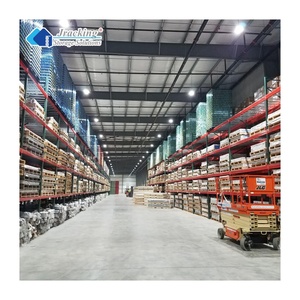
US Standard Industrial Teardrop Pallet Racking
- Pitch Interval: 2.0 Inch (50.8 mm)
- Standard Bay Load: Up to 30,000 lbs
- Compatibility: Universal Interchangeable
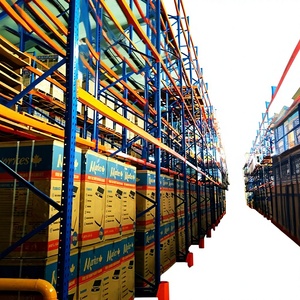
Heavy Duty Industrial Steel Storage Racking
- Beam Section: Box & Step Beams
- Layer Capacity: 1,000 - 5,000 kg / tier
- Surface Finish: AkzoNobel Epoxy Powder
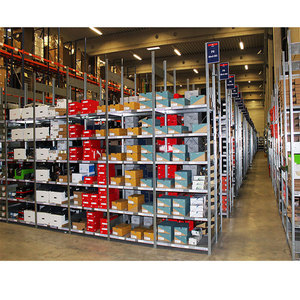
European Standard Heavy Duty Pallet Rack
- Upright Pitch: 50mm / 75mm Adjustable
- Compliance: EN 15512 & FEM 10.2.02
- Safety Factor: gamma_M = 1.4 Steel Factor
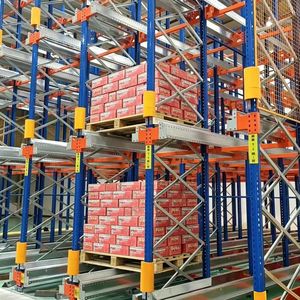
Automated Radio Shuttle Pallet Racking
- Storage Modes: FIFO & LIFO Operations
- Travel Speed: Up to 1.1 m/s (Loaded)
- Temperature Range: -25°C to +45°C Freezer Safe
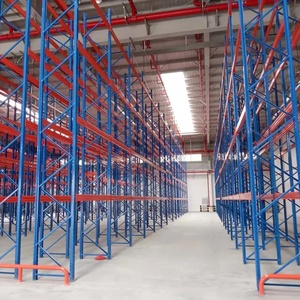
Anti-Rust 5-Tier Long Span Warehouse Shelving
- Unit Load: 300 - 800 kg / level
- Decking Type: Galvanized Mesh / Solid Steel
- Assembly: Quick-Lock Boltless System
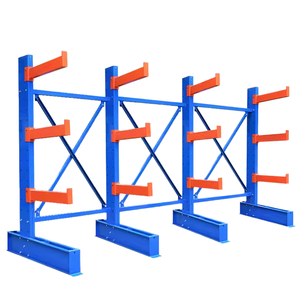
Industrial Structural Cantilever Rack Systems
- Arm Capacity: 500 - 3,000 kg / arm
- Column Types: Single or Double-Sided Post
- Typical Goods: Pipes, Profiles, Timber, Coils
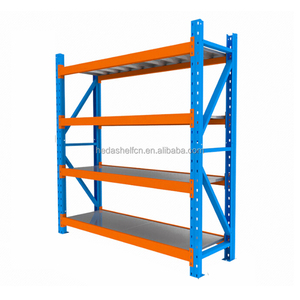
Factory Boltless Stacking Industrial Shelves
- Structure: Interlocking Plug-in Joint
- Upright Profile: Butterfly & Diamond Hole
- Corrosion Class: C2 - C4 High Resistance
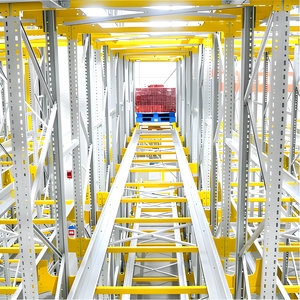
Double Deep Heavy-Duty High-Bay Pallet Racks
- Density Index: 50% Fewer Aisles Needed
- Vertical Clearance: Engineered up to 12+ Meters
- Truck Equipment: Pantograph Deep-Reach Forklifts
China Wholesale Pallet Rack Sourcing Guide: Structural Integrity, Quality Verification, & Supply Chain Resilience
Navigating direct procurement from China wholesale pallet rack shelving factories requires a rigorous, engineering-grounded evaluation beyond superficial pricing per metric ton. As logistics real estate rates soar globally, modern distribution centers, 3PL aggregators, and cold storage hubs depend entirely on the load safety, dimensional tolerances, and metallurgic consistency of their racking skeletons. A failure in an industrial upright or beam deflection under maximum static load not only damages inventory but poses catastrophic life-safety hazards. Sourcing from top-tier Chinese racking manufacturers bridges cost-effectiveness with world-class structural steel engineering, provided procurement teams implement precise QA/QC checklists and structural verification protocols.
Raw Material Metallurgy: Q235B vs. Q355B and Certified High-Tensile Coils
The foundation of durable pallet racking lies in the original prime steel coils. Reputable Chinese factories source directly from state-owned mega-mills such as Baosteel, Shougang, or Ansteel, furnishing Mill Test Certificates (MTC) with each heat number. While Q235B (yield strength equivalent to ASTM A36) is commonly used for standard light-to-medium industrial shelving and roll-formed box beams, automated high-bay facilities and seismic zones require high-yield Q355B (equivalent to ASTM A572 Grade 50 / European S355JR). The higher tensile strength allows optimized cross-sections, increased section modulus, and enhanced load factors without excessive structural deadweight.
Automated Continuous Roll-Forming and Punching Tolerances
Dimensional consistency across upright profiles and connector lugs is vital for rapid on-site erection. Leading factories utilize high-precision CNC punch presses operating before continuous multi-station cold roll-forming lines. This prevents residual internal stresses and preserves hole-pitch accuracy within ±0.2mm over a 12-meter continuous column. Whether fabricating American standard 2-inch teardrop profiles, European 50mm/75mm upright pitch, or Australian AS4084 76.2mm configurations, continuous in-line monitoring eliminates camber, bow, and twist, ensuring upright frames remain vertical during plumb-line surveys.
Why Tier-1 Warehouse Operators Partner With Our Factory
Integrating end-to-end mechanical engineering, flexible robotic fabrication, and complete global code certifications to provide seamless project delivery from turnkey layout to on-site assembly.
In-House Structural Engineering & FEA
Our dedicated engineering team models every bespoke project using advanced ANSYS structural simulation, certifying deflection ratios (L/200, L/300) under dynamic seismic loadings, live forklift vibrations, and heavy slab interaction.
100% Structural Steel & Roll-Formed Capacity
We run both high-efficiency cold roll-forming lines and heavy hot-rolled structural steel channel production cells. Our modular plant handles standard teardrop, European selective, high-density push back, and massive cantilever beams simultaneously.
Global Code Compliance & Certifications
Full compliance with US RMI ANSI MH16.1, European EN 15512 / FEM 10.2.02, and Australian AS 4084-2023. Our testing lab conducts rigorous destructive static load tests, cantilever shear tests, and beam-end connector moment-rotation evaluations.
Industrial Coating & Pre-Treatment
Our 6-stage surface preparation line incorporates automated shot-blasting (Sa 2.5 grade) followed by non-phosphate silane nanotechnology. Electrostatic epoxy-polyester powder coats cure in a 200°C tunnel, delivering 500+ hours salt-spray resistance.
Direct Export Packaging & Ocean Freight Optimization
Uprights and beams are bundled with steel bandings, custom wood dunnage, protective corner guards, and water-resistant shrink film. Our loading software optimizes container cubic utilization up to 98.5%, significantly decreasing sea-freight overhead per pallet position.
Bespoke OEM / ODM Tailoring
From specialized teardrop roll-formed punch patterns for North American retailers to seismic base plates, heavy structural column protectors, and custom rail extrusions for radio shuttle carts, our rapid tooling team delivers bespoke solutions in weeks.
Industrial Storage Systems: Technical & Operational Comparison
Compare storage density, SKU selectivity, inventory flow, and initial capital expenditures across primary warehouse racking topologies to determine the optimal configuration for your operational profile.
| System Architecture | Storage Density | Pallet Selectivity | Inventory Rotation | Recommended Forklift Equipment | Optimal Industry Application |
|---|---|---|---|---|---|
| Selective Pallet Rack | Standard (40-50%) | 100% Direct Access | FIFO / LIFO Flexible | Standard Counterbalance, Reach Truck | General Distribution, E-commerce, Retail DCs |
| Double-Deep Racking | High (60-65%) | 50% Immediate Access | LIFO | Pantograph Deep-Reach Forklift | Wholesale Bulk, Cold Storage, Staging Buffers |
| Drive-In / Drive-Through | Very High (75-85%) | Low (Per Lane Lane) | LIFO (Drive-In) / FIFO (Drive-Thru) | Narrow-Chassis Counterbalance / Reach | High-Volume Seasonal Goods, Freezers, Beverages |
| Push Back Racking | High (65-75%) | Lane-Level Selectivity | LIFO (Gravity Cart Retraction) | Standard Reach Truck | Medium SKU Velocity, Food & Beverage Hubs |
| Pallet Flow (Gravity Roller) | Very High (80-85%) | Lane-Level Selectivity | Strict FIFO (First-In, First-Out) | Separate Loading & Retrieval Trucks | Perishables, Pharmaceutical, Expiration Batching |
| Radio Shuttle Automation | Maximum (85-92%) | Lane Automated Shuttle | FIFO & LIFO Programmed | Standard Forklift for Shuttle Relocation | Large Cold Stores, FMCG Mega-Hubs, High Labor Cost DCs |
| Structural Cantilever Rack | Specialized Linear | 100% Accessible Long Loads | Flexible Batch Access | Side Loader, Multi-Directional Forklift | Steel Pipes, Lumber, Extrusions, Sheet Coils |
What Will Define Global Pallet Racking Procurement Over the Next Decade?
Examine the shifts transforming warehouse storage manufacturing—from carbon-neutral steel tracing and seismic resilience to deep-tier autonomous intralogistics ecosystems.
Green Steel & Sustainable Manufacturing
Global enterprise buyers are under pressure from Scope 3 emissions reporting. The procurement of warehouse racking is rapidly aligning with ESG criteria, driving demand for verified environmental product declarations (EPD).
- Transition from blast furnaces to Electric Arc Furnace (EAF) steel with recycled scrap content exceeding 75%.
- Low-VOC and zero-solvent powder coating lines with full heat-recovery closed-loop curing ovens.
- Life-cycle assessments calculating carbon footprints per installed pallet position across international logistics routes.
Direct ASRS & 4-Way Pallet Shuttle Compatibility
Traditional static racks are steadily giving way to automated storage architectures. Upright frames and support rails must satisfy millimetric deflection tolerances to integrate with robotic shuttles and stacker cranes.
- Tighter beam straightness tolerances (L/1000) for seamless optical laser navigation of automated guided vehicles (AGVs).
- Embedded laser-cut rail systems designed for 4-way autonomous shuttles moving along both X and Y grid axes.
- Pre-punched channels for sensor cables, optical busways, and integrated power tracks inside structural columns.
Performance-Based Seismic Design & Base Isolation
With major logistics corridors situated in seismically active regions across the Americas and Asia-Pacific, racking procurement prioritizes certified dynamic resilience and post-earthquake operational continuity.
- Transition from static load calculations to non-linear dynamic time-history simulation of earthquake response.
- Bespoke ductile energy-dissipating base plates that protect warehouse concrete floor slabs from catastrophic punch-through.
- Heavy structural bracing configurations specifically compliant with FEMA 460 and ASCE 7 structural standards.
BIM Integration & Digital Twin Maintenance
Warehouse designers now expect parametric Building Information Modeling (BIM) objects to coordinate structural steel racking with overhead fire sprinklers, HVAC ducting, and automated handling machinery.
- Autodesk Revit Level of Detail (LOD) 350-400 BIM model provision directly from factory engineering desks.
- Integrated RFID tagging and QR serial engraving on structural uprights for life-cycle asset inspection tracking.
- Predictive maintenance analytics via wireless strain gauge sensors monitoring live structural deflection thresholds.
Frequently Asked Questions on Pallet Rack Sourcing
Practical, engineering-grade answers addressing common technical queries, international shipping logistics, structural standards, and custom manufacturing runs.
How does structural steel racking compare to roll-formed teardrop in total cost of ownership (TCO)?
While roll-formed teardrop racking offers a lower initial purchase price due to lighter steel gauges, structural steel racking (fabricated from hot-rolled C-channels) delivers dramatically superior impact resistance. In busy distribution centers or freezers with frequent forklift contact, roll-formed columns can buckle easily, requiring frequent bay shutdowns and costly frame replacements. Structural steel absorbs impacts with minimal deformation, significantly lowering lifetime repair costs and preventing operational downtime.
What documentation does a China factory need to provide for local warehouse building permits?
To secure municipal building permits in North America (IBC/RMI) or Europe (Eurocodes), buyers require comprehensive engineering calculation packages. This includes stamped structural calculations showing dead, live, wind, and seismic loads, Mill Test Certificates (MTC) proving steel chemical composition and tensile strength, welding certifications (AWS D1.1 or ISO 3834), and finite element connection data verifying beam-to-column connector moment capacities.
How do you prevent freight damage and rust during long ocean transit across varying humidity?
Industrial components undergo thorough packaging: uprights and beams are bundled with steel bands, cushioned with protective plastic edge-guards, and separated by corrugated dunnage to eliminate metal-on-metal abrasion. Bundles are wrapped in multi-layer water-resistant stretch film with integrated VCI (Vapor Corrosion Inhibitor) desiccants inside shipping containers to neutralize condensation and moisture fluctuations crossing equatorial waters.
Can Chinese racking factories fabricate custom beam connectors and universal teardrop designs?
Yes. Direct manufacturers operate precision tooling and CNC laser cutting facilities capable of matching standard American teardrop punching, New Zealand/Australian AS4084 76.2mm hole patterns, European 50mm and 75mm pitches, as well as proprietary hook-in connectors. Custom step beams, box beams with reinforcement ribs, and welded stop-plates can be engineered to fit existing infrastructure seamlessly.
What is the standard production lead time for large-volume wholesale orders (10-50 containers)?
Standard manufacturing turnaround for high-volume orders ranges from 25 to 35 calendar days following engineering drawing sign-off and deposit receipt. Factories equipped with continuous automated roll-forming lines and robotic welding can output 150 to 200 metric tons per day. Split container deliveries can be scheduled to match phased on-site warehouse construction milestones.
What safety factors and load deflection limits are used in factory structural calculations?
Standard pallet rack design limits vertical beam deflection under full working load to L/200 (or L/300 for sensitive automated systems), in accordance with RMI ANSI MH16.1 and EN 15512 specifications. Steel safety factors are calculated with a minimum margin of 1.4 to 1.67 over yield strength, incorporating dead load, rated dynamic impact factors (typically 25% on beam supports), and site-specific seismic acceleration spectra.