Factory-Engineered Catalog
Industrial Warehouse Storage Systems: Heavy Duty & Precision Built
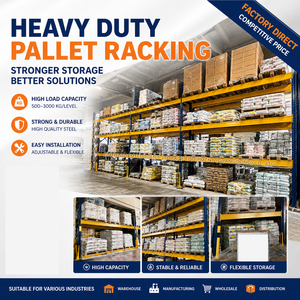
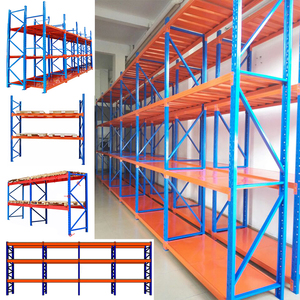
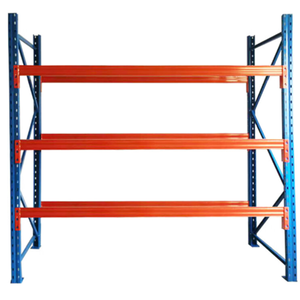
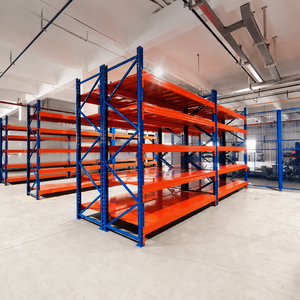
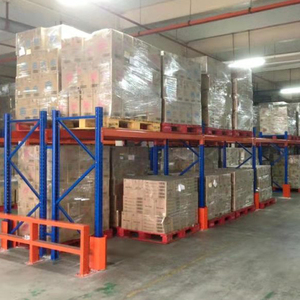
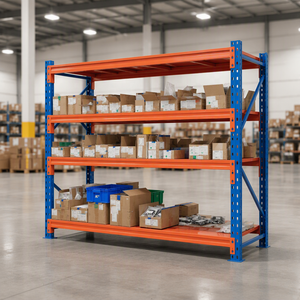
Engineered from premium Q235B and Q355B cold-rolled structural steel, our modular rack designs feature load capacities up to 1,900+ kg per beam level, high structural impact resilience, and electrostatic epoxy coating.
100%
Structural Certified Hot & Cold Rolled Steel
RMI / FEM
Seismic & Safety Compliance Worldwide
45,000+
Tons Annual High-Precision Export Capacity
2-Year
Impact Structural Warranty Guarantee
Procurement Specification Benchmark
Comparative Matrix: Selecting the Optimum Racking Architecture
Choosing the right racking configuration involves analyzing floor loading thresholds, SKU turnover velocity, material handling equipment (MHE) turning radiuses, and vertical warehouse cube utilization.
| Racking Type | Storage Density | SKU Selectivity | Inventory Method | Typical Payload Rating | Ideal Applications |
|---|---|---|---|---|---|
| Selective Pallet Racking | Standard (35-40% footprint) | 100% Direct Access | FIFO / LIFO Flexible | 1,000 – 4,000 kg / Beam Pair | FMCG, 3PL Warehouses, Multi-SKU Retail |
| Heavy-Duty Mold Racks | High Floor Concentration | Individual Drawer Access | Organized Tooling Access | 1,500 – 2,000 kg / Level | Injection Molding, Die Casting, Metal Stamping |
| Drive-In / Drive-Thru | Very High (up to 75%) | Low (Lane-dependent) | LIFO (Drive-In) / FIFO | 1,000 – 1,800 kg / Position | Cold Storage, Homogeneous Seasonal SKUs |
| Push Back Racking | High (2 to 6 pallets deep) | Moderate (By Lane) | LIFO (Nested Carts) | 1,000 – 1,500 kg / Cart | Food & Beverage, Cold Chain Consolidations |
| Pallet Flow / Gravity | Maximum Density | Automatic Lane Feed | Strict FIFO | 800 – 1,500 kg / Pallet | Perishable Groceries, Pharmaceuticals |
| ASRS High-Bay Racking | Maximum Vertical Cube | 100% Automated Shuttle | WMS / ERP Controlled | Up to 2,000 kg / Automation Bay | 24/7 Smart Hubs, High-Volume E-Commerce |
Strategic Intelligence
Future Warehouse Racking Procurement Trends for Global Buyers
Navigating global supply chain volatility demands deeper supply-chain alignment. Forward-thinking procurement officers are reshaping their technical specifications around three core axes:
1. Decarbonized Steel & Sustainable Metallurgy
International carbon border adjustment mechanisms (such as EU CBAM) are compelling logistics developers to mandate mill-test certification with verifiable low-carbon output. Purchasing from Chinese factories with electric arc furnace (EAF) options and recyclable polyester powder coatings has evolved from a branding exercise to an import duty safeguard.
2. Native Compatibility with Autonomous Mobile Robots (AMR)
Static storage racks are transitioning to automation-ready hybrid frames. Modern systems now incorporate laser-cut guide tracks, robotic base clearances, and integrated QR / barcode indexing plates. This pre-configuration ensures seamless transition to autonomous guided vehicles (AGV) without retrofitting expenses.
3. Parametric Engineering & BIM Pre-Assembly Verification
Overseas buyers now mitigate on-site assembly failure by demanding full 3D Building Information Modeling (BIM) files prior to cutting steel. Parametric stress simulations, cold-temperature embrittlement testing, and floor plate seismic analysis have become baseline deliverables in high-stakes tender processes.
Technological Innovation
Racking Engineering Trends: Materials, Coatings & Cold Chains
China's leading warehouse rack manufacturers are utilizing automated continuous roll-forming lines, laser profiling, and multi-stage anti-corrosion methods to meet demanding storage environments.
High-Yield Micro-Alloy Steels
Transition from standard carbon steel to micro-alloyed Q355B and high-strength steels reduces profile weight by 12-18% without sacrificing structural safety. This yields substantial shipping cost reductions per container while improving total bay load factors.
Cold-Chain Cryogenic Treatments
Blast freezer storage down to -30°C introduces extreme risks of brittle steel failure. Specialized pre-treated alloys with high Charpy V-notch impact toughness combined with hot-dip galvanizing ensure crack resistance and zero zinc spalling.
Automated Robotic Welding
Beam end connectors and base assemblies welded via multi-axis CNC robotic systems eliminate cold joins and porous welds. Every connection ensures balanced moment distribution across vertical frames under maximum deflection stresses.
Sensor-Integrated Smart Racks
Integration of low-power IoT deflection gauges, ultrasonic overload warnings, and automated seismic trip switches inside upright posts. Facilities managers receive live structural integrity alerts before rack failure occurs.
Application Domains
Engineered Across Demanding Supply Sectors
Cold Logistics
3PL Warehousing
E-Commerce DCs
Automotive Dies
Chemicals & Barrels
Pharmaceuticals
Factory Advantage
Why Top Global Brands Partner Directly With Our China Facilities
Combining seventy years of structural steel lineage with precision automated roll-forming equipment, we bridge the gap between competitive raw material pricing and stringent international safety codes. Every system is calculated for longevity, seismic safety, and reduced total cost of ownership (TCO).
- Direct Structural Channel & Cold-Roll Forming: Precision manufacturing utilizing high-tensile structural steel profiles for impact resilience.
- Engineering Handshake Protocol: In-house structural engineers interface directly with your CAD, BIM, and automated forklift providers.
- Comprehensive 2-Year Rack Damage Warranty: We guarantee component structural soundness and supply modular bolted replacements rapidly.
- Export-Ready Logistics Packaging: Bundled with high-grade protective wrapping, nested structural framing, and clear piece numbering to prevent shipping transit abrasion.
Need Layout Optimization?
Upload your architectural DWG floor plans, rack height clearances, and lift truck specifications. Our licensed engineers will return complete bay load calculations and an itemized factory bill-of-materials (BOM).
Get a QuoteBuyer Knowledge Base
Frequently Asked Procurement Questions
Actionable answers to technical, commercial, and regulatory questions encountered by supply chain buyers importing warehouse racking from China.
What is the structural difference between hot-rolled and cold-formed racking columns?
Cold-formed (roll-formed teardrop or omega) profiles are created by rolling flat-rolled steel coils at room temperature, making them lightweight and economical for standard retail and light distribution facilities. Hot-rolled structural steel channels are forged at high temperatures, offering substantial thickness and impact resistance against forklift collisions. In high-traffic distribution centers and sub-zero freezers, structural steel columns provide lower lifetime maintenance costs through bolted, easily repairable configurations.
How do Chinese racking manufacturers comply with international seismic and building codes?
Our structural design team uses finite element analysis (FEA) software calibrated to international standards including European FEM 10.2.02, American ANSI MH16.1 (RMI), and Australian AS4084-2023. We calculate specific spectral acceleration responses, soil factors, and slab anchor shear stresses tailored to your warehouse GPS coordinates, providing signed structural design calculations ready for local municipal building permitting.
What is the standard protective finish, and how does powder coating perform in cold storage?
Standard indoor industrial racking is treated through an automated 7-stage chemical pre-treatment and electrostatic epoxy-polyester thermoset powder coating cured at 180°C-200°C, providing 60-80 microns of dry film thickness (DFT). For cold storage below -20°C or corrosive marine environments, hot-dip galvanizing (HDG) conforming to ISO 1461 / ASTM A123 is applied, ensuring complete interior and exterior metallurgical bonding against condensation rust.
What parameters are required to generate an accurate quotation and CAD layout?
To produce an engineering-ready proposal, our project managers require: (1) Warehouse building DWG plans detailing column grid locations and clear ceiling heights; (2) Pallet specifications (width, depth, overall height including cargo overhang, and gross pallet weight); (3) Forklift model, maximum mast lift reach, and turning radius (Ast); (4) Operating temperature parameters; and (5) Specific seismic zone risk ratings.
How are long upright frames and heavy beams secured against transit damage during ocean freight?
Upright posts and pallet support beams are bound using high-tensile steel strapping, corner edge guards, and multi-layer stretch film with corrugated separators. Components are arranged on custom-fabricated steel skids for efficient forklift unloading at destination ports, minimizing movement in standard 40ft High Cube (HC) and Open-Top shipping containers.
Ready to Build Your High-Performance Warehouse Racking System?
Connect with our technical sales engineers to review storage densities, discuss seismic calculations, and obtain a competitive direct-factory quotation with full DDP shipping support.
Get a Quote