75+
Years Engineering Pedigree (Est. 1949)
100%
Q235B / Q355B Grade Structural Steel
50,000+
Tons Annual Export Wholesaling Output
2-Year
Comprehensive Structural Integrity Warranty
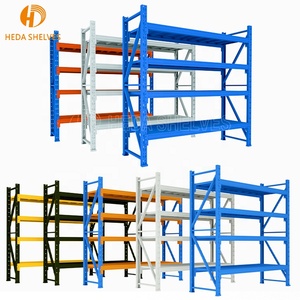
Precision Heavy Duty Systems
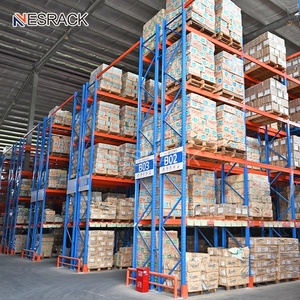
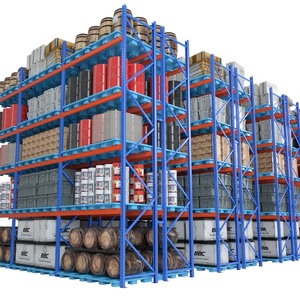
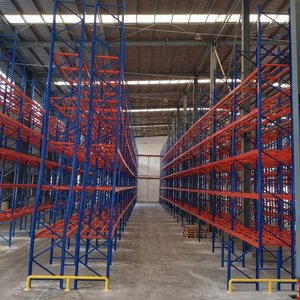
Featured Warehouse Pallet Racking Portfolios
From dynamic high-bay pallet flow to bespoke heavy cantilever systems, our automated manufacturing ensures millimeter precision, high seismic resistance, and international standard certification.
OEM & ODM Manufacturing Prowess
Why Tier-1 3PLs & Industrial Giants Rely on Our Supply Chain
Combining 70+ years of engineering heritage with advanced roll-forming and robotic welding hubs in China, we deliver infrastructure-grade racking that reduces total cost of ownership (TCO).
Certified Structural Integrity
Formulated entirely with certified Q235B and high-yield Q355B structural steel. Engineered to strict ANSI MH16.1 (RMI), AS4084, and European FEM 10.2.02 racking standards, guaranteeing high impact resilience under forklift-dense environments.
Robotic Automated Fabrication
State-of-the-art continuous cold roll-forming lines, computerized CNC punching arrays, and multi-axis laser cutting machines maintain bay tolerances within ±0.5mm, streamlining onsite bolt-up assembly with minimal labor.
2-Year Damage Warranty
Unlike conventional lightweight teardrop systems, our structural channel uprights and bolted box beams absorb heavy kinetic forklift hits without catastrophic buckling, reinforced by an export-proven 2-year warranty.
Severe Cold-Chain Durability
Anti-corrosion pre-treatment and thermal cured AkzoNobel powder coatings rated down to -30°C. Proven failure-free performance across international deep-freeze warehouses, pharmaceutical repositories, and cryogenic centers.
Turnkey Global Project Delivery
Exporting over 2,500 containers annually to North America, Europe, Australia, and ASEAN. Full container nested packaging minimizes maritime cubing losses and ensures zero transit corrosion or frame bending.
Custom Seismic Engineering
Our structural engineering group utilizes finite element analysis (FEA) to tailor base plate anchoring, diagonal bracing arrays, and frame thickness to specific seismic geographic zones and local municipal permitting codes.
Technical Whitepaper Insights
Future Warehouse Racking Trends & Procurement Architecture
Analyzing industry transitions toward automation-ready modularity, carbon footprint reductions, and AS/RS convergence in high-velocity logistics centers.
1. Shift from Roll-Formed to Structural Channel Racking
While light-gauge teardrop racking historically captured entry-level budgets, global distributors are shifting toward hot-rolled structural steel C-channels. Structural steel delivers up to 300% greater torsional rigidity, substantially reducing column crippling from high-reach counterbalanced forklifts and dropping ongoing maintenance budgets by 42% over a ten-year operational lifecycle.
2. Automation Integration & Shuttle-Ready Engineering
Deep-lane radio shuttle systems (Pallet Moles) and four-way autonomous shuttle robotics are replacing conventional drive-in systems. Procuring racking requires tighter deflection tolerances (L/500 or tighter) and rail alignment precision under 1.5mm to allow laser-guided cranes and robotic retrieval vehicles to dock and traverse without jamming.
3. Rack-Supported Building (Clad-Rack) Acceleration
Skyrocketing industrial real estate prices make traditional warehouse construction uneconomical. Next-generation facilities employ rack-supported buildings where racking uprights serve double duty as the primary building envelope skeleton, bearing roof, side wall panels, and dynamic wind/snow loads, slashing civil construction schedules by 25-35%.
Engineering Benchmarks
Warehouse Storage Systems Selection & Capacity Matrix
Engineered to support pallet loads ranging from 500kg up to 5,000kg per level across diverse material handling configurations.
| Racking Typology | Primary Steel Profile | Max Bay Capacity | Access Selectivity | Material Handling Match | Target Applications |
|---|---|---|---|---|---|
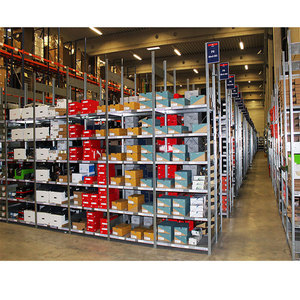
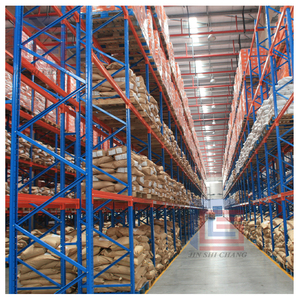
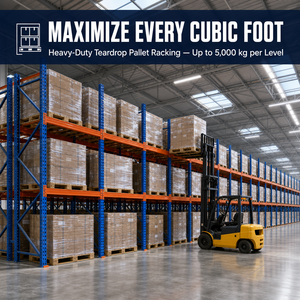
| Selective Pallet Racking | 80-120mm Omega / C-Section | Up to 24,000 kg | 100% (Direct Access) | Reach Trucks, Counterbalance | High-SKU 3PL, FMCG, Retail Fulfillment |
| Drive-In / Drive-Through | Structural C-Channel / Heavy Omega | Up to 18,000 kg | LIFO / FIFO (Batch) | Standard Forklifts | Cold Storage, Bulk Homogeneous Goods |
| Glide-In® Push Back Rack | Nested Tubular Rolling Carts | Up to 1,500 kg/lane | LIFO (2 to 6 deep) | Standard Counterbalance | Medium Velocity SKUs, Food & Beverage |
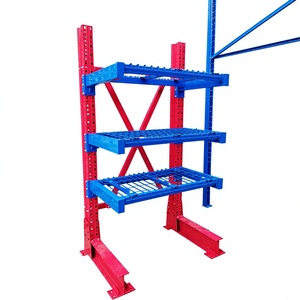
| Heavy Cantilever Rack | H-Beam / Structural Hot-Rolled | Up to 8,000 kg/arm | 100% for Long Items | Side Loaders, 4-Way Trucks | Steel Pipes, Timber, Sheet Aluminum |
| High-Bay AS/RS Racking | High-Tensile Structural Box/Tube | Up to 40,000 kg/tower | Automated Direct | Stacker Cranes, AMR/AGV | Mega E-Commerce Hubs, Pharma Cold Chain |
Procurement Intelligence
Frequently Asked Questions for Wholesale B2B Sourcing
Actionable answers addressing overseas logistics, seismic approvals, steel grade verification, and OEM manufacturing workflows.
What are the primary differences between roll-formed teardrop and structural pallet racking?
Roll-formed teardrop racking is manufactured from lighter-gauge coiled strip steel via progressive roll bending with open punch-hole configurations. While offering lower upfront cost and tool-free pin assembly, roll-formed columns are susceptible to fork-truck impact twisting and failure. Structural pallet racking is fabricated from hot-rolled C-channel structural steel with welded or bolted connector plates. Structural racking delivers vastly higher kinetic impact resilience, unyielding torsional strength in freezer environments, and superior load ratings per bay, delivering a much lower total cost of ownership (TCO) over decades.
How do you ensure racking compliance with local seismic codes (e.g., IBC, UBC, AS4084, FEM)?
Every custom racking project engineered at our plant undergoes full finite element analysis (FEA) based on the project's geographic coordinates, seismic design category (Ss and S1 values), soil type, clear building height, and slab thickness. We engineer enlarged baseplates, double-anchor column shoes, heavy-duty back-to-back ties, and horizontal/vertical bracing portals. We can provide full calculation sheets stamped by licensed professional structural engineers (PE/SE) to facilitate local municipal building and fire permit sign-offs.
What raw material mill test certificates (MTC) do you furnish for export wholesale orders?
All steel used across our uprights, load beams, and braces is sourced exclusively from premier state-owned mills (such as Baosteel and Shougang). We furnish EN 10204 3.1 Mill Test Certificates verifying chemical composition (carbon, manganese, phosphorus limits) and mechanical properties (yield strength ≥ 235-355 MPa, tensile strength, and elongation) with every production batch prior to container loading.
How does your packaging prevent shipping damage and container distortion during sea freight?
Upright frames and long beams are packed on heavy-duty customized steel dunnage with protective corner protectors, corrugated separators, and multi-layer stretch shrink wrapping. All small hardware (bolts, safety pins, row spacers, shims) are boxed in seaworthy timber crates labeled with individual bay schedules. This structural bundling enables seamless forklift unloading at overseas ports without scratching powder coating or bending structural brackets.
What key warehouse architectural inputs are required to generate an engineering layout and quotation?
To provide a turn-key quotation and CAD engineering layout within 24-48 hours, our engineering department requires: (1) Architectural DWG drawing highlighting warehouse perimeter, clear height to truss/sprinkler, and column locations; (2) Pallet specifications including width, depth, height, and gross pallet weight; (3) Forklift model, turning radius, and maximum lifting mast height; (4) Desired turnover methodology (FIFO or LIFO); and (5) Ambient facility temperature (ambient, cold-storage, or deep freeze).