Deep-Lane Tech
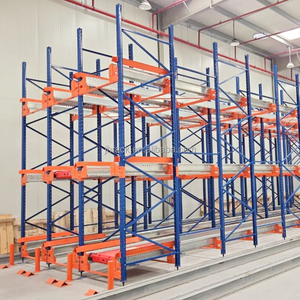
Precision-manufactured with premium hot-rolled Q235B & Q355B structural steel, conforming to international seismic tolerances, FEM, EN 15512, and AS4084 warehousing structural standards.
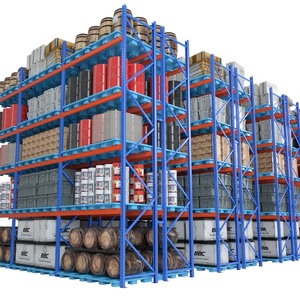
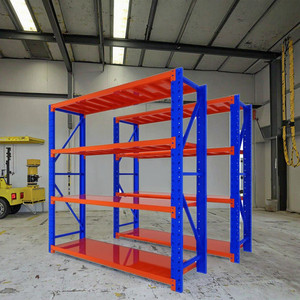
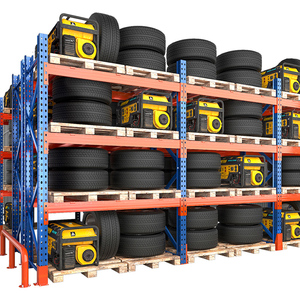
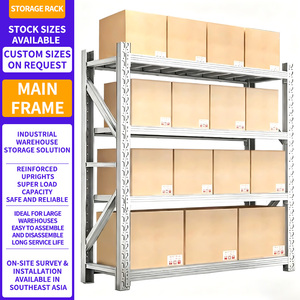
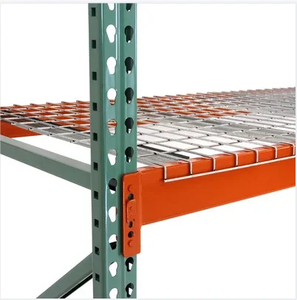
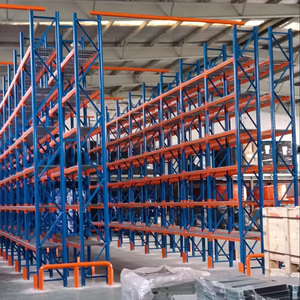
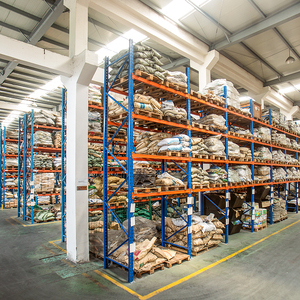
Direct procurement from primary Chinese manufacturing facilities requires precise alignment between structural load engineering, floor utilization parameters, and material handling material handling equipment (MHE) kinematics.
| Racking Architecture | Space Utilization | SKU Selectivity | Load Capacity (Per Tier) | MHE Compatibility | Primary Industrial Sector |
|---|---|---|---|---|---|
| Selective Pallet Racking | 40% - 50% Baseline | 100% Direct Access | 1,000 kg – 4,500 kg | Standard Counterbalance, Reach Trucks | General 3PL, FMCG, E-Commerce, Retail Hubs |
| Radio Shuttle Automation | 80% - 90% Ultra-High | Batch / Lane Specific | 1,000 kg – 2,000 kg / pallet | AGV / Semi-Auto Shuttle Carts | Cold Storage, Food Processing, Beverage Plants |
| Very Narrow Aisle (VNA) | 65% - 75% High-Cube | 100% Selectivity | 1,000 kg – 3,500 kg | VNA Turret Trucks, Wire-Guided MHE | Pharmaceuticals, High-Density Distribution |
| Drive-In / Drive-Thru | 75% - 85% Deep-Lane | Low (LIFO / FIFO) | 1,000 kg – 2,000 kg | Drive-In Forklifts with Overhead Guard | Seasonal Bulk Goods, Raw Material Storage |
| Push-Back Nested Carts | 70% - 80% Compact | Lane Selectivity (LIFO) | 1,000 kg – 1,500 kg | Standard Counterbalance & Reach Trucks | Chemical Facilities, Perishables, Buffer Stores |
| Rack-Supported AS/RS | 95% Maximum Envelope | WMS Automated Dynamic | Up to 3,000 kg (High-Bay) | SRM Stacker Cranes, Automated Hoists | Megawarehouses, Automotive Mega-Hubs, Greenfields |
Navigating the global supply chain demands more than competitive pricing; it requires certified material provenance, traceable steel metallurgy, and robotic fabrication tolerances that eliminate on-site erection errors. As an elite Chinese racking manufacturer, we bridge the gap between heavy industrial metallurgy and precision automation readiness.
Operating dedicated CNC automated roll-forming lines, automated punching arrays, and multi-axis robotic welding stations, our facilities produce standard Teardrop profiles for North American clients as well as 50mm, 75mm, and 76.2mm pitch European Omega uprights. Every batch is rigorously certified to prevent beam deflection exceeding strict ANSI MH16.1 limits (L/180 or L/240 under full static deadweight).
Warehouse safety is governed by rigorous engineering calculations. Pallet rack systems installed across earthquake-prone regions must withstand combined gravitational loads, localized beam-column shear forces, and seismic accelerations. Our in-house structural engineering department provides PE-stamped structural calculation packages tailored to regional design standards.
Material procurement directors, logistics engineers, and warehouse investors are adapting to macroeconomic disruptions, automation imperatives, and sustainability benchmarks across global warehousing hubs.
Traditional static racking procurement is declining in favor of hybrid structural frameworks designed to host Autonomous Mobile Robots (AMRs), Automated Guided Vehicles (AGVs), and multi-directional 4-way pallet shuttles. Procurement managers now demand ultra-strict beam level tolerances (±1.0mm) to allow seamless automated robotic vision navigation.
Intermediary wholesale brokerage margins are giving way to direct engineering collaborations with Chinese tier-1 factories. Modern enterprise procurement teams utilize collaborative 3D BIM (Building Information Modeling) and CAD pipelines directly with factory engineers to finalize layout schemes, shortening project lead times by 35% to 50%.
ESG mandates across Europe, North America, and Australia are establishing carbon-accounting guidelines for warehouse racking components. Factories utilizing electric-arc furnace (EAF) recycled scrap steel and zero-VOC electrostatic powder coatings are prioritized in public tenders and multinational sustainability audits.
How material science, structural geometric profiles, and cold-chain innovations are reshaping modern industrial rack manufacturing.
Transitioning from standard carbon steel to micro-alloyed boron and niobium steel variants permits thinner structural gauges while providing equal or superior moment-resisting cross-section modulus. This reduces dead load weight on concrete slabs and cuts freight shipping expenses per pallet position.
Cold-storage blast freezers operating down to -30°C cause embrittlement in conventional steel. Modern Chinese manufacturing uses specialized Charpy V-notch impact-tested Q355D/E alloys, preventing catastrophic brittle failure under dynamic forklift impact.
For outdoor rack-clad structures and highly corrosive chemical storage environments, inline continuous pre-galvanization (Magnelis / ZAM zinc-aluminum-magnesium alloy coatings) has eclipsed traditional hot-dip batch galvanizing, delivering self-healing scratch protection.
Warehouse builders are choosing rack-supported building configurations where racking uprights serve as the primary structural skeleton supporting roof trusses and exterior insulated sandwich wall panels, cutting overall facility construction time by 40%.
Critical engineering, regulatory compliance, quality control, and logistics details answered by our senior racking structural engineering team.
Top Chinese pallet racking factories predominantly use Q235B and Q355B structural hot-rolled carbon steel coils, procured from premier mills like Baosteel and Ansteel. In structural engineering terms:
Every raw material coil delivery includes certified Mill Test Certificates (MTC) documenting chemical composition (C, Mn, Si, P, S) and tensile yield properties.
Compliance is engineered into our manufacturing process from tooling design to quality assurance. For North American export orders, we manufacture true Teardrop-compatible punch patterns with a 2-inch vertical pitch, designed and physically tested according to ANSI MH16.1 (Specification for the Design, Testing and Utilization of Industrial Steel Storage Racks). For European and British Commonwealth markets, we utilize 50mm, 75mm, and 76.2mm pitch configurations compliant with EN 15512, EN 15620, and AS4084-2023.
Our quality verification processes include destructive beam-end connector stub testing, upright stub column compression testing, cyclic fatigue validation, and full dynamic finite element analysis (FEA) modeled for specific project seismic acceleration zones (Ss and S1 parameters).
Standard fabrication lead time for standard project sizes (5 to 20 full 40ft High Cube containers) is typically 20 to 30 business days following structural shop drawing sign-off. Highly customized automation profiles or bespoke galvanization runs may require 35 to 45 days.
Because structural racking contains significant volume, maximizing container density is essential to lowering per-pallet landed costs. We implement custom-engineered steel packing racks and wood-blocked strapping bundles that allow our crews to load up to 26,000–28,000 kg per 40ft HQ container (subject to port weight regulations). Upright frames are nested, beams are banded with protective cardboard corners, and all hardware is sealed in labeled marine-grade wooden crates for rapid on-site unpacking.
Yes. A complete warehouse pallet rack solution requires coordinated safety components. We manufacture matched accessories directly on our integrated secondary lines:
Our in-house design engineering department consists of over 25 structural and logistics engineers equipped with AutoCAD, SolidWorks, and specialized structural FEA software. Upon receiving your warehouse architectural drawings, floor slab geotechnical data, and pallet SKU profiles, we provide a complete engineering submittal package within 3 to 5 days.
This package includes detailed 2D plan views, elevation cross-sections, anchor bolt pull-out force calculations, slab bearing pressure tables, and structural beam deflection sheets. For projects in the United States, Canada, and Australia, we partner with licensed local Professional Engineers (PE / RPEQ) to provide formal structural stamps where required by city building and fire departments.
Our standard finishing line uses a fully automated 12-stage chemical cleaning and phosphating pre-treatment tunnel, followed by automated electrostatic Swiss GEMA powder application guns. The components undergo high-temperature curing at 180°C–200°C with thermosetting polyester epoxy powder, yielding a uniform coating thickness of 60 to 90 microns with superior scratch, peel, and impact resistance.
For outdoor operations, high-humidity coastal distribution hubs, or corrosive chemical facilities, we provide hot-dip galvanization conforming to ASTM A123 / ISO 1461, achieving a minimum zinc coating thickness of 80 to 100 microns for decades of maintenance-free service.