75+
Years Combined Engineering Heritage
Q235B/Q355B
Certified High-Tensile Structural Steel
100%
RMI ANSI MH16.1 & EN 15512 Compliance
80+
Global Export Countries Served
Product Catalog
Precision-Engineered Industrial Storage Systems
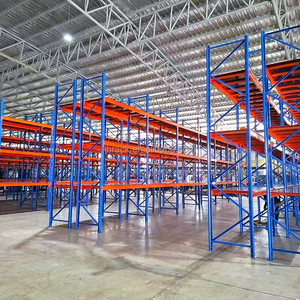
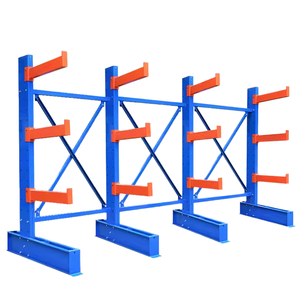
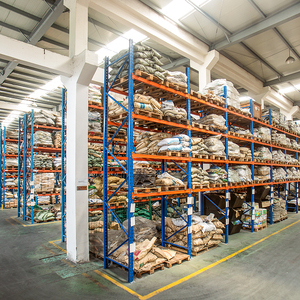
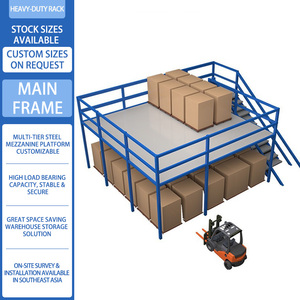
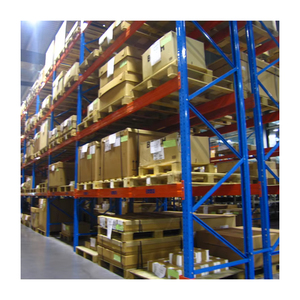
From heavy-load selective pallet units to multi-tier cantilever systems, each solution is fabricated using high-yield cold-rolled and structural steel to support mission-critical warehouse workflows.
Engineering Integrity
Why Tier-1 Global Operators Partner With Chinese Manufacturers
Industrial warehousing is not merely about stacking steel; it is civil and mechanical infrastructure engineering. China's top shelving manufacturers leverage complete vertical supply chains to offer unprecedented structural durability, tight manufacturing tolerances, and significant cost advantages.
Prime Structural & High-Yield Cold-Rolled Steel
We source prime hot-rolled and cold-rolled steel coils exclusively from premier domestic mills like Baosteel and Ansteel. Using structural grades such as Q235B and high-strength Q355B ensures our uprights and box beams maintain elasticity and ultimate tensile stability even under severe seismic ratings and extreme temperature cycles (-30°C freezer grade).
Continuous CNC Roll-Forming Lines
Structural profile integrity depends on residual stress control during cold forming. Advanced multi-station continuous roll-forming lines fabricate upright Omega profiles with pinpoint pitch accuracy (50mm, 75mm, 76.2mm). Integrated high-speed hydraulic punching dies ensure hole pitch tolerances within ±0.1mm, facilitating smooth boltless assembly without on-site forced alignment.
Multi-Stage Surface Treatment & Powder Coating
Surface longevity prevents premature oxidation in demanding environments. Our lines feature 7-stage automated chemical pre-treatment (degreasing, acid pickling, phosphating, nano-ceramic passivation) followed by electrostatic powder deposition cured at 200°C. Standard coating thickness exceeds 60–80 microns, passing 500-hour neutral salt spray tests (ASTM B117).
Procurement Guide
Engineering Specification Matrix for High-Bay & Selective Systems
Review comprehensive dimensional thresholds, steel grades, and load factors before submitting your layout drawings.
| System Category | Typical Steel Grade | Upright Profile (mm) | Beam Section (mm) | Max Deflection Ratio | Standard Compatibility |
|---|---|---|---|---|---|
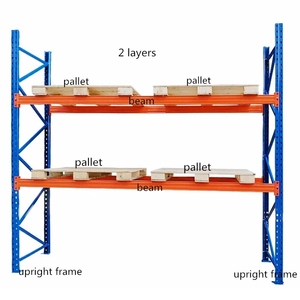
| Heavy-Duty Selective Pallet Rack | Q235B / Q355B (SS400) | 80×60, 90×70, 100×70, 120×95 | 80×50 to 160×50 (Box Beam) | 1/200 of Clear Span (L/200) | RMI MH16.1 / EN 15512 / AS 4084 |
| Heavy-Duty Cantilever Racking | Q235B / Hot-Rolled H-Beam | 200×100 to 400×150 C/C Column | IPE 100–240 or Tapered Arm | 1/180 at Maximum Reach | FEM 10.2.02 / ANSI MH16.1 |
| Automated ASRS High-Bay Racking | High-Tensile Q355B | 120×95, 140×100 Upright | Rectangular Tube / Heavy Box | 1/300 (Crane Interface Grade) | FEM 9.831 / DIN EN 15620 |
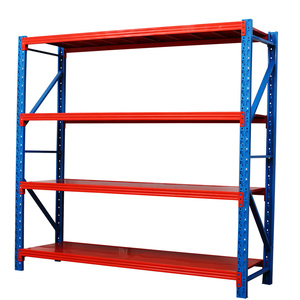
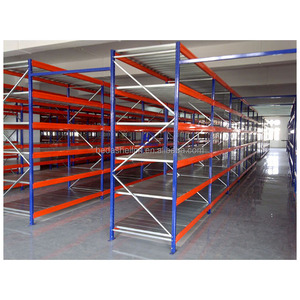
| Medium-Duty Boltless Shelving | SPCC Cold-Rolled Carbon | 55×47, 50×30 Angle/Omega | Step Beam / P-Beam Section | 1/150 of Shelf Width | ISO 9001 / CE Certified |
Strategic Whitepaper
Future Procurement Trends in Industrial Storage & Material Handling
Global macroeconomic factors, real estate costs, and automated logistics are rapidly shifting warehouse procurement criteria. How forward-thinking supply chain directors evaluate manufacturing partners today determines their operational efficiency for the next 20 years.
1. Convergence of Structural Racking with ASRS Automation
Conventional static racking is increasingly giving way to semi-automated and fully automated high-bay facilities. Automated Storage and Retrieval Systems (ASRS) and 4-way radio pallet shuttle grids demand deflection limits and alignment tolerances that standard roll-formed tear-drop shelving cannot deliver.
Top-tier Chinese manufacturers now integrate structural channel steel with sub-millimeter precision welding fixtures to accommodate stacker cranes operating at speeds up to 240 m/min without frame vibration resonance.
- Laser-calibrated verticality tolerances within 1:1000
- Floor rail anchor systems engineered for dynamic braking forces
- Modular integration with automated conveyor and AGV handoff points
2. Cold Chain Optimization & Sub-Zero Metallurgical Resilience
The global surge in biologics, pharmaceuticals, and fresh grocery fulfillment has driven unprecedented demand for sub-zero temperature warehousing (-25°C to -40°C). Ordinary commercial steels undergo ductile-to-brittle transitions under prolonged cold exposure, dramatically elevating the risk of catastrophic shear under impact.
Future-proof procurement prioritizes manufacturers capable of certified Charpy V-notch impact testing at -20°C and -40°C, verifying high-toughness steel chemistry with reduced sulfur/phosphorus inclusions and specialized cold-room powder resins that resist micro-cracking.
- Elimination of welded embrittlement zones via bolted column connections
- Zinc-rich epoxy primer coatings with anti-peel characteristics
- Dense multi-deep push-back and shuttle layouts reducing refrigerated cube volume
3. Sustainable Circular Steel & Total Cost of Ownership (TCO)
Supply chain ESG mandates in North America and the European Union have transformed procurement from comparing pure CIF price per ton to assessing the 20-year Total Cost of Ownership (TCO). Thin-gauge roll-formed racks vulnerable to daily forklift impacts require recurring beam replacement, rack-out downtime, and ongoing risk management.
Procurement teams are shifting capital toward heavier-gauge, repairable structural steel profiles that incorporate recycled EAF (Electric Arc Furnace) feedstock, robust wrap-around column protectors, and bolted repairable bottom stubs.
- Modular bolted bottom segments for 15-minute impact repairs without frame dismantling
- EPD (Environmental Product Declaration) carbon footprint transparency
- Finite Element Analysis (FEA) optimization to reduce material deadweight while boosting load margins
Procurement FAQ
Frequently Asked Questions by International Buyers & Engineers
Addressing structural calculations, international building code compliance, seismic certification, and logistical variables for global imports.
How do Chinese racking manufacturers ensure compliance with RMI (USA) and EN 15512 (Europe)?
Reputable tier-1 manufacturers conduct full-scale physical destructive testing on upright stubs, beam-to-column connector assemblies, and baseplates according to ANSI MH16.1 and EN 15512 protocols. Finite Element Analysis (ANSYS) models are calibrated with physical test data, enabling in-house civil engineering teams to provide PE (Professional Engineer) stamped structural calculation packages for local municipal building permitting across North America, Australia, and the EU.
What is the structural difference between Cold-Rolled Teardrop and Structural Steel Racking?
Roll-formed teardrop rack is cold-shaped from light-gauge sheet coil (typically 12–16 gauge) with open-back slots, making it economical and fast to install for light-to-medium retail distribution. Structural steel racking is fabricated from hot-rolled structural channels (C-channels) joined by heavy Grade 5/Grade 8 high-tensile bolts. Structural steel boasts dramatically higher torsional rigidity and impact resistance against heavy forklifts, eliminating the buckling risk common in fast-paced distribution hubs.
How are seismic load calculations handled for active fault regions (e.g., California, Japan, Chile)?
Seismic design requires dynamic spectral acceleration analysis based on project-specific USGS or Eurocode seismic maps (Ss and S1 ground acceleration parameters, Site Class soil condition). Uprights are reinforced with oversized baseplates, paired anchoring systems, and heavy internal diagonal bracings. Beam connectors feature 4-to-5 pin heavy forged claws or bolted structural flanges to absorb cyclic horizontal seismic shear without joint disengagement.
How do you optimize 40ft High Cube (40HQ) container packing to prevent maritime transport damage?
Uprights are nested on customized heavy-gauge steel skids with protective corrugated interleaving to avoid surface abrasions during intermodal ocean transit. Beams are stacked in strapped bundles separated by softwood dunnage, oriented to optimize container center-of-gravity. Critical small hardware (bolts, safety pins, shims) are vacuum-sealed in moisture-resistant film and packed in reinforced plywood crates, maximizing container space utilization (averaging 24–26 tons per 40HQ).
Accelerate Your Distribution Center Storage Engineering
Submit your CAD layout drawings, load dimensions, and local seismic criteria. Our structural engineering group will deliver a complete layout optimization report, static load analysis, and competitive factory-direct supply schedule within 24 hours.
Get Catalog