China Best Push Racks Factories & Wholesaler

Global Engineering Excellence: Premium Structural & Roll-Formed Push Back Pallet Racks, Custom High-Density Logistics Systems, and Certified Turnkey Factory-Direct Procurement Solutions.

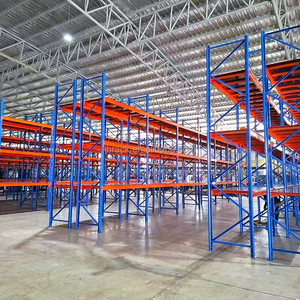
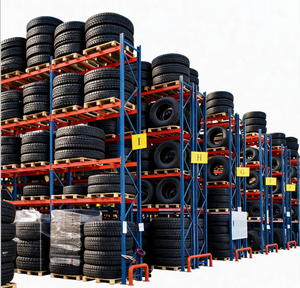
Precision Manufacturing Showcase

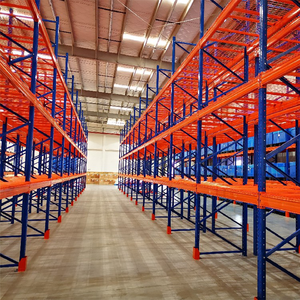
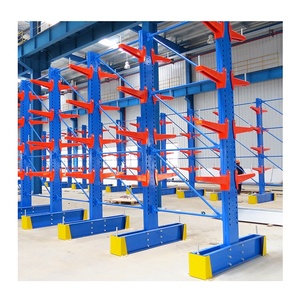
High-Density Dynamic Storage & Pallet Racking Portfolios

Explore our heavy-duty industrial racking configurations engineered for rigorous warehouse operations, high cold-storage resilience, and optimized throughput kinematics.
70+
Years Engineering Pedigree (Since 1949)
100%
Structural & High-Yield Q235B/Q355B Steel
10+
Advanced Plants Across Global Supply Corridors
2-Year
Comprehensive Structural Impact Warranty
Engineering Whitepaper & Market Intelligence

Push Back Pallet Racks: Technical Architecture & Kinematics

A comprehensive engineering review of high-density Last-In, First-Out (LIFO) nested cart dynamic storage mechanisms, metallurgical selection, and structural safety parameters.

The Mechanics of Gravity-Assisted Dynamic Cart Systems

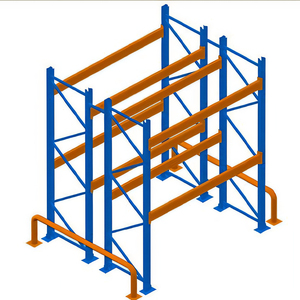
Push back pallet racking systems represent the pinnacle of dynamic space optimization, bridging the selectivity gap between conventional selective pallet rack and high-density drive-in racking. Operating on a gently inclined structural steel track (typically engineered between a precise 1.5% to 2.5% slope), push back systems utilize a series of nested rolling carts stacked progressively along the lane depth.

When the first pallet is loaded by the counterbalanced or reach truck, it sits on the uppermost carrier cart. When the second unit load arrives, the forklift operator uses that pallet to push the initial pallet back, exposing the next nested cart underneath. System depths commonly range from 2 to 6 pallets deep per storage lane.
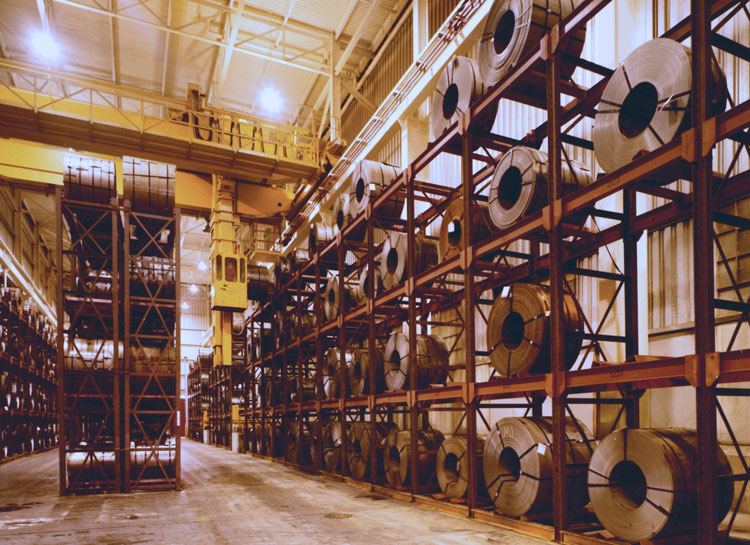
  • Single Aisle Operational Footprint: In contrast to pallet flow racking which mandates dedicated loading and retrieval aisles (FIFO), push back concentrates all vehicular movements into a single operational aisle.
  • Reduced Forklift In-Rack Travel: Forklifts never penetrate the storage cube itself, drastically minimizing column impacts, rail collisions, and truck dwell times.
  • Superior Multi-SKU Velocity: Each lane operates independently, enabling multi-SKU storage per bay without honeycombing or severe pallet lockouts common in drive-in bays.
Industrial Structural Steel Engineering Demonstration
Comparative System Matrix

High-Density Dynamic Storage Selection Parameters

Storage System Type Spatial Density SKU Selectivity Profile Inventory Flow Model Structural Collision Risk Capital Investment Ratio
Push Back Racking (Glide-In® Cart) High (Up to 75% Cube) Lane-Level Selectivity (High) LIFO (Last-In, First-Out) Negligible (External Loading Only) Moderate / High ROI
Selective Pallet Rack (Sentinel®) Standard (35% - 40% Cube) 100% Immediate Selectivity Universal (FIFO / LIFO) Moderate (High Aisle Traffic) Baseline Economy
Drive-In Pallet Racking Extremely High (Up to 85%) Bay-Level Only (Restricted) LIFO (Strictly Batch Runs) High (Tines/Trucks Inside Bays) Low Initial / High Maintenance
Gravity Pallet Flow Rack Very High (Dual-Aisle) Lane-Level Controlled Strict FIFO (Date-Coded) Low (Separated In/Out Aisles) Substantial / Specialized
Automated AS/RS Crane & Shuttle Maximum Vertical Footprint Software Automation Driven Dynamic Intelligent System Zero Human Driver Collision Enterprise Capital Scale
Market Foresight & Procurement Directives

Future Procurement Trends in China Push Racking Wholesales

Strategic analyses for international supply chain managers, warehouse developers, and automation EPC integrators navigating modern global procurement.

Cold Chain Integrity & Cryogenic Steel

Global demand for frozen pharmaceutical warehousing, bio-logistics, and flash-frozen food supply chains requires cold-temperature resilience. Modern China push rack exporters are moving toward low-carbon micro-alloyed steels, such as modified Q355D and structural channel sections capable of retaining impact toughness at temperatures dropping to -35°C without brittleness failure.

Nearshoring, USMCA & Multi-Hub Fulfillment

Procurement teams are shifting away from pure single-origin ex-works sourcing. Leading Chinese manufacturers now integrate bonded logistical warehousing, knock-down modular engineering to optimize 40HQ container cube utilization by over 32%, and coordinate direct bonded shipments to regional distribution hubs across North America, Southeast Asia, and Europe.

Integration with AGVs & Hybrid Pallet Shuttles

Traditional push back racks are evolving into hybrid staging zones. Deep-lane push carts are configured to interface seamlessly with Automated Guided Forklifts (AGVs) and Autonomous Mobile Robots (AMRs), incorporating laser-guided optical docking targets and high-tolerance welded end stops for fully robotic pick-and-deposit actions.
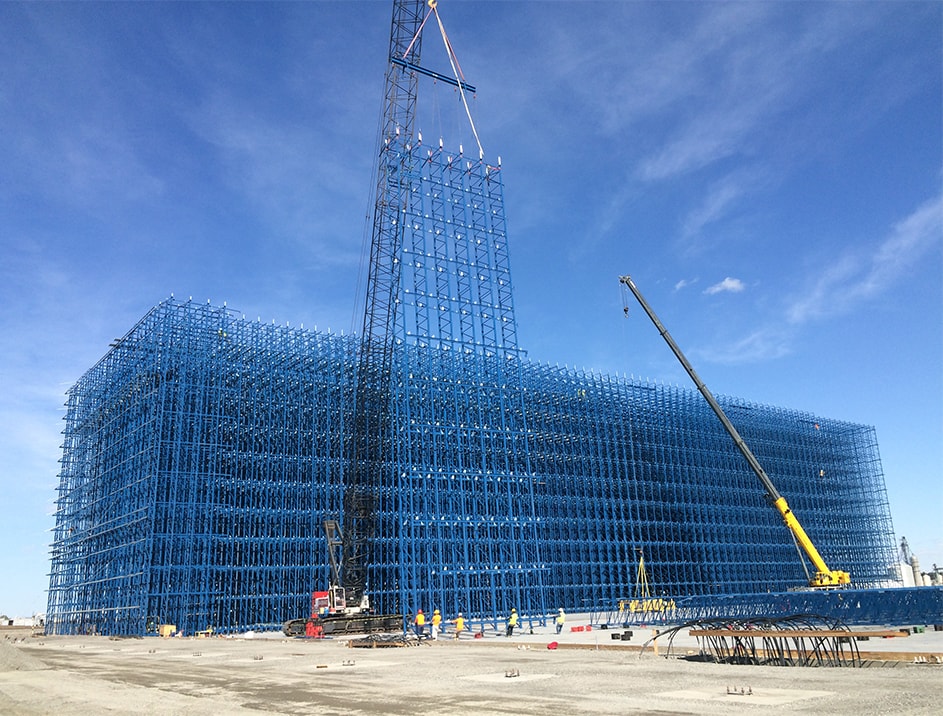
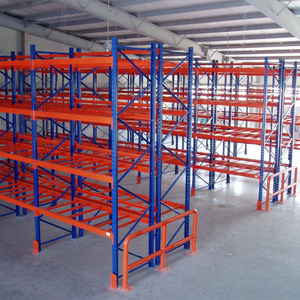
Structural Steel Pallet Racking Installation in High-Traffic Warehouse
Engineering Durability

Structural Steel Channel vs. Roll-Formed Teardrop: True TCO

While light-gauge cold roll-formed teardrop racks frequently exhibit lower initial invoicing costs, life-cycle studies across distribution centers reveal a different financial reality. In operations handling hundreds of pallet cycles per bay daily, forklift tine clipping and frame deflections quickly result in structural red-tagging, costly inventory unloads, and emergency structural repairs.

Our heavy-duty hot-rolled structural steel channel uprights and push-back rails deliver unmatched mechanical resilience:

  • Up to 250% Greater Corner Impact Resistance: Solid structural flanges absorb heavy vehicular collisions that instantly collapse open-back roll-formed profiles.
  • Grade 5 Bolted Fastener Continuity: Engineered moment-resisting connections eliminate accidental connector beam pop-outs caused by upright load bounce.
  • Complete Structural Weld Penetration: Continuous submerged-arc welding on carts and chassis ensures zero rail divergence under full static deflection.
  • RMI ANSI MH16.1 Compliance: Complete seismic documentation and engineering stamps available for Western building codes and municipal permitting authorities.
Consult Our Application Engineers
The Manufacturer Advantage

Why Tier-1 Global Distribution Brands Choose Our Production Ecosystem

Combining 75 years of engineering authority, multi-plant manufacturing velocity, and direct-to-enterprise commercial accountability under one global umbrella.

Full-Spectrum In-House Engineering

Standard catalog racks cannot solve complex distribution logjams. Our high-rise engineering department, standard product design desks, AS/RS automation coordinators, and finite element analysis (FEA) teams collaborate on every custom push back blueprint, verifying seismic moments and floor slab reactions before steel fabrication begins.

Dual-Year Structural Impact Warranty

While common wholesalers exit responsibility upon customs bill-of-lading issuance, our systems carry a standard two-year rack damage warranty. Because our push back systems are fabricated with field-replaceable bolted parts and high-impact structural steel members, maintenance costs over a 15-year operational lifecycle drop by up to 60%.

Rigorous Global Standards Validation

Every manufacturing line operates under audited ISO 9001 and ISO 14001 certified quality control loops. Components are calculated in accordance with Rack Manufacturers Institute (RMI) ANSI MH16.1 specifications, European EN 15512, and Australian AS 4084 standards, streamlining insurance underwriting and permitting worldwide.

Cross-Sector Deployments

Engineered to Support Demanding Industry Workloads

Our heavy-duty push rack and structural steel storage solutions operate at the core of high-throughput distribution hubs globally:

  • Refrigerated Cold Warehousing: Storing frozen commodities at maximum density to minimize refrigerated volumetric square footage and reduce utility overheads.
  • Food & Beverage Distribution: Multi-deep push back lanes store dense single-SKU beverage batches while maintaining instant lane picking along central thoroughfares.
  • Third-Party Logistics (3PL) & E-Commerce: Flexible lane depths (2-deep to 6-deep) facilitate rapid re-profiling as client product velocities change dynamically.
  • Automotive & Heavy Manufacturing: High load capacities per cart accommodate heavy engine blocks, tooling steel, and metal sheet pallets without track sag.

From custom beam profiles to integrated wire decking and front anti-rollback safety stops, our engineering group tailors each bay to your precise operational flow.

Distribution Logistics Center Equipped with Structural Storage Rack
Procurement & Engineering FAQ

Frequently Asked Questions on Importing Push Back Racks from China

Addressing the technical, metallurgical, seismic, and logistical questions most frequently evaluated by warehouse directors, structural engineers, and corporate buyers.

What are the exact mechanical differences between push back racking and pallet flow racking?
Push back pallet racking is a dynamic high-density Last-In, First-Out (LIFO) storage system operating via nested wheeled carts on an inclined steel rail. Loading and unloading occur from the same single operational aisle. In contrast, pallet flow racking operates on a First-In, First-Out (FIFO) methodology utilizing full-length cylindrical roller beds or skate wheels, requiring a dedicated rear charging aisle and a front picking aisle. Push back requires less floor area devoted to travel aisles and features lower mechanical maintenance than full-lane roller beds.
Can Chinese factory push back racks be certified to local North American (RMI/IBC) and European (FEM/EN) seismic codes?
Yes. Leading Chinese manufacturing partners like our group design structural steel systems in complete conformance with the Rack Manufacturers Institute (RMI) ANSI MH16.1 specification, the International Building Code (IBC), and European EN 15512 standards. Calculations consider local site seismic accelerations (Ss, S1), soil classes, floor slab capacities, and building drift tolerances. Complete PE (Professional Engineer) stamped structural calculation packages are provided to satisfy municipal permitting and fire department compliance.
How are fragile pallets or uneven wooden runners accommodated on push back carts?
Because pallets rest on solid-welded structural steel cart frames rather than point-loaded rolling wheels, push back systems are far more forgiving of varied pallet qualities than gravity roller flow racks. For operations handling GMA, CHEP, Euro-pallets, plastic skids, or non-standard wooden skids, our engineers integrate full-surface wire mesh cart decking, center support steel tubes, or containment flanges to prevent pallet deflections and ensure steady, binding-free glide action.
What steel grades and anti-corrosion finishes are utilized for cold storage installations?
For standard climate-controlled ambient warehouses, hot-rolled structural steel profiles (equivalent to ASTM A36) or high-yield Q235B/Q355B cold-rolled beams are treated with multi-stage electrostatic epoxy powder coating (60–90 microns). For deep freeze and sub-zero blast freezers (-30°C to -40°C), we utilize impact-rated structural channel steel and recommend hot-dip galvanizing (complying with ASTM A123 / ISO 1461) or specialized cryogenic epoxy formulations with low-temperature synthetic cart bearing lubricants.
What data is required from our engineering team to generate a formal quote and CAD layout?
To generate an optimized CAD proposal and load engineering analysis, please provide: building architectural DWG drawings detailing clear ceiling height, column grids, and floor expansion joints; pallet specifications (Width x Depth x Height including overhang, and maximum gross weight); current forklift models, mast heights, and operational turning radius; preferred lane depths (e.g., 2, 3, 4, 5, or 6 deep); and the geographical installation address to establish municipal seismic design categories.

Ready to Modernize Your High-Density Storage Architecture?

Connect with our technical design office today. Whether evaluating greenfield rack-supported buildings, upgrading selective racks to 4-deep push back lanes, or sourcing factory-direct structural channel beams, our engineering staff will generate custom CAD layouts, seismic load calculations, and turnkey wholesale pricing within 24 business hours.