Featured Longspan & Industrial Warehouse Storage Systems
Precision-engineered racking solutions designed for manual picking, heavy-load bulk consolidation, and automated warehouse material flow. Fully customizable beam levels, upright profiles, and steel decking.
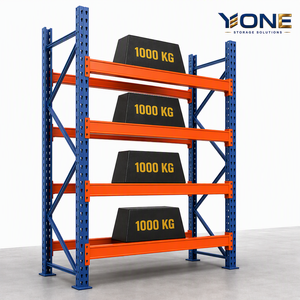
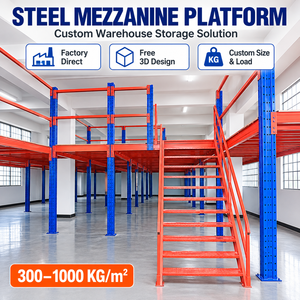
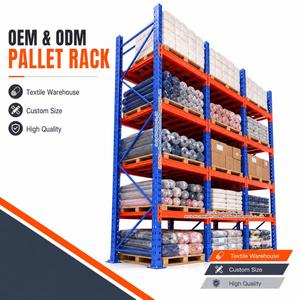
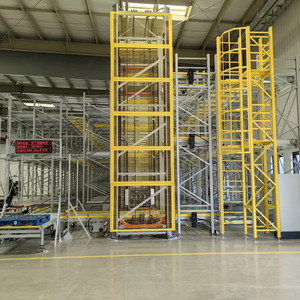
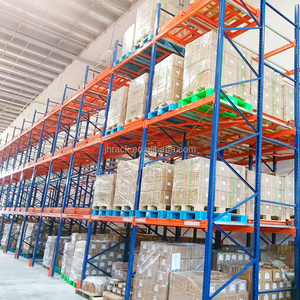
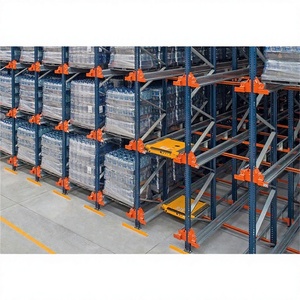
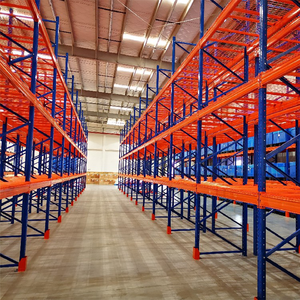
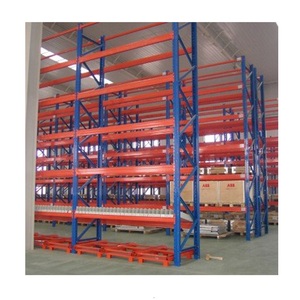
Structural Anatomy & Load Dynamics of Industrial Longspan Racking
A rigorous examination of section modulus, high-tensile cold-rolled cold-formed steel sections, and mechanical stress mitigation for medium to heavy hand-loaded inventory environments.
In modern industrial warehousing and omni-channel distribution facilities, longspan shelving and wide-span racking systems occupy a critical operational tier bridging light-duty boltless shelving and heavy-duty structural pallet racks. While standard pallet racking is engineered predominantly for mechanized unit loads moved by counterbalanced or reach trucks, longspan systems are tailor-built for high-density, high-velocity manual picking, carton flow, archive storage, and awkwardly shaped, un-palletized commercial products. As China's premier manufacturer and global exporter, our engineering design principles address the structural realities of continuous operational loads, accidental human and equipment impact, dynamic beam deflection, and stringent seismic considerations across global jurisdictions.
The structural backbone of any high-performance longspan system begins with raw metallurgical integrity. Our production standard exclusively utilizes certified prime hot-rolled coils subsequently cold-formed into precision upright columns. Using high-yield structural steel grades Q235B and Q355B (equivalent to European EN 10025 S235JR and S355JR, or North American ASTM A36 and A572 Grade 50), the structural profiles undergo multi-stage continuous roll forming. The resulting upright profiles feature complex omega (Ω) or closed-lip geometry with up to 12 cold-bent work-hardened corners. This sophisticated geometry exponentially enhances the cross-sectional moment of inertia ($I_x$ and $I_y$) and torsional rigidity, allowing slender vertical columns to support working bay loads exceeding 5,000 kg (11,000 lbs) under permissible $L/200$ deflection criteria, without exhibiting signs of torsional buckling or local flanging.
Upright Frame Optimization
Multi-bend column geometry featuring continuous pitch stamping (50mm or 75mm increments) accommodates diverse load configurations while maintaining exceptional axial compression resistance.
- Profile gauges: 1.5mm to 2.5mm cold-rolled steel
- Bracing: Bolted C-profile diagonal and horizontal struts
- Base plates: Heavy-duty stamped steel with seismic anchor holes
Step Beam & Z-Beam Integrity
Engineered step profiles receive steel shelf panels, wire mesh decks, or high-density timber flush with the beam edge, eliminating snag points and securing maximum structural beam engagement.
- Beam profiles: Step beam, Box tube, and P-beam profiles
- Connector clips: 3-claw or 4-claw cold-stamped safety connectors
- Spring-locking pins: High-visibility zinc-plated safety pins
Surface Pretreatment & Coating
Automatic 9-stage degreasing, zinc phosphate conversion, and deionized water rinsing followed by electrostatic thermosetting polyester powder coating baked at 200°C.
- Coating thickness: 60 to 90 microns continuous film
- Corrosion resistance: Exceeds 500 hours neutral salt spray (ASTM B117)
- Environmental compliance: Zero VOC emissions, RoHS certified
Connecting the uprights and longitudinal step beams is our proprietary hook-in claw connector system. Unlike light commercial bolt-together shelving that loosens over time due to cyclical micro-vibrations, our precision-stamped 3-prong and 4-prong heavy-gauge connector brackets engage upright perforations with a self-wedging taper. As payload is applied across the shelf level, the gravitational vector forces the beam claws deeper into the vertical keyholes, generating an intrinsically self-locking rigid moment connection. Furthermore, every beam-to-frame joint is backed by high-tensile spring steel safety locking pins that resist accidental upward displacement caused by forklift tines, order-picker platforms, or hand-truck collisions.
Comprehensive Technical Specification & Comparison Guide
Detailed performance parameters across industrial longspan racking, multi-tier platforms, and high-density warehouse storage systems.
| Storage System Type | Typical Payload / Shelf | Standard Clear Span (mm) | Upright Depth Range | Compatible Decking Material | Primary Industrial Applications |
|---|---|---|---|---|---|
| Light-Duty Longspan (LS-200) | 150 – 350 kg (Uniformly Distributed) | 900 – 1,800 mm | 400 – 800 mm | Pre-galvanized drop-in steel shelves, 16mm chipboard | E-commerce fulfillment centers, pharmaceuticals, retail backrooms |
| Medium-Duty Longspan (LS-500) | 350 – 800 kg (Uniformly Distributed) | 1,200 – 2,400 mm | 500 – 1,200 mm | Heavy steel drop-in shelves, flush wire mesh decking | Automotive tier-1 parts storage, hardware wholesale, electrical distributors |
| Heavy-Duty Wide Span (WS-1000) | 800 – 1,800 kg (Uniformly Distributed) | 1,800 – 3,300 mm | 600 – 1,500 mm | Reinforced hat-channel steel decks, flanged wire decks | Raw machinery components, chemical drum storage, manufacturing buffers |
| Multi-Tier Longspan Mezzanine | 300 – 600 kg per walkway sq. meter | 1,500 – 2,700 mm | 600 – 1,000 mm | Perforated anti-slip steel planking, bar grating, B-deck | High-cube archival facilities, apparel distribution, multi-level sorting |
| Carton Flow Longspan Hybrid | 100 – 300 kg per roller bed track | 1,500 – 2,400 mm | 1,200 – 2,500 mm | Polyethylene or aluminum roller tracks, guide dividers | Fast-moving consumer goods (FMCG), split-case order picking, assembly lines |
Future Procurement Trends in Industrial Longspan Racking
Global supply chain demands, automation interoperability, and environmental compliance are fundamentally reshaping warehouse rack procurement through 2030.
Integration with Autonomous Mobile Robots (AMRs)
Traditional manual pick aisles are rapidly converting into hybrid robot-human picking corridors. Modern longspan shelving is increasingly engineered with precise floor guide-lines, base-deflector kickers, and customized underside clearance to allow low-profile shelf-carrying AMRs and picking AGVs to navigate unobstructed under rack bays.
Modular Multi-Tier High-Cube Utilization
With industrial real estate lease rates at all-time highs across North America, Western Europe, and Southeast Asia, operators are rejecting single-floor horizontal expansion. Procurement is shifting towards modular rack-supported mezzanines and 2-to-4 tier catwalk shelving systems that leverage up to 12 meters of vertical warehouse cubic volume without requiring civil structural changes.
Low-Carbon Steel & Eco-Certified Coatings
Scope 3 carbon reporting and ESG mandates from Fortune 500 retailers are influencing racking procurement. Leading Chinese exporters are migrating to scrap-recycled electric arc furnace (EAF) steel feedstocks, alongside heavy-metal-free, low-temperature curing thermoset powder coatings that yield 28% reductions in embedded lifecycle emissions.
Smart RFID & Digital Sensor Slotting
The convergence of physical infrastructure and Warehouse Management Systems (WMS) is driving the adoption of pre-slotted electronic shelf labels (ESL), built-in pick-to-light (PTL) wiring conduits, and load-cell sensor mounts directly into roll-formed longspan beam channels, eliminating post-installation retrofitting costs.
Why Tier-1 Global Distributors Partner With Our Factory
Decades of dedicated heavy industrial fabrication, robotic automation, and complete vertical control from coil slit to ocean container dispatch.
Automated Robotic Roll-Forming Lines
Our intelligent workshop houses over 20 continuous automated roll-forming lines equipped with online CNC punching presses. High-precision tooling guarantees dimensional pitch tolerances within ±0.2mm along a 12-meter continuous column, ensuring flawless on-site installation without field reaming or forcing.
Full Seismic & FEA Structural Modeling
Every racking system dispatched by our export division is validated using 3D Finite Element Analysis (FEA) software. We calculate buckling modes, nodal displacements, and seismic reaction forces tailored to specific global building codes, including RMI ANSI MH16.1 (USA), AS 4084 (Australia), and EN 15512 (Europe).
Zero-Defect Quality Control (ISO9001/14001)
From spectral metallurgical testing of incoming raw steel batches to weld bead penetration ultrasonic inspection and powder coating adhesion cross-hatch testing (ASTM D3359), our multi-stage QA protocol guarantees that every pallet bundle arrives ready for mission-critical deployment.
Optimized Export Container Packaging
Export freight costs can make or break international projects. Our logistics engineers design custom steel pallet frames and modular nesting bundling for frames and beams, achieving 98% 40ft High Cube container volumetric fill rates while eliminating transit scratch damage through multi-layer EPE foam and corrugated wraps.
Turnkey OEM/ODM Engineering Support
Whether you require proprietary teardrop perforations, custom beam drop angles, custom corporate branding colors (RAL match), or specialized branded export packaging, our in-house engineering team converts CAD sketches into functional structural prototypes within 5 working days.
Aggressive Lead Times & Raw Material Hedging
With an ongoing reserve of over 10,000 metric tons of prime steel coil in stock, our facility mitigates global steel price volatility for our clients. Standard longspan export orders ship within 14 to 21 days from drawing approval, ensuring your warehouse fit-out project remains strictly on schedule.
Frequently Asked Questions on Longspan Racking Sourcing
Technical, logistical, and commercial inquiries answered by our senior material handling structural engineers.
What is the exact engineering difference between Longspan Shelving and Standard Pallet Racking?
While both systems utilize roll-formed steel vertical upright frames and horizontal load beams, the principal distinction lies in load dynamics, dimensional profile, and handling methods. Standard pallet racking is engineered primarily for full-palletized unit loads deposited via forklifts, with bay depths typically matching standard ISO pallets (1,000mm to 1,200mm) and beam section capacities ranging from 2,000kg to over 4,500kg per pair. In contrast, Longspan Shelving is engineered specifically for manual picking, split-case handling, and intermediate-sized items. Longspan beam profiles are stepped (allowing drop-in steel panels, wire mesh, or timber to sit completely flush with the top beam surface) with typical load capacities between 300kg and 1,000kg per level. Longspan systems feature a lighter self-weight, smaller frame profiles, narrower aisle allowances, and lower initial capital expense per square meter of pick face.
How do you calculate the maximum safe working load (SWL) for longspan beam spans?
Maximum Safe Working Load (SWL) is calculated under the assumption of a Uniformly Distributed Load (UDL) across two paired beams in accordance with FEM 10.2.02 and ANSI MH16.1 specifications. Structural engineers evaluate two limiting thresholds: ultimate bending stress (factoring in the section modulus $Z$ and steel yield strength $f_y$ with a structural safety coefficient of typically 1.5 to 1.65), and maximum allowable vertical elastic deflection. In longspan manual picking environments, deflection under full service load must never exceed $1/200$ (or $0.5\%$) of the clear beam span distance ($L$). For example, on a 2,000mm clear span, maximum central beam sag must remain strictly under 10mm. If dynamic or point loads are anticipated, additional reinforcing cross-ties or heavy-duty hat-stiffeners are welded beneath the decking plates.
Can your longspan shelving be converted into a multi-tier catwalk or mezzanine system?
Yes. Our heavy-duty longspan upright frames (utilizing Q355B high-tensile steel with minimum 2.0mm thickness) are engineered with high axial load capacity specifically to serve as supporting columns for 2-tier and 3-tier catwalk multi-level shelving. In these configurations, intermediate structural steel main channel beams and secondary joists are bolted directly to the upright column faces. Heavy-duty walkways—constructed from perforated galvanized anti-skid steel planks or industrial open steel bar grating—are laid between the shelving aisles. Our engineering team provides full architectural layout calculations, including live walkway loads (typically 3.0 to 5.0 kN/m²), staircase egress widths, OSHA/EN compliant safety handrails, kickplates, and integrated gravity-assisted pallet drop-gates.
What steel grades and surface finishes do you supply for humid or cold storage applications?
For standard temperature-controlled distribution warehouses, we utilize prime high-yield structural steel coils (Q235B / Q355B) coated with our 9-stage thermoset polyester powder coat finish, offering superior scratch resistance and 500+ hours salt spray durability. For high-humidity facilities, non-conditioned marine storage, or sub-zero blast freezer logistics (-30°C), we provide two superior options: continuous pre-galvanized cold-rolled steel sheet with minimum Z275 zinc mass coating, or post-fabrication Hot-Dip Galvanizing (HDG) conforming to ISO 1461 / ASTM A123. The hot-dip galvanizing process bonds a 70 to 100-micron thick zinc-iron alloy layer over all exposed surfaces, interior weld seams, and punched hole edges, guaranteeing 25+ years of zero-rust operational life even under rigorous industrial washdown conditions.
What information does your engineering team require to provide a custom warehouse layout and formal quotation?
To produce an optimized CAD warehouse layout, static load calculation sheet, and exact FOB/CIF quotation, our design team requires: 1. Clear building architectural drawings (PDF/DWG) detailing warehouse dimensions, internal column grid locations, clear ceiling height under roof trusses, and emergency fire exit pathways. 2. Detailed item specifications: maximum dimensions ($W \times D \times H$) and gross weight of cartons, bins, or unboxed products to be stored per level. 3. Desired number of beam storage levels per bay and shelf deck preferences (steel drop-in panels, galvanized wire mesh, or timber). 4. Material handling equipment: manual pushcarts, rolling order picker ladders, or electric pedestrian stackers (to determine optimal aisle clear widths). 5. Project geographic location (to factor local seismic zone classifications and regional building code mandates).
How do you ensure safe international sea freight delivery without transit deformation?
Racking components are vulnerable to friction, bending, and moisture ingress during prolonged ocean voyages. Our export packaging protocol is engineered like our steel products. Upright frames are stacked flat with high-density EPE foam spacers placed between contact surfaces and secured onto welded heavy-gauge steel channel transit skids with heavy-duty polyester strapping. Horizontal step beams are nested face-to-face in designated bundles protected with waterproof shrink wrap and heavy-gauge corrugated edge protectors. Small accessories, anchor bolts, row spacers, shims, and safety locking pins are sealed in moisture-barrier bags and crated in fumigated solid timber or composite plywood boxes labeled with bilingual packing lists for rapid customs clearance and job-site staging.
Ready to Optimize Your Warehouse Storage Density?
Connect directly with our senior structural racking engineers today. Receive complimentary 2D/3D CAD layouts, comprehensive load capacity analysis, and direct factory-price quotation within 24 hours.