Heavy-Duty
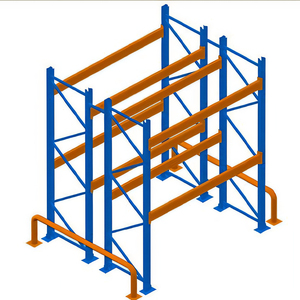
Explore our top-tier industrial shelving and pallet racking product lineup. Fabricated from certified high-yield hot-rolled structural and Q235B cold-rolled steel, each system is configured to eliminate structural deflection, protect high-density inventories, and yield low total cost of ownership (TCO).
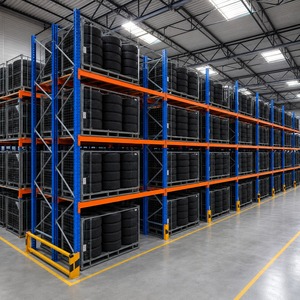
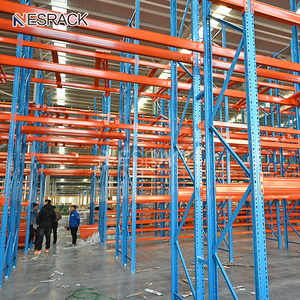
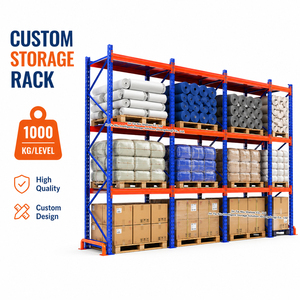
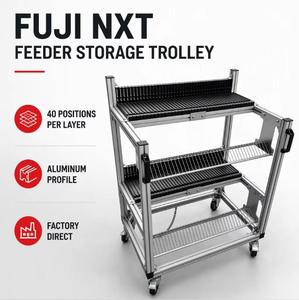
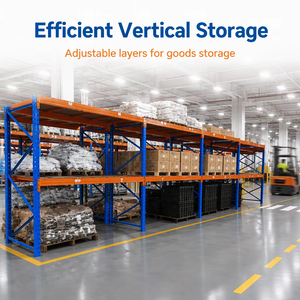
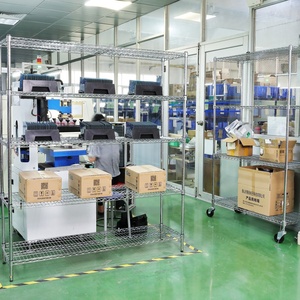
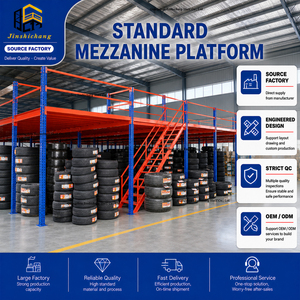
In modern industrial warehousing, commercial retail staging, and high-velocity supply chain hubs, storage systems are no longer treated as simple passive hardware or bare metal furniture. They operate as foundational infrastructure that defines cubic storage efficiency, picking throughput, seismic resilience, and operational life cycles. Sourcing industrial shelving and pallet racking systems directly from elite Chinese manufacturers gives international procurement executives, logistics developers, and supply chain directors a substantial economic and operational edge.
This industry procurement white paper provides comprehensive structural engineering criteria, comparative cost analyses, and future-ready intralogistics trends. Navigating Chinese industrial manufacturing hubs—predominantly concentrated across Jiangsu (Nanjing), Zhejiang, and Shandong provinces—requires balancing initial capital expense (CapEx) against rigorous global compliance standards, such as the North American Rack Manufacturers Institute (RMI ANSI MH16.1), the European FEM 10.2.02 standard, and stringent seismic baseline engineering codes.
When selecting industrial style shelving and warehouse pallet racking from Chinese exporters, understanding the metallurgical divergence between hot-rolled structural steel channels and cold roll-formed uprights is critical for calculated risk mitigation:
Fabricated directly from red-hot structural steel billets, C-channel structural racking features massive column thickness (often 3mm to 6mm or greater) with solid, uniform corners. As detailed in North American high-impact distribution settings, hot-rolled steel maintains superior toughness at sub-zero temperatures (ideal for refrigerated cold storage) and delivers unyielding resistance to lateral forklift mast impacts. When columns encounter minor physical impact, bolted joints allow localized profile replacement without compromising the stability of adjacent storage bays.
Formed by running flat steel coils through a sequence of progressive forming rollers at ambient temperatures, roll-formed designs utilize lighter-gauge sheet steel (1.5mm to 2.5mm) with precision-punched teardrop or keyhole slots. While cost-effective, easy to install, and optimal for commercial retail displays, workshops, and light-to-medium industrial goods, open-back roll-formed columns are fundamentally more susceptible to torsional buckling under aggressive lateral forklift collisions.
| Evaluation Parameter | Structural Hot-Rolled Channel | Cold Roll-Formed (Teardrop/Slotted) | Multi-Tier Mezzanine Platforms |
|---|---|---|---|
| Steel Grade Base | Q235B / Q355B Heavy Structural Channel | Q235B Cold Strip Steel Coils | Heavy H-Beam & Interlocking Steel Decking |
| Impact Resistance | Exceptional (Forklift Grade) | Moderate (Requires Guarding) | High Load Distribution |
| Cold Storage Durability | Superior (Resistant to brittle fracture) | Standard (Moisture traps in open seams) | Custom insulated decking profiles |
| Primary Application | Heavy distribution, 3PL, Freezer DC | Selective picking, Retail, Light industrial | High-clearance warehouse vertical staging |
| Lifecycle Expectancy | 20+ Years in high-traffic operations | 7 - 12 Years depending on traffic | 25+ Years structural life |
Global procurement teams must align their direct-from-China sourcing programs with ongoing technological transformations across distribution networks:
The standard static rack is increasingly functioning as the structural chassis for automated systems. Sourcing criteria are shifting rapidly toward precision fabrication tolerances (+/- 1.0mm per 10-meter upright span) to ensure that automated robotic cranes, 4-way pallet shuttles, and Autonomous Mobile Robots (AMRs) navigate guide rails without tracking errors or mechanical jams.
Traditional iron phosphate cleaning baths are being replaced in elite Chinese manufacturing plants by silane/zirconium nano-ceramic pretreatment systems. Paired with electrostatic TGIC-free polyester epoxy powder coatings, modern industrial shelving finishes provide exceptional salt spray resistance (>1,000 hours ASTM B117), complete resistance to scratching during heavy pallet loading, and compliance with stringent Western environmental standards.
Forward-thinking supply chain wholesalers are demanding racking systems pre-engineered with dedicated sensor mounts. Fiber-optic strain sensors and wireless 3-axis accelerometers integrated directly into upright baseplates provide warehouse facility managers with immediate alerts regarding overload conditions, structural tilt, or unrecorded forklift impact damage.
Partnering with our certified Chinese manufacturing and export network provides tangible operational advantages backed by comprehensive manufacturing capabilities:
Utilizing high-purity Baosteel and Ansteel certified mill-run raw materials. Full traceability with certified EN 10204 3.1 chemical and physical test reports accompanying every export consignment.
Engineering teams rigorously design upright geometry and beam cross-sections to satisfy ANSI MH16.1 specifications, AS4084 Australian standards, and European CE/FEM load guidelines.
Continuous dual-torch robotic CO2 gas-shielded welding lines ensure zero porosity, uniform bead penetration, and high yield strength across all beam connector pins and baseplates.
Specialized flat-pack steel bundling and protective corrugated cushioning optimize container cube volume (CBM), preventing ocean freight transit abrasion and minimizing destination offloading labor.
Full customization covering non-standard bay widths, seismic base isolators, heavy wire mesh decking, structural mezzanine platforms, and specialized cleanroom anti-static ESD trolleys.
Dedicated quality assurance documentation, comprehensive load-capacity labeling, structural finite element analysis (FEA) models, and ongoing field maintenance engineering support.
Essential answers addressing technical compliance, international shipping, quality verification, and structural calculation parameters when procuring warehouse racks directly from China.
Top-tier Chinese manufacturers run complete Finite Element Analysis (FEA) software modeling verified by third-party testing institutes (such as SGS, TÜV Rheinland, or certified US/European professional engineering consultants). Upright column profiles undergo physical stub-column testing, cyclic beam-to-column connector testing, and baseplate anchorage shear tests to generate accurate load capacity charts that meet local building safety codes.
Q235B is roughly equivalent to ASTM A36 (yield strength ~235 MPa), serving as the dependable worldwide standard for light-to-medium pallet beams and uprights. Q355B offers high-tensile properties comparable to ASTM A572 Grade 50 (yield strength ~355 MPa), utilized specifically in heavy-duty structural channel columns, high-bay ASRS frameworks, and seismic-rated racking structures to minimize gauge thickness while maximizing ultimate load thresholds.
Elite exporters use multi-stage surface preparation: shot-blasting to Sa 2.5 profile standards, automated phosphating/nano-ceramic rinsing, followed by continuous oven-cured TGIC-free thermosetting polyester powder coating (60–90 microns). For maritime transport, bundles are packed using moisture-absorbing desiccant packs, non-stretch protective stretch wrapping, corner edge protectors, and elevated steel skids to eliminate condensation corrosion inside marine containers.
To produce an engineered proposal, our engineering team requires: (1) Architectural CAD floor plans showing clear building height, column grids, and egress doors; (2) Pallet specifications (width, depth, overall height including cargo overhang, and maximum gross weight); (3) Forklift specifications (minimum turning radius, mast lift height, aisle clearance requirements); (4) Local seismic acceleration parameters (Ss, S1) and municipal building fire suppression standards.
Accelerate your warehouse facility throughput. Share your project layout drawings, pallet load specifications, and cubic capacity targets for a comprehensive technical assessment and direct factory proposal within 24 hours.