Factory Direct Catalog
Heavy-Duty Warehouse Storage Racks & Systems
Browse our certified heavy-duty pallet racks, cantilever frameworks, wire mesh decking, and custom automation-ready systems configured for maximum volumetric efficiency and seismic compliance.
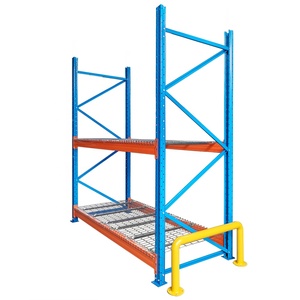
1300KG New Design Racks Industrial Warehouse Racking System Shelf Shelves Rack Shelving Storage 1400KG
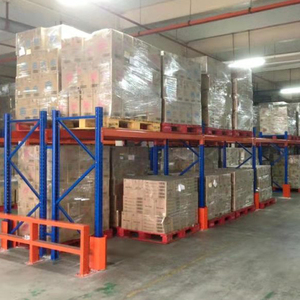
Guangzhou Rack Adjustable Pallet Racking System 2000KG 2200KG 2200KG 2300KG 2400KG 2500KG Pounds Tons
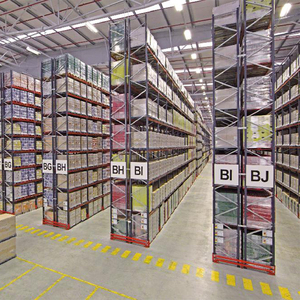
Boltless Adjustable Industrial Light and Medium Duty Pallet Racking System Warehouse Steel Metal Storage Shelf
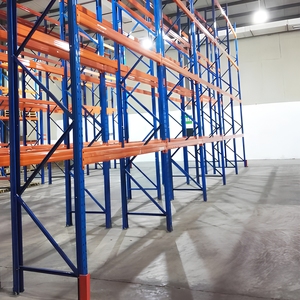
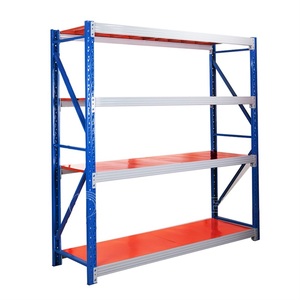
Wholesale Heavy Duty Steel Adjustable Stackable Modern Multi-Level Warehouse Rack Storage Pallet Racking Industrial 1000-3000kg
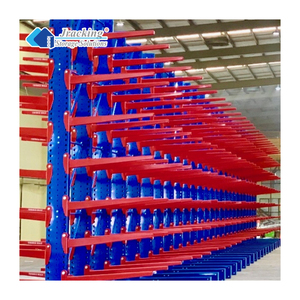
CE-Certified Industrial Warehouse Storage Shelves Heavy-Duty Cantilever Racking System for Cold Storage Pipe Storage
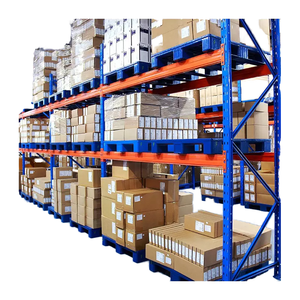
Heavy Duty Selective Pallet Rack Metal Q235 Seismic Reinforced Wire Mesh Protection Epoxy Coated Supporting Smart Warehouse
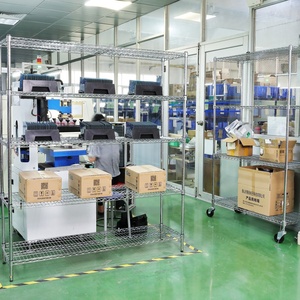
Heavy Duty Industrial Factory Workshop Parts Storage Rack Longspan 5 Tiers Chrome Steel Wire Shelving Unit
Technical Whitepaper
Engineering Structural Reliability in High-Velocity Warehousing
Understanding load limits, metallurgy, structural safety factors, and compliance requirements under European EN 15512 and North American RMI MH16.1 specifications.
Modern intralogistics operates under tighter floor space constraints, faster cycle rates, and higher pallet load densities than at any point in supply chain history. Selecting an industrial storage system is not simply an exercise in furnishing empty square footage—it represents a multi-decade capital infrastructure commitment. As a CE-certified warehouse shelving and racking factory and global exporter, our engineering practice aligns structural analysis, metallurgy precision, and site-specific seismic simulation to eliminate downtime, prevent structural failure, and drastically reduce the Total Cost of Ownership (TCO).
Structural Hot-Rolled Channel vs. Cold Roll-Formed Steel: The Life-Cycle Economics
A primary design dilemma procurement officers face is choosing between standard roll-formed (teardrop) racking and heavy-duty structural steel profiles. While cold roll-formed uprights offer an economical entry point for low-velocity distribution hubs, their lighter gauge and open-back profile make them susceptible to structural deformation from accidental forklift mast impacts. In high-velocity distribution centers, grocery cold chains, and cross-docking facilities, forklift collisions are not a matter of 'if' but 'when'.
Structural steel pallet racking, manufactured from hot-rolled C-channel profiles with solid bolted beam connections, provides up to 300% greater resistance to torsional impact. The heavy-gauge flanges and web resist buckling, and in the event of severe impact, bolted components can be isolated, unbolted, and replaced without taking entire bays out of commission or destabilizing adjacent pallet runs. Over a 10-year facility lifespan, the avoided repair downtime, collapsed rack litigation risks, and repeated replacement costs render structural steel far more economical on a per-pallet-position basis.
| Evaluation Parameter | Structural Steel Racking (Hot-Rolled) | Roll-Formed Teardrop Systems | High-Density Shuttle / ASRS Integration |
|---|---|---|---|
| Impact Resistance (Forklift) | Exceptional (Solid hot-rolled C-channels absorb high kinetic energy) | Moderate to Low (Thin-gauge sections buckle under direct hits) | High (Reinforced guide-rail profiles with anchor dampeners) |
| Standard Bay Load Capacity | Up to 15,000 kg+ per bay depending on configuration | Typically 6,000 kg – 9,000 kg maximum per bay | Engineered specifically to automation crane & shuttle dynamics |
| Cold-Chain & Sub-Zero Resiliency | Superior (Maintains ductile strength down to -30°C) | Requires specialized cold-tough steel grades to prevent brittleness | Maximum performance with thermal expansion expansion joints |
| Maintenance & Field Repairability | Fast bolted component change-out without structural welding | Requires specialized frame splice sleeves or complete upright replacement | Precision tolerances require factory-certified technician repair |
| Initial Capital Expenditure (CapEx) | Higher upfront material investment | Lower initial purchase price per pallet location | Highest initial capital; lowest operational cost per SKU movement |
Future Procurement Trends: The Shift Toward Smart & Automated Storage
As land lease rates surge globally and labor shortages challenge 24/7 fulfillment centers, industrial warehousing procurement is undergoing three massive structural shifts:
1. Vertical High-Bay Optimization & Rack-Supported Structures: Facilities are bypassing traditional clear heights of 9 to 11 meters in favor of automated systems exceeding 24 to 40 meters. In rack-supported buildings, the storage matrix itself carries the wall cladding, roofing, and environmental loads (wind, rain, seismic). By eliminating structural building columns, warehouses gain up to 18% additional usable storage volume within the exact same building footprint.
2. Integration-Ready Tolerances for Pallet Shuttles and AMR: Modern pallet racking cannot simply sit on uneven concrete; it must interface seamlessly with Autonomous Mobile Robots (AMRs), automated pallet shuttles (like Mole IQ® solutions), and Stacker Cranes. This requires manufacturing tolerances within ±1.5 mm across hundreds of linear meters, verified through 3D laser scanning before system commissioning.
3. Seismic Resilience and International Code Harmonization: Multinational supply chains now demand that factory-direct exporters provide engineering calculations backed by local professional engineers (PE stamps). Whether calculating seismic drift according to ASCE 7 / RMI ANSI MH16.1 in the Americas or Eurocode 3 / EN 15512 across the European Union, dynamic load testing and finite element analysis (FEA) are non-negotiable prerequisites for municipal permitting.
Factory Capabilities
Why Tier-1 Logistics Hubs Partner With Our Factory
Uniting over seven decades of manufacturing heritage, deep technical engineering, and localized project execution across 10 strategic facilities.
Flexible Manufacturing Footprint
Operating 10 dedicated manufacturing facilities across key logistical corridors in North America and export gateways, reducing ocean freight overhead, shortening delivery lanes, and guaranteeing on-time project handover.
In-House PE Structural Engineering
Our engineering divisions include AS/RS high-rise specialists, seismic analysts, and CAD/BIM modelers who collaborate directly with client project managers to deliver stamped calculations compliant with regional building authorities.
2-Year Rack Damage Warranty
Backed by heavy hot-rolled steel channel designs, our installations offer an industry-leading 2-year rack damage warranty, validating our confidence in steel ductility, weld purity, and superior impact tolerance.
Procurement Guidance
Frequently Asked Questions by Industrial Buyers
Critical structural, operational, and regulatory answers to inform your warehouse investment.
What documents are needed to begin engineering layout design?
To generate an optimized, code-compliant proposal, our engineers require: slab floor plan (slab thickness, concrete compressive strength psi, clear height to truss/fire suppression), pallet dimensions (width, depth, height inclusive of overhang), gross pallet load weights, lift truck specifications (mast lift height, turning radius), and facility location to pinpoint seismic spectral accelerations.
How does CE Certification affect international project compliance?
CE Certification confirms compliance with European standard EN 15512 for steel static storage systems and EN 1090 for structural steel fabrication execution. For global operators, CE marking guarantees traceability of mill test certificates (Q235B / S355JR), rigorous non-destructive weld testing, and predictable safety coefficients under operational limit state designs.
Why is hot-rolled structural steel preferred for refrigerated & freezer storage?
Sub-zero temperatures induce ductile-to-brittle transition in thin cold-formed sheet steels. Hot-rolled structural channels retain higher impact toughness in low temperatures, preventing catastrophic flange shattering from forklift bumps in slippery freezer drive-in and push-back channels.
Can our factory integrate with existing automated crane & shuttle systems?
Yes. Our high-bay ASRS engineering division works in tandem with global automation integrators. We design structural uprights and shuttle rail supports with millimeter-accurate tolerances, pre-punched mounting plates, and thermal expansion joints ready for high-speed automated storage and retrieval systems.
Ready to Engineer Your High-Density Storage Facility?
Connect with our technical design team today. Obtain complete structural layout drawings, static load calculations, and comprehensive product catalogs engineered to your exact site requirements.