Engineering Principles of CE Certified Pallet Flow Racking
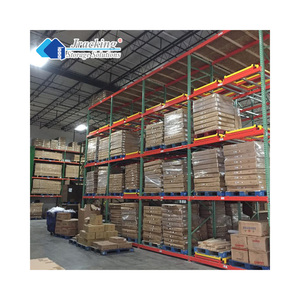
In modern supply chain architecture, static racking configurations are frequently overwhelmed by escalating SKU throughput velocities, stringent perishable product lifespans, and real estate costs per square meter. A CE Certified Pallet Flow Rack (commonly known as gravity flow racking) operates as an automated dynamic storage and accumulation engine that relies on controlled gravitational descent to eliminate redundant forklift aisle transit while enforcing strict First-In, First-Out (FIFO) stock rotation.
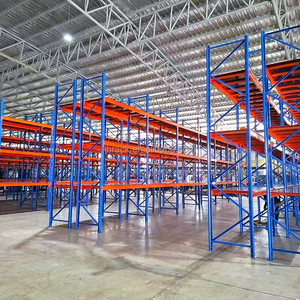
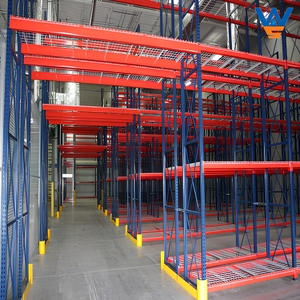
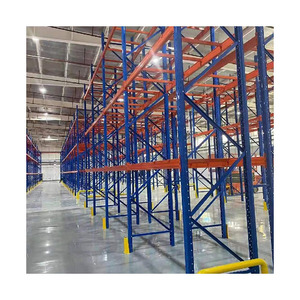
Unlike push-back or standard selective racking systems, pallet flow designs segregate loading and picking aisles entirely. Pallets enter from the rear charging aisle, traverse across slightly declined roller beds or cylindrical wheel tracks at an engineered slope (typically 3% to 4%), and arrive safely at the discharge pick face. To comply with rigorous European Standard EN 15512 and the Machinery Directive requirements governing structural safety and dynamic pallet management, wholesale pallet flow systems integrate centrifugal speed controller rollers, structural steel entry guides, and automatic mechanical separators.
Centrifugal Speed Controllers
Dynamically govern pallet velocity between 0.1 m/s and 0.3 m/s, preventing kinetic acceleration spikes regardless of weight variations from 300kg to 1,500kg per position.
Pallet Separation Devices
Patented mechanical release latches disengage hydrostatic line pressure from trailing pallets, granting safe, zero-back-pressure discharge extraction for standard forklifts and AGVs.
CE & FEM Compliant Uprights
Heavy-duty structural channel profiles and engineered Q355B alloy columns resist horizontal kinetic loads, seismic displacement, and inadvertent forklift chassis impacts.
Procurement Selection Matrix: Pallet Flow vs. Alternative High-Density Systems
Global procurement teams evaluate warehouse storage investments against operational KPIs: spatial volumetric efficiency, cycle-time latency, inventory turnover protocols, and total capital expenditure (CapEx) amortized against labor savings. The comparative data visualization below highlights operational dynamics across leading systems:
| Storage System Type | Space Utilization | Inventory Rotation | Aisle Requirements | Forklift Travel Time | Primary Industrial Application |
|---|---|---|---|---|---|
| Pallet Flow Rack (Dynamic FIFO) | Up to 85% Volumetric Density | Strict FIFO (First-In, First-Out) | 2 (Separated Infeed & Outfeed) | Ultra-Low (Dedicated lanes) | Cold Storage, Perishables, High-Velocity FMCG |
| Drive-In Racking | Up to 75% Volumetric Density | Strict LIFO (Last-In, First-Out) | 1 (Shared Infeed / Outfeed) | High (Forklift drives inside lanes) | Raw Materials, Bulk Homogeneous Batches |
| Push-Back Rack (Carts/Rollers) | Up to 70% Volumetric Density | Strict LIFO (Last-In, First-Out) | 1 (Front aisle only) | Moderate (Front pushing cycle) | 2–6 Pallet Deep Medium Velocity SKUs |
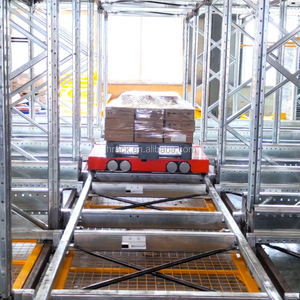
| Automated 4-Way Shuttle | Up to 90% Volumetric Density | FIFO / LIFO Dynamic Software Driven | 1 Transfer / Picking Interface | Minimal (Fully robotic handling) | Dark Warehouses, Automated High-Bay Distribution |
| Selective Racking | 35%–40% Volumetric Density | 100% Direct Selectivity | Multiple Wide / Narrow Aisles | High (Substantial driving distances) | Multi-SKU E-commerce, 3PL Fulfillment Centers |
Future Procurement Trends in Gravity Storage & Dynamic Intralogistics
As corporate real estate valuations escalate and warehouse labor availability contracts across Europe, North America, and the Asia-Pacific, procurement officers are no longer viewing pallet racking as simple warehouse furniture. Structural racking is being reimagined as high-efficiency mechanical infrastructure. Key procurement trends shaping the sector include:
Integration with Autonomous Mobile Robots (AMR) & AGVs
Pallet flow loading faces are increasingly engineered with optical target reflectors, magnetic floor alignments, and micro-tolerance pick stops. Rather than depending on manual counterbalance trucks, automated guided vehicles load gravity tracks continuously during off-peak energy intervals, maximizing throughput consistency and eliminating racking damage caused by driver error.
Sub-Zero Energy Optimization in Cold-Chain Logistics
Operating cold storage environments at -25°C incurs tremendous energy consumption per cubic meter. By eliminating excessive forklift access corridors, pallet flow reduces conditioned air volume by up to 40%. Buyers are demanding pre-galvanized components, low-temperature synthetic roller bearings, and anti-freezing lubricant compounds designed for indefinite sub-zero duty cycles.
Furthermore, wholesale B2B contracts prioritize lifecycle engineering documentation over initial unit costs. Supply chain directors mandate certified FEM (Fédération Européenne de la Manutention) deflection analysis, mill test certificates (MTC) verifying high-tensile structural steel chemistry, and factory-executed impact tests. A lower Total Cost of Ownership (TCO) is achieved through replaceable modular roller tracks, bolted column protectors, and hot-rolled structural steel beams that absorb continuous loading impacts without permanent structural deformation.
Future Technological Trajectory of Dynamic Flow Racking Systems
The evolution of pallet flow systems converges directly with digital factory paradigms and sensorized inventory visibility. As supply chains move toward predictive restocking, the physical gravity track is evolving through the following industrial advancements:
- Smart Sensorized Roller Tracks: Low-power IoT weight and speed sensors embedded directly within flow rollers transmit real-time telemetry to Warehouse Management Systems (WMS). The system automatically alerts operators to lane blockage, pallet resting drift, or decelerating roller wear before operational jams occur.
- Dynamic Speed Governing for Mixed-Weight Profiles: Next-generation flow beds employ variable-torque magnetic eddy-current brake rollers. These contactless braking mechanisms require zero mechanical friction pads, automatically scaling dampening resistance linearly to the weight of the pallet—allowing empty wooden pallets (25kg) and dense metal bins (1,500kg) to run reliably down the identical gravity lane.
- Hybrid Gravity Shuttle Topologies: By mating multi-deep gravity lanes with 4-way autonomous shuttles at the pick elevation, logistics facilities achieve horizontal gravity buffering alongside 3D automated vertical stacking, yielding unparalleled pick velocities for critical distribution operations.
Engineering Excellence & Manufacturing Advantages
Partnering with a dedicated manufacturer and global wholesaler gives engineering contractors, logistics architects, and system integrators direct access to comprehensive structural manufacturing capabilities:
100% Structural Steel Channel
Fabricated using heavy hot-rolled structural steel sections with superior yield strengths, eliminating the fragile open-back buckling vulnerabilities common to light-gauge teardrop rack.
Flexible Global Manufacturing
Equipped with high-precision automated roll-forming lines, robotic CNC beam welding, and electrostatic powder coating bays delivering unmatched tolerances and anti-corrosion life.
Engineering Turnkey Support
Full-spectrum structural calculations, seismic analysis (RMI ANSI MH16.1 & Eurocode 3), 3D DWG/BIM model layout consultation, and comprehensive export logistics documentation.
Frequently Asked Questions (FAQ) for Pallet Flow Racking Sourcing
What technical criteria determine whether my pallets are suitable for gravity flow racking?
How do speed controllers and brake rollers manage varying load capacities?
What standards guarantee structural safety and CE certification in high-bay pallet flow projects?
How does pallet flow racking compare to push-back racking for cold storage operations?
What information is required to receive a detailed engineering design and wholesale quote?
Request an Engineered Layout & Wholesale Quotation
Connect directly with our structural engineering team. Submit your pallet specifications and building dimensions for an optimized FIFO flow layout, seismic calculation, and volume manufacturing quotation.