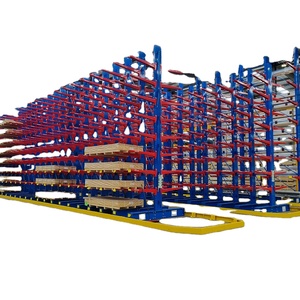
Heavy Profile Cantilever
Direct factory manufacturing of CE-marked structural cantilever racks, adjustable selective teardrop/hot-rolled profiles, and automated intralogistics structures designed for maximum payload endurance.
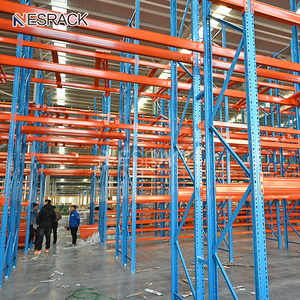
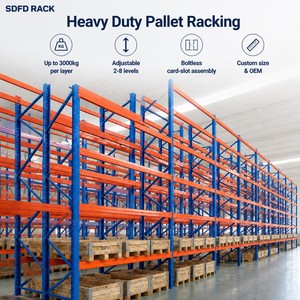
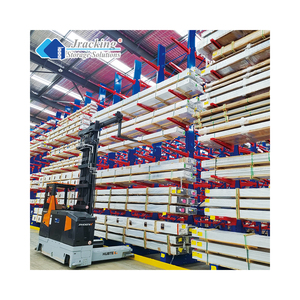
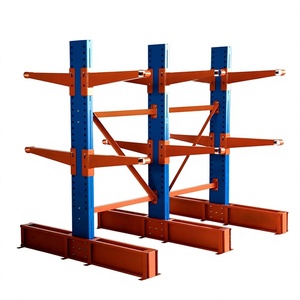
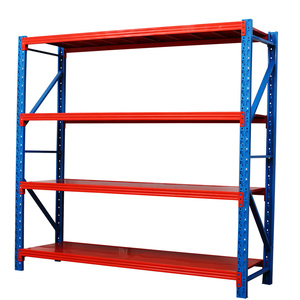
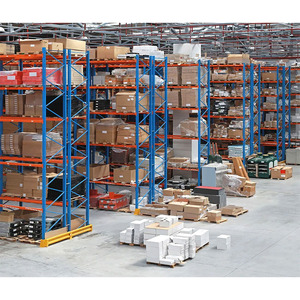
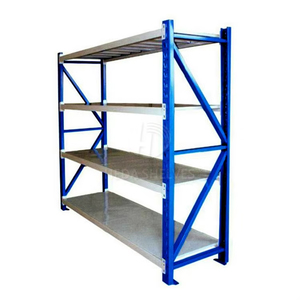
Combining in-house structural engineering, hot-rolled steel profile fabrication, and turnkey intralogistics project delivery to minimize Total Cost of Ownership (TCO).
Unlike fragile cold roll-formed uprights that collapse under forklift fork shear, our heavy-duty hot-rolled channel systems withstand repeat impacts in aggressive manufacturing and cold chain distribution centers.
Every industrial shelving and pallet racking assembly is engineered according to EN 15512, EN 15620, EN 15629, and ANSI MH16.1 specifications, verified by complete finite element analysis (FEA) calculation dossiers for permitting.
Operating dedicated production bases equipped with automated continuous roll-forming lines, robotic CNC beam welding, and eco-friendly electrostatic thermosetting powder coating lines ensuring micron-level dimensional precision.
Our high-rise tolerance racking matches strict robotic automated storage and retrieval systems (AS/RS), stacker cranes, 4-way pallet shuttles, and autonomous mobile robot (AMR) deflection thresholds under full cyclic loading.
Because structural channel racking features bolted structural frames, minor forklift accidents do not mandate cutting and welding. Individual parts are replaceable in field, backed by our direct 2-year rack damage warranty.
From initial slab structural loading analysis, seismic moment frame calculation, and fire sprinkler integration to field supervision and third-party inspection certifications, our engineers accompany every deployment.
In modern industrial logistics, storage systems have evolved from passive warehouse furniture into active, mission-critical structural infrastructure. A facility's throughput rate, occupational safety compliance, seismic resilience, and return on investment (ROI) depend on the structural specification of the storage envelope. Sourcing industrial shelving and pallet racking with CE certification under the Construction Products Regulation (CPR 305/2011/EU) and EN 1090-1 ensures that cold-formed or hot-rolled steel assemblies fulfill rigorous design calculations, mechanical yield tolerances, and metallurgical traceability.
A fundamental decision facing industrial procurement managers and logistics architects is selecting between roll-formed teardrop profiles and structural steel channel assemblies. While roll-formed racking offers a lower initial purchase price, its open-back, thin-gauge sheet steel (typically 1.5mm to 2.5mm) is highly vulnerable to forklift shear loads, column buckling, and torsional collapse under corner impact. In contrast, heavy-duty structural steel channel columns (ASTM A36 / Q235B / S275JR) feature solid structural channel flanges with hot-rolled web thicknesses exceeding 6.0mm. This offers over 250% higher torsional impact resistance and eliminates catastrophic progressive frame failure in high-velocity 3PLs, beverage distribution hubs, and cold storage freezers.
| Engineering Parameter | Standard Roll-Formed Shelving | Structural Steel Channel Racking | AS/RS High-Bay Racking Matrix |
|---|---|---|---|
| Steel Specification | Q235 / Cold-rolled DC01 (1.5 - 2.5mm) | Hot-Rolled Structural Channel (4.0 - 8.0mm) | High-Yield Structural Alloy S355 / ASTM A572 |
| Forklift Impact Resistance | Low (Deforms under 5kJ impact) | Extreme (Withstands >25kJ direct hit) | Engineered with integrated guide-rail buffers |
| Connection Mechanics | Drop-in hook / Teardrop connector pins | High-strength Grade 8.8 structural bolts | Precision-machined structural flange joints |
| Cold Storage Durability (-30°C) | Susceptible to notch embrittlement | Excellent impact ductility under low temp | Thermal stress compensated finite modeling |
| Design Codes Followed | EN 15512 / RMI MH16.1 | EN 15512 / AISC 360 / ANSI MH16.1 | FEM 9.831 / EN 15620 Class 100/200 |
Industrial warehousing installations located in active seismic zones (such as Mediterranean Europe, the Pacific Rim, and North American western corridors) require dynamic finite element modeling to determine frame ductility and baseplate shear resistance. Under dynamic earthquake excitations, pallet loads interact with racking beams through friction coefficients, creating a combined sloshing and pendulum effect. Our CE-certified factory employs nonlinear time-history seismic simulations to calculate frame base overturning moments, sizing heavy anchor bolts and anchor embedment depths to ensure life safety and structural stability without progressive structural collapse.
In sub-zero temperatures down to -30°C, ordinary mild carbon steel risks brittle fracture at low impact angles. Our materials undergo Charpy V-notch impact verification at negative temperatures to confirm crystal matrix ductility. In addition, moisture condensation during defrost cycles demands robust anti-corrosion protection. We offer continuous hot-dip galvanizing adhering to ISO 1461 (minimum 65-85 micron zinc bath coating) and multi-stage automated iron-phosphate pretreatments sealed by polyester powder coating exceeding 1000 hours of continuous salt spray test exposure (ASTM B117).
How automation, urban micro-fulfillment, and carbon accountability are transforming industrial storage specifications through 2030.
Global demand is rapidly shifting away from manual reach-truck selective racking toward high-bay automated cranes, miniload systems, and pallet shuttles. Storage manufacturing now requires millimeter-level deflection precision (EN 15620 tolerances) and sensorized pick faces to enable 24/7 dark warehouse operation without robotic arm jams.
With industrial land costs escalating, enterprises avoid erecting conventional warehouse walls. Rack-supported buildings utilize the storage racking uprights as the primary load-bearing columns to carry external wall sandwich panels, roof assemblies, and dynamic wind/snow loads, slashing civil construction timetables by up to 35%.
Corporate ESG directives are making Environmental Product Declarations (EPDs) standard in industrial tenders. Storage purchasers prioritize factories using Electric Arc Furnace (EAF) low-carbon steel alongside modular bolted connections that permit structural disassembly, height reconfiguration, and relocation rather than scrap disposal.
Essential technical, compliance, and engineering guidance to streamline your storage racking acquisition process.
Under EN 15512 and EN 1090-1, the manufacturer must execute full-scale stub column compression tests, beam end connector shear and moment tests, floor connection stiffness evaluations, and complete factory production control (FPC) audits certified by an accredited European Notified Body.
Our engineering team evaluates your building's concrete slab thickness, compressive strength (f'c), subgrade modulus (k-value), and rebar reinforcement. We design customized oversized baseplates to distribute point-load forces below the concrete punch-shear threshold.
Sub-zero temperatures reduce steel toughness. Hot-rolled structural steel retains superior Charpy impact ductility in sub-zero environments, whereas light-gauge roll-formed steel can crack or suffer brittle failure upon minor forklift fork impacts during tight maneuvering.
We supply certified professional engineer (PE) signed calculation packages, including NFPA 13 sprinkler clearance verification, seismic response spectra curves, material mill test certificates (EN 10204 Type 3.1), and comprehensive load application warning plaques.
Connect with our senior intralogistics structural engineers for custom CAD layouts, seismic loading analyses, and direct manufacturer pricing quotations.
Contact Us