Choosing the best Pallet Storage Racking System in 2026 starts with the work happening on your warehouse floor. A narrow-aisle operation handling uniform pallets has different needs from a busy facility storing mixed loads. The right choice depends on pallet dimensions, load weights, ceiling height, forklift type, inventory turnover, and the space available around each aisle. Small details matter. A few centimeters of clearance can affect daily handling.
This guide compares selective, drive-in, push-back, pallet-flow, and mobile racking. It considers storage density, access to individual pallets, installation demands, and room for future changes. No single design fits every warehouse. A system that adds capacity may slow picking or require different equipment. That trade-off deserves a careful look.
One practical principle captures the decision: “Choose the rack around the load and the workflow—not the other way around.” The source material provided does not identify a verifiable pallet-racking expert or contain a quotation, so assigning this line to a named specialist would risk inventing a source. Before publication, add a checked quotation from a qualified rack designer, engineer, or industry association representative. That step strengthens trust. It also keeps the recommendation grounded in real operating experience.
The aim here is not to crown one system for every site. It is to show which options suit particular layouts and inventory patterns, and where their limits appear. A floor plan may look efficient on paper. Then a forklift turns too tightly, or a fast-moving pallet sits behind slow stock. Those are the details worth testing before choosing.
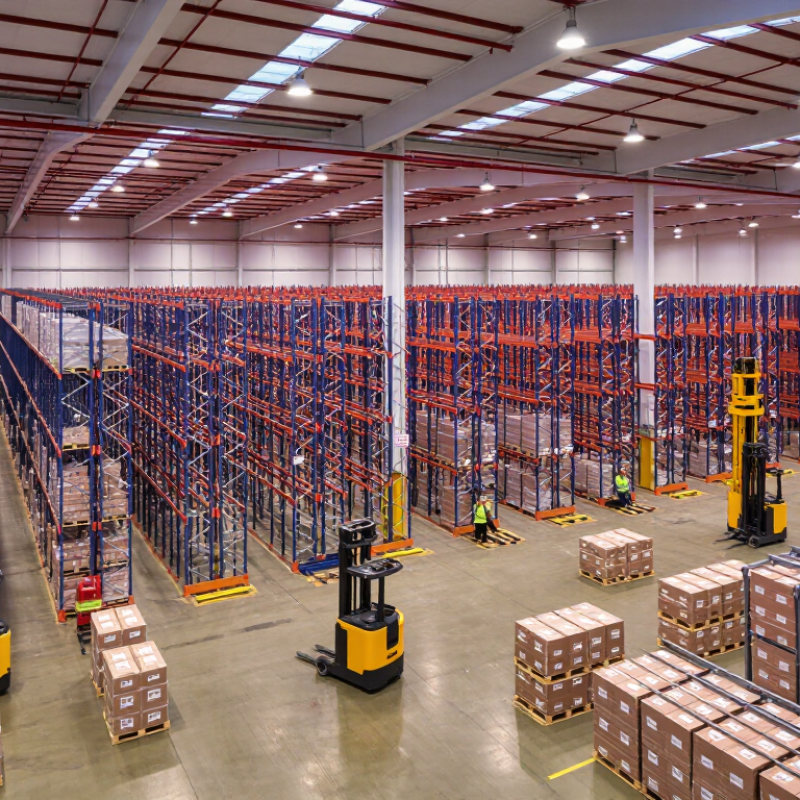
A pallet storage racking system is a steel structure designed to hold palletized goods in organized, accessible positions. Upright frames support horizontal beams, creating levels where forklifts can place or retrieve loads. Unlike floor stacking, this arrangement uses vertical space and makes individual pallets easier to reach.
The details matter. A warehouse team should match beam spacing and rack depth to pallet dimensions, product weight, and handling equipment. A forklift that needs a wide turning aisle may limit how many rack rows fit on the floor. Load capacity also depends on the rack design and how weight is distributed. Check the system’s load information, and keep pallets within the intended position. Small mismatches can become expensive.
There is no single layout for every building. Selective racks provide direct access to many pallets, while denser configurations may suit operations storing fewer product types in larger quantities. The trade-off is access. That can be easy to miss during planning. Clear labels, protected uprights, and regular checks for bent beams help teams spot problems early. The floor condition and building height deserve attention too; they are not glamorous details, but they shape what the system can safely support.
Pallet racking in 2026 includes several layouts, each suited to different inventory patterns. Selective racking gives a forklift direct access to every pallet position. It is flexible and easy to reconfigure, but uses more aisle space than dense systems. Double-deep racking stores pallets two positions deep, improving storage density while requiring compatible equipment and careful stock rotation.
Drive-in and drive-through racks let forklifts enter storage lanes. They work well for large batches of similar products, though access to individual pallets is limited. Push-back systems store pallets on nested carts, while pallet-flow racks use rollers to move loads toward a picking face. Both can support higher throughput, but flow performance depends on pallet condition, load consistency, and maintenance. Small details matter.
Mobile racking moves rows along floor rails, opening an aisle only where needed. It can make better use of floor space, yet adds moving equipment and requires thoughtful operating procedures. Cantilever racks may suit long, bulky items, but they are not a general replacement for pallet racks.
Choosing among these systems starts with real operating data: pallet dimensions and weights, daily picks, SKU variety, forklift turning space, and expansion plans. A site review should also check floor capacity, rack protection, clearances, and sprinkler access. In practice, the densest layout is not always the fastest. I would test the proposed pick path with warehouse staff; drawings can miss awkward turns. Recheck assumptions before installation.
There is no single best system for every warehouse. This qualitative selectivity rating compares how directly individual pallets can be accessed: 5 means each pallet can be reached without moving another; 1 means access is highly restricted by other stored pallets. Selective and mobile systems provide direct access, while dense systems generally trade selectivity for space efficiency.
A warehouse’s best pallet racking system depends on how goods move through the building. Selective racking gives forklift operators direct access to every pallet, which helps when orders contain many different products. High-turnover operations may value that speed. But it uses floor space less densely than some alternatives.
Storage patterns change the choice. A facility holding large quantities of a few products might consider drive-in or push-back racking to use deeper lanes. Those systems can reduce aisle space, but access is less flexible. Check pallet dimensions, load weights, forklift turning space, ceiling height, and sprinkler clearance before comparing layouts. Small details matter. A beam that fits on paper may leave too little room for safe handling.
Growth plans matter, too. A system sized only for today’s inventory can become awkward when product lines expand or pallet sizes change. I have seen space calculations look convincing until real pick paths are considered; that part is easy to underestimate. Review traffic patterns with warehouse staff, and have a qualified professional verify floor capacity and load specifications. The most space-efficient option is not always the easiest one to operate.
The best pallet storage racking system in 2026 depends on the loads, building, and daily work—not a single “best” design. Safety starts with accurate pallet weights, rack height, forklift type, and floor conditions. Small gaps matter. A tight aisle can save floor space but leave less room for turning, increasing the chance of impacts. Check that operators can see the load and place pallets without forcing them into position.
Space and cost often pull in different directions. Selective racking gives direct access to each pallet, which can suit varied stock and frequent picking. Higher-density options may store more pallets in the same footprint, but can restrict access or require compatible handling equipment. Compare the full operating cost, including installation, inspections, repairs, and any changes to forklifts. A low purchase price can become expensive if it slows routine work.
Before choosing, map real pallet dimensions and inventory movement, then test the layout against peak periods. Include guards where impacts are likely, keep aisles clear, and have qualified personnel assess the structure and its load capacity. A spreadsheet may suggest one layout; a busy shift can expose its weak points. That is worth admitting. Review the design after operations begin, because stock patterns and equipment needs can change.
The best pallet racking system in 2026 depends less on trends than on how your warehouse moves goods. Measure SKU count, pallet turnover, aisle width, ceiling height, and forklift type before choosing. Selective racking suits facilities with many SKUs and frequent access to individual pallets. It is easy to adjust, but it uses more floor space for aisles. That trade-off matters.
Drive-in or drive-through racking can increase storage density when products arrive in large, uniform batches. These layouts can suit cold rooms or seasonal inventory with fewer product lines. However, deep lanes reduce direct access, and older stock may remain behind newer loads. Rotation rules matter. Push-back racking stores several pallets per lane while keeping loading and retrieval at the aisle face. It can fit medium-turnover goods, though lane depth and pallet consistency need careful checks.
Pallet-flow systems support fast movement in distribution areas with predictable replenishment. Very high-volume operations may consider pallet shuttles, but automation only pays when throughput and maintenance support it. A site survey should check beam loads, floor condition, sprinkler clearance, and seismic requirements with qualified professionals. Small errors matter. A tidy drawing can still fail when forklift turning space or real pallet overhang is ignored. Choose for actual workflows, not just maximum pallet count.
Common options include selective, double-deep, drive-in, drive-through, push-back, pallet-flow, mobile, and cantilever racks. Each fits different goods and workflows.
Selective racking gives forklifts direct access to each pallet position. It suits varied products, but uses more aisle space.
It stores pallets two positions deep and can increase storage density. It needs compatible equipment and careful stock rotation.
Forklifts enter storage lanes to place or retrieve pallets. These systems suit large batches of similar products, but limit access to individual pallets.
Push-back racks use nested carts. Pallet-flow racks use rollers to move loads toward the picking face. Pallet condition matters.
Mobile rows move along floor rails, opening an aisle where needed. This can use floor space efficiently, but operating procedures need thought.
Check pallet sizes and weights, daily picks, SKU variety, forklift turning space, ceiling height, floor capacity, clearances, and sprinkler access. Small measurements matter.
Not necessarily. Dense storage may slow access or complicate handling. I might overvalue the floor-space figures; testing pick paths with warehouse staff can reveal awkward turns.
Product lines and pallet sizes may change. A layout sized only for current stock can become awkward later. Recheck the assumptions.
Choosing the best Pallet Storage Racking System in 2026 starts with understanding how a warehouse stores, retrieves, and moves its inventory. Options may include selective racks for direct access to each pallet, high-density systems for storing more goods in limited space, and automated or specialized configurations for operations with particular handling needs. No single design suits every facility: pallet turnover, product variety, available floor area, ceiling height, equipment, and workflow all influence the right choice.
Safety, space efficiency, and total cost should be considered together. A system that increases storage capacity may reduce selectivity, while a highly accessible layout may require more aisle space. Buyers should also account for installation, maintenance, future growth, and the need to protect workers and inventory. The best fit is the system that supports the warehouse’s daily operations, makes effective use of its space, meets appropriate safety requirements, and remains practical as storage needs change.